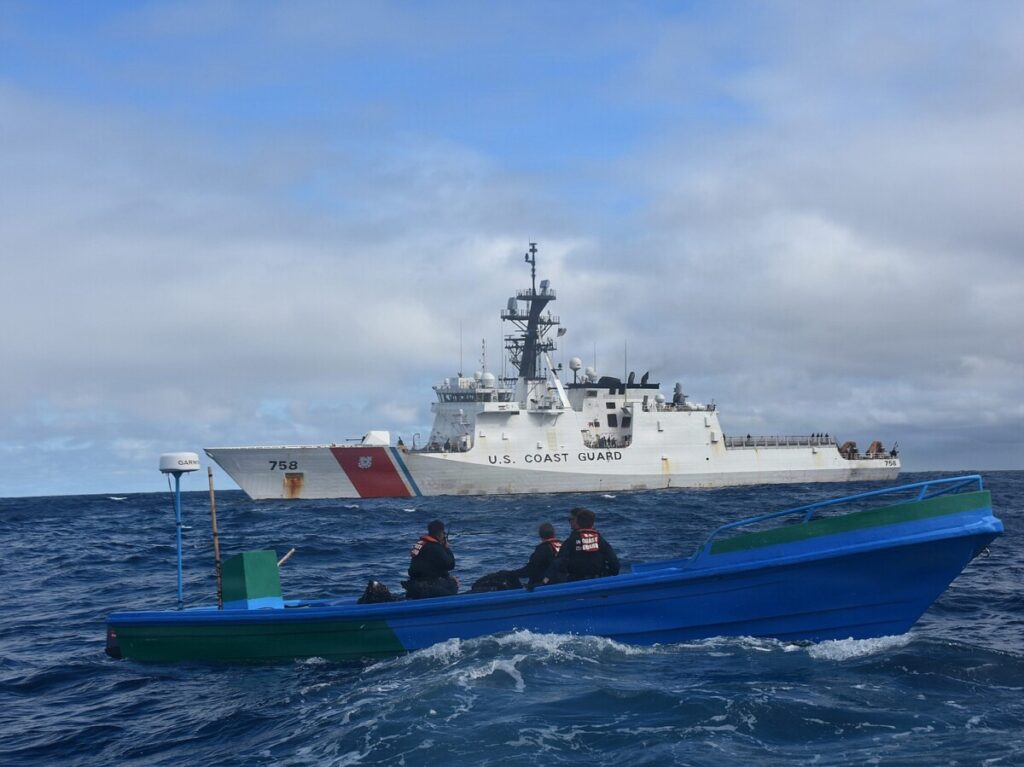
The Coast Guard says it’s seizing more drugs than ever and needs more ships, aircraft, and people to keep up
The U.S. Coast Guard is facing an unprecedented challenge as it grapples with record-breaking drug hauls from its interdiction efforts. Recent statistics reveal that the flow of narcotics entering the United States, particularly through the Eastern Pacific and Caribbean, has surged dramatically. In a notable operation, the Coast Guard cutter Stone offloaded over 49,000 pounds of cocaine, valued at more than $362 million, marking the largest single deployment seizure in the service’s history. This success is part of a larger trend, with the Coast Guard reporting significant increases in drug interceptions, driven by a combination of factors such as instability in drug-producing regions and the evolving tactics of traffickers.
In response to this escalating crisis, Coast Guard leadership is advocating for an expansion of their fleet and capabilities. Cmdr. Chris Guy, commanding officer of the South Tactical Law Enforcement Team, emphasized the urgent need for more ships and aircraft to effectively combat the rising tide of drug shipments. The Coast Guard’s strategic plan for 2028, recently approved by Homeland Security, aims to bolster the workforce, enhance shipbuilding efforts, and improve intelligence, surveillance, and reconnaissance (ISR) capabilities. This plan comes after years of underinvestment and operational challenges, as highlighted by the Government Accountability Office. The introduction of advanced technologies, such as uncrewed aerial systems, is also expected to revolutionize the Coast Guard’s ability to track and intercept drug traffickers.
As the Coast Guard ramps up its counter-narcotics operations, it is also navigating a complex landscape of interagency cooperation and evolving tactics. The current administration has adopted a more aggressive approach, exploring military options against drug traffickers, which has sparked debate about the implications of such strategies. Nevertheless, the Coast Guard remains committed to its lawful interdiction methods, with Vice Adm. Nathan Moore reporting that the service seized nearly 510,000 pounds of cocaine in fiscal year 2025 alone. With the majority of drug shipments occurring at sea, the Coast Guard’s efforts are crucial in mitigating the impact of narcotics on American communities. As the agency seeks to enhance its capabilities, the battle against drug trafficking continues to be a pressing national security concern.
https://www.youtube.com/watch?v=Da4SqKTXoLg
TK
US Coast Guard photo by Cutter Stone’s crew
The Coast Guard is seeing record-breaking numbers of drug hauls from its interdictions.
Leadership said the service wants more ships, capabilities, aircraft, and people to keep up with drug runners.
Intelligence, surveillance, and reconnaissance capabilities remain a top priority.
USCG HITRON JACKSONVILLE, Florida — The Coast Guard is pushing for more ships, aircraft, and personnel to keep
pace with the record flow of drugs heading toward the US.
Recent
drug offloads
from Coast Guard cutters rank among the largest in the service’s history, and leaders say
the flow of narcotics
through the eastern Pacific and Caribbean continues to rise.
“From a service perspective, I’d say we need assets,” Cmdr. Chris Guy, commanding officer of the Coast Guard’s South Tactical Law Enforcement Team, told Business Insider. “We need ships,” he added, and “the more assets we have, the more ability we have” to “stop the flow of dangerous drugs into the United States.”
Last week, the Coast Guard cutter Stone offloaded over 49,000 pounds of cocaine worth more than $362 million in Port Everglades, Florida, after a monthslong deployment in the eastern Pacific. The crew of the Stone, a Legends-class National Security cutter, completed 15 interdictions, including three in one night.
The offload was the largest amount of cocaine ever seized by a single Coast Guard ship on one deployment, but it’s just the latest in a string of
major busts
for the service.
More drugs, more intercepts
TK
US Coast Guard photo by Cutter Stone’s crew
The Coast Guard has long been the nation’s leading force for
intercepting drug shipments at sea
. But as traffickers grow in number and their hauls get larger, the service is pushing to expand its fleet, adopt new technology, and boost recruiting to keep pace.
The Coast Guard’s force design plan for 2028, approved by US Secretary of Homeland Security Kristi Noem earlier this year, aims to increase the workforce, acquire more ships and revamp the current fleet, add
more helicopters, and invest in better intelligence, surveillance, and reconnaissance (ISR) capabilities.
At the time the plan was unveiled, the acting Coast Guard commandant, Adm. Kevin Lunday, wrote that it came after “decades of underinvestment and severe readiness challenges.”
Some of those issues, including shipbuilding and maintenance delays and years of missed recruiting and retention goals, have been tracked by the Government Accountability Office, a government watchdog agency.
tk
US Coast Guard photo
Guy said the Coast Guard knows what capabilities it continues to need to meet that threat.
“We need
maritime patrol aircraft,
and we need persistent surveillance at sea so that we can find the drugs. We need vessels that have, whether it’s a Coast Guard cutter or whether that’s a US Navy ship, a Coast Guard boarding team attached to it. And then we need that end-game capability, whether that’s a fast boat with a marksman that’s in the back of the boat and the ability to shoot out engines, or a helicopter with a marksman that can stop the vessel,” he told Business Insider.
As the force design plan takes effect, it’s expected to have a significant impact on addressing major challenges, officials said, at a time when the service is intercepting more drugs than ever before.
A mix of factors is driving those record hauls, from instability in drug-producing countries in South America and shifting trafficking routes to improved surveillance on ships like the Stone and the service’s growing ability to adapt to new smuggling tactics.
In particular, the increasing use of uncrewed aerial systems, like
Shield AI’s MQ-35 V-BAT
, which was aboard the Stone on its recent deployment and helped the ship’s crew find vessels at night, is upping the Coast Guard’s ability to locate and track drug runners.
“The UAS is a game-changing capability for us,” Capt. Daniel Broadhurst, the commanding officer of the Coast Guard’s Helicopter Interdiction Tactical Squadron, told Business Insider. “The number one enabler of what we do, the key to success, is ISR.”
Getting more ISR capabilities for the cutters on patrol, be it better sensors onboard or drones that can be the eyes in the sky, has been a priority for the service.
Stopping drug runners
TK
US Coast Guard photo
The US is intensely focused right now on stopping drug shipments at sea, relying on cooperation across multiple federal agencies.
Under President Donald Trump, the tactics have now moved beyond regular, lawful Coast Guard interdictions. This year, the administration has pursued controversial
military strikes on alleged traffickers
in the Pacific and Caribbean, raising concerns as the president has used wartime rhetoric. Trump has said that the previous methods of interdicting these vessels have “been totally ineffective.”
Last week, Director of National Intelligence Tulsi Gabbard told reporters aboard the Stone that the president “has taken an all-hands approach” to stopping drug smugglers.
“He’s not choosing just one line of effort but recognizes the unique capabilities that we have across the United States government to get after that promise that he made to make America’s streets and communities safe again,” Gabbard said.
TK
US Coast Guard photo by Petty Officer 3rd Class Jessica Walker
Meanwhile, the
Coast Guard
continues to see substantial success in conducting its lawful, step-by-step interdiction process.
“When we say the Coast Guard is accelerating counter-narcotics operations, we mean it,” Vice Adm. Nathan Moore, commander of the Coast Guard’s Atlantic Area, said last week at the Stone’s offload. “In fiscal year 2025, we seized the most cocaine in the service’s history, nearly 510,000 pounds.”
The Coast Guard estimates 80% of interdictions of US-bound drugs occur at sea, the majority of which are based in the eastern Pacific. They’re coming to the US mostly on “go-fast boats,” as well as fishing vessels and semi-submersibles.
The increasing number of drugs seized, particularly in the past year, reflects “the intensity and the scale and the lethality of the drugs and the threats that we face,” Moore added.
Read the original article on
Business Insider


