Mark Cuban warns the AI wars could end like the search engine crash — with one winner and a lot of losers
In a recent episode of the “Pioneers of AI” podcast, billionaire investor Mark Cuban drew parallels between the current race in artificial intelligence (AI) and the explosive growth of search engines in the 1990s. Cuban warned that, much like the eventual dominance of Google in the search market, the AI landscape is likely to culminate in a winner-takes-all scenario. As major players such as Google, OpenAI, and Meta compete fiercely to develop the most powerful AI models, Cuban expressed concern over the potential financial repercussions of this arms race. He highlighted that these companies are pouring resources into an intense competition, which may lead to an unsustainable economic bubble that could burst, leaving many of them financially crippled.
Cuban emphasized that the current AI arms race mirrors the earlier tech boom, where numerous search engines vied for supremacy but ultimately led to a monopolistic market dominated by Google. He pointed out that while companies are investing heavily, the infrastructure needed to support these large AI models—particularly the costly data centers—raises questions about the long-term viability of such expenditures. Cuban cautioned that the pace of technological advancement might soon render today’s investments obsolete, creating opportunities for disruptive innovations that could upend the current hierarchy. He believes that the true breakthroughs in AI will not come from incremental improvements but rather from unexpected innovations that could redefine the landscape entirely.
Reflecting on his experiences during the dot-com boom, Cuban noted that the atmosphere of excitement and speculation surrounding AI today feels eerily familiar. He believes that the future of the AI industry will not solely depend on who builds the largest model, but rather on who can create the most intelligent and efficient solutions. As the competition intensifies, Cuban warns that history suggests many players may not survive the inevitable shakeout, reinforcing the notion that the current AI arms race is fraught with both opportunity and peril.
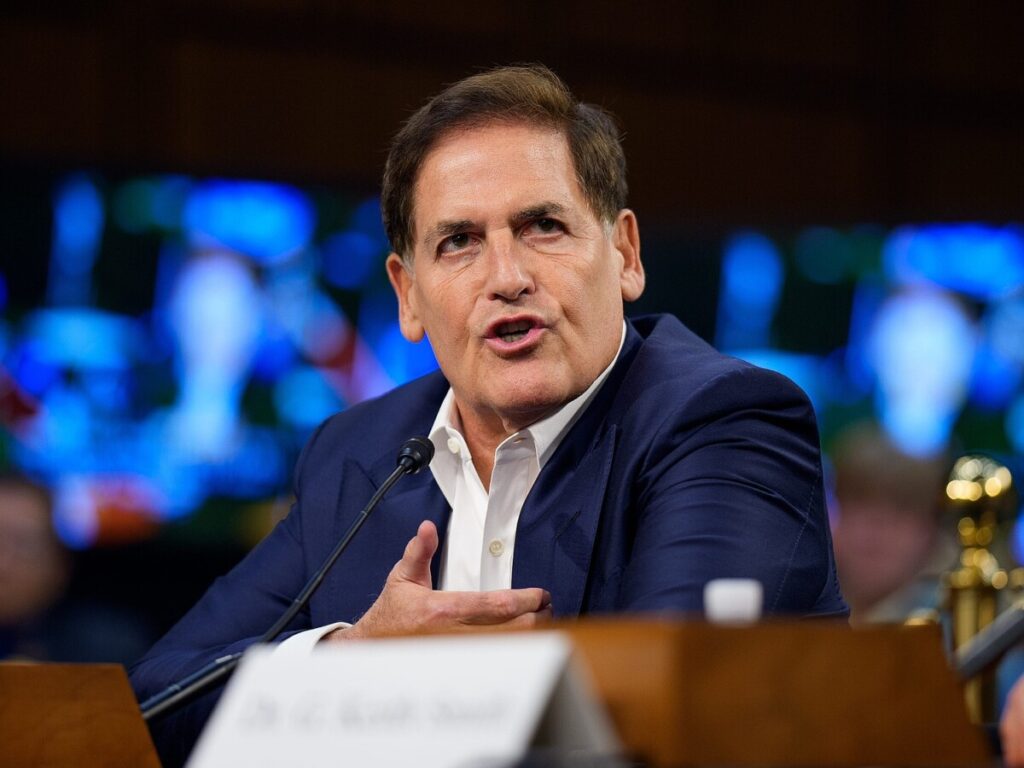
Mark Cuban says Big Tech’s AI arms race is barreling toward a Google-style shakeout.
Andrew Harnik/Getty Images
Mark Cuban says Big Tech’s AI race mirrors the 1990s engine search wars, and could end the same way.
He warns that major players, such as Google and OpenAI, are overspending in a winner-takes-all race.
The investor says an AI bubble could burst soon, leaving one giant standing and everyone else broke.
Mark Cuban says the race to build the world’s most powerful
AI model
looks eerily similar to the 1990s search-engine boom — and could end the same way: with one dominant player and everyone else left behind.
“You’ve got five, six, whatever it is, companies that are trying to create the ultimate foundational model that we all depend on,”
Cuban
said on the “Pioneers of AI” podcast.
“It’s almost like in the ’90s when all the search engines were competing pre-Google… There were all these different [ones] and you didn’t know if it was going to be a winner-take-all, or a top five.”
“Now, we know with search engines it’s
Google
, and then there’s Bing, as, like, 1 or 2% and DuckDuckGo has got a half a percent. So it’s effectively a winner-take-all,” he added. “And that’s going to be really scary because there will come a time where they have to live up to the economics.”
Inside the AI arms race
Cuban said the major AI players — including Google,
Meta
, and OpenAI — are “spending everything, consuming every resource that they can just in case it’s winner take all.”
But he warned that this race to build the most powerful model could create its
own kind of bubble
— a view shared to varying extents by many tech and business leaders, including Sam Altman, Bill Gates, and Ray Dalio.
“They may be overspending,” he said. “And if they overspend or get too caught up, the bubble is in the competition between all those models because that could pop just like that with any new technology.”
The
billionaire investor
said he’s also concerned about the infrastructure behind AI — particularly the vast and expensive data centers now being built to power large models.
“I just can’t imagine over a 10-year period that we aren’t going to improve the technology enough that if you overspend on today’s technology,” he said. “It just doesn’t feel right to me.”
Cuban believes the real disruption won’t come from incremental improvements but from something “incredible” that no one sees coming.
“Somebody’s going to come up with some incredible shit, right? If I knew what it was, I’d do it,” he said.
He’s seen this movie before
Cuban has lived through this kind of moment before. The former Shark Tank star made his fortune during the
dot-com boom
and said he recognizes the same combination of excitement, hype, and overspending now playing out in AI.
“They anticipate for at least another decade spending every penny they have,” he said of the major model developers.
“I mean, if that’s not ripe for disruption to come up with better ways, I don’t know what is.”
For Cuban, the outcome of the AI wars will depend not just on who builds the biggest model, but on who builds the smartest one.
And, he warned, history suggests most players won’t survive long enough to find out.
Read the original article on
Business Insider


