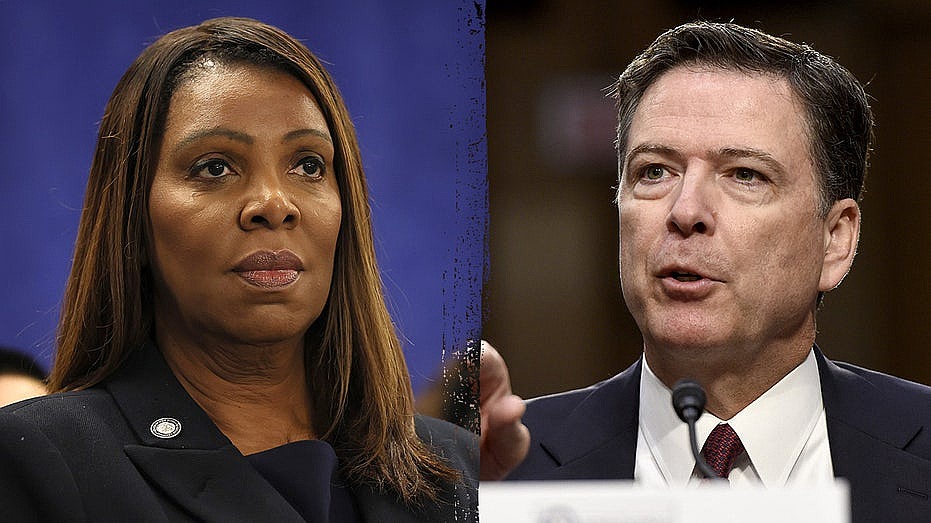
Federal judge dismisses James Comey, Letitia James indictments
In a significant legal development, a federal judge has dismissed indictments against former FBI Director James Comey and New York Attorney General Letitia James, citing the illegitimacy of the charges brought by an unqualified U.S. attorney. Judge Cameron Currie found that Lindsey Halligan, who was appointed as the interim U.S. attorney for the Eastern District of Virginia, lacked the authority to present the cases against Comey and James. Currie’s ruling, issued on Monday, dismissed the false statements charges against Comey and bank fraud charges against James without prejudice, meaning that the Department of Justice (DOJ) could potentially refile the charges under a different U.S. attorney. The judge emphasized that Halligan’s appointment was invalid, stating, “I conclude that the Attorney General’s attempt to install Ms. Halligan as Interim U.S. Attorney… was invalid.”
The implications of this ruling are profound, particularly as it comes amid ongoing tensions surrounding the DOJ’s handling of cases involving prominent political figures. Halligan, who had no prior prosecutorial experience, was thrust into a high-stakes role shortly after President Trump ousted the previous interim U.S. attorney. The judge’s skepticism about Halligan’s qualifications was evident during the hearing, where he questioned the validity of her authority to bring charges without the endorsement of Virginia judges. This situation mirrors broader issues within the Trump administration, where attempts to bypass Senate confirmations for U.S. attorney appointments have faced scrutiny. The DOJ, backed by White House press secretary Karoline Leavitt, has indicated plans to appeal the ruling, asserting Halligan’s qualifications and legality of her appointment.
Comey, who has been a significant figure in the political landscape, expressed gratitude for the dismissal of the charges, framing the prosecution as a reflection of the DOJ’s politicization under Trump. He described the case against him as based on “malevolence and incompetence.” Meanwhile, Leavitt cautioned Comey against celebrating too soon, highlighting the possibility of the DOJ’s appeal changing the outcome. This ruling not only affects Comey and James but also raises questions about the broader legal and political strategies employed by the Trump administration in pursuing indictments against political adversaries. As the situation develops, the legal community and political observers will be closely watching how the DOJ responds and whether these charges will resurface under different circumstances.
https://www.youtube.com/watch?v=FtGAIqKCReM
A federal judge threw out the indictments against James Comey and Letitia James on Monday, finding they were illegitimate because they were brought by an unqualified U.S. attorney.
Judge Cameron Currie dismissed the false statements charges against Comey and bank fraud charges against James without prejudice, meaning the charges could be brought again.
“I conclude that the Attorney General’s attempt to install Ms. [Lindsey] Halligan as Interim U.S. Attorney for the Eastern District of Virginia was invalid and that Ms. Halligan has been unlawfully serving in that role since September 22, 2025,” Currie wrote.
The
Department of Justice
could appeal the decision or attempt to bring the charges under a different U.S. attorney. White House press secretary Karoline Leavitt told Fox News’ Martha MacCaullum the DOJ plans to appeal.
“We believe the attorney in this case, Lindsey Halligan, is not only extremely qualified for this position but she was in fact legally appointed,” Leavitt said. “And I know the Department of Justice will be appealing this in very short order.”
COMEY DENIES CHARGES, DECLARES ‘I AM NOT AFRAID’
The move to scrap two of the highest-profile criminal cases the DOJ has leveled against President Donald Trump’s political foes comes after the judge voiced skepticism at a recent
hearing
in Virginia about Halligan’s ability to bring the charges as interim U.S. attorney.
Currie, a Clinton appointee based in
South Carolina
, was brought in from out of state to preside over proceedings about the question of Halligan’s authority because it presented a conflict for the Virginia judges. Comey’s and James’ challenges to Halligan’s appointment were consolidated because of their similarity.
Halligan acted alone in presenting charges to the grand juries shortly after Trump ousted the prior interim U.S. attorney, Erik Siebert, and urged Attorney General Pam Bondi to replace him with Halligan, a former White House aide and insurance lawyer. Bondi complied, but Currie found the interim U.S. attorney term had already expired under Siebert and that the Virginia judges were now responsible for appointing a temporary U.S. attorney to serve until Trump could get one confirmed in the Senate.
Trump has been unable to persuade the Senate to confirm several U.S. attorneys in blue states, leading the president and Bondi to sidestep the upper chamber at times to install Trump’s preferred appointees, such as Halligan. Currie’s decision comes after federal judges also disqualified appointees in California, New Jersey and Nevada.
Trump had called on Bondi to act quickly to indict Comey and others, a call that came as the statutes of limitations in Comey’s case was about to lapse. Halligan, who had no prior prosecutorial experience when she took over one of the most high-profile federal court districts in the country, delivered for Trump within days. She was the lone lawyer to present the cases to the grand juries and sign the indictments. No prosecutors from Virginia joined in on either of the cases.
The DOJ has since put its full backing behind Halligan.
Bondi
attempted to ratify and then re-ratify the indictments after the fact, a move Currie suggested would not have been necessary if Halligan were a valid appointee.
FEDERAL JUDGE VOICES DOUBT ABOUT TRUMP APPOINTEE’S ABILITY TO CHARGE COMEY, JAMES
DOJ attorney Henry Whitaker argued during the hearing that the motions to dismiss Comey’s and James’ cases involved “at best a paperwork error,” unworthy of dismissing charges over.
James’ attorney Abbe Lowell said Halligan was a “private person” when she entered the grand jury rooms and completely unauthorized to be in them. Currie agreed, saying that retroactively validating Halligan and her actions would be unheard of.
“The implications of a contrary conclusion are extraordinary,” Currie wrote. “It would mean the Government could send any private citizen off the street — attorney or not — into the grand jury room to secure an indictment so long as the Attorney General gives her approval after the fact. That cannot be the law.”
Comey praised the judge’s decision in a social media video.
“I am grateful the Court ended the case against me, which was a prosecution based on malevolence and incompetence, and a reflection of what the Justice Department has become under Donald Trump, which is heartbreaking,” Comey said.
Leavitt told Fox News that “maybe James Comey should pump the brakes on his victory lap” in light of the DOJ’s anticipated appeal.