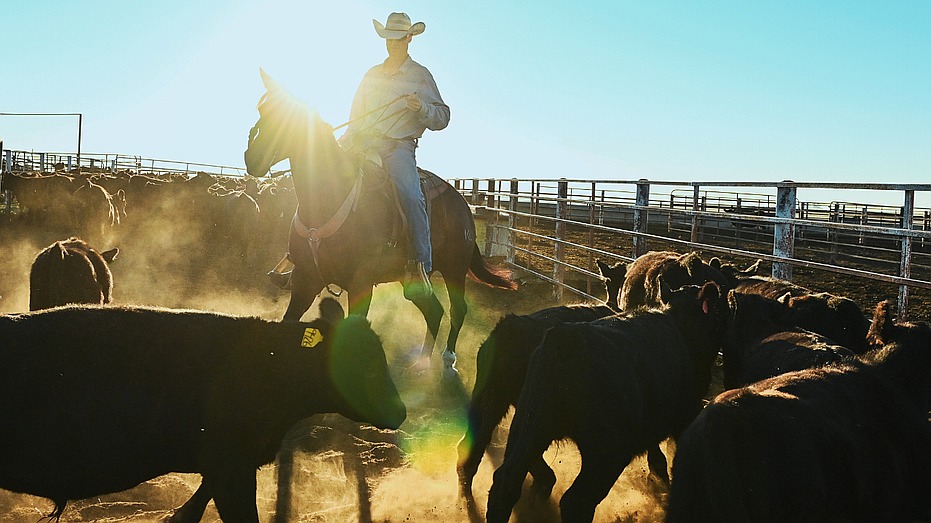
America’s smallest cattle herd in 70 years means rebuilding will take years and beef prices could stay high
America’s cattle ranchers are grappling with a historic crisis as the nation’s cattle herd has shrunk to its smallest size in 70 years. This alarming trend is primarily attributed to years of severe drought, escalating costs, and an aging workforce in the ranching sector. Eric Belasco, head of the agricultural economics department at Montana State University, emphasizes that the persistent drought has devastated grasslands across the West and Plains, leaving ranchers struggling to provide adequate feed and water for their herds. Consequently, many ranchers have been forced to sell off cattle prematurely, including breeding stock necessary for future generations, creating a significant barrier to herd recovery. Belasco warns that this situation isn’t something that can be rectified quickly; without a substantial rebuilding of cattle inventories, consumers can expect beef prices to remain high.
The implications of this crisis are felt not only on ranches but also at grocery stores nationwide. The average retail price of beef has surged from approximately $8.51 per pound in August 2024 to $9.85 per pound a year later, marking a significant 16% increase. While ranchers are receiving slightly higher prices for their cattle, most of the price hikes occur after the cattle leave the ranch, with processing and distribution costs largely benefiting the industry’s major meatpackers, such as Tyson Foods and JBS. Despite these rising costs, consumer demand for beef remains robust, with sales reaching $44.3 billion over the past year—a 12% increase that outpaces other meats like chicken and pork. Glynn Tonsor, an agricultural economist at Kansas State University, notes that American consumers are choosing to continue purchasing beef, thus driving prices higher regardless of supply challenges. This confluence of factors underscores the urgent need for a long-term strategy to address the challenges facing America’s ranchers and stabilize the beef market.
https://www.youtube.com/watch?v=DGXIjGbKbuM
America’s ranchers are facing their smallest cattle herd in 70 years.
Years of punishing drought, rising costs and an aging ranching workforce have thinned herds across the country. Ranchers and agricultural economists alike say rebuilding will take years and
beef prices
aren’t likely to ease anytime soon.
“The biggest thing has been drought,” said Eric Belasco, head of the agricultural economics department at Montana State University.
BEEF PRICES ARE CLOSE TO RECORD HIGHS — BUT AMERICANS AREN’T CUTTING BACK
He said years of dry weather have wiped out grasslands across the West and Plains, leaving ranchers without enough feed or water to sustain their herds. Many have been forced to sell cattle early, even the cows needed to produce the next generation of calves, making it hard to rebuild.
“It’s not going to be a quick fix, you’re not going to solve it overnight,” Belasco told Fox News Digital.
Belasco said the aftereffects of years of drought are still being felt and until ranchers can rebuild their herds, consumers will keep paying the price.
“The primary reason you see prices so high is because we haven’t seen any kind of inventory rebuilding,” he said. “Until you see that rebuild, you probably won’t see prices coming back down again.”
That slow rebuilding is a challenge for the cattle industry, according to Derrell Peel, a professor of agricultural economics at Oklahoma State University.
“The fact of the matter is there’s really nothing anybody can do to change this very quickly,” Peel said. “We’re in a tight supply situation that took several years to develop, and it’ll take several years to get out of it.”
Peel, who specializes in livestock marketing, said there’s no quick way to ease pressure on beef prices, since it takes roughly two years to bring animals to market and several years to rebuild herds.
TRUMP’S BEEF IMPORT PLAN IGNORES KEY ISSUE SQUEEZING AMERICAN CATTLE RANCHERS
Even as ranchers wait for herds to recover, parched conditions are working against them, turning pastures to dust and feed into a luxury.
Research from the Kansas City Federal Reserve found that with each step up in drought severity, cattle-producing regions see about a 12% drop in hay production, a 5% rise in hay prices, a 1% reduction in herd size and a 4% decrease in farm income.
To cope, many ranchers are shrinking their herds. A 2022 Farm Bureau survey found that about two in three ranchers have sold animals off, leaving them with roughly one-third fewer cattle than before.
Few people see the challenges of ranching more clearly than Cole Bolton, owner of K&C Cattle Company, whose pastures stretch along the soft edge of the Texas Hill Country.
“I think it’s going to take a while to fix this crisis that we’re in with the cattle shortage. My message to consumers is simple, folks, be patient. We’ve got to build back our herds,” Bolton told Fox News Digital.
Bolton said the region, known for its red dirt and family-run ranches, has gone nearly three months without rain. While showers were finally arriving, he noted that the cattle industry has weathered one setback after another, from market turmoil to extreme conditions, over the past five years.
The growing strain highlights how persistent drought is reshaping the ranching industry and tightening the nation’s livestock supply.
That pressure is being felt not just on ranches but also at the
grocery store
.
According to USDA data, the average retail price of beef rose from about $8.51 a pound in August 2024 to $9.85 a pound a year later, a gain of roughly 16%.
The “5-market steer price” represents what ranchers earn for live cattle before they’re processed into meat. The “farm-to-retail” spread reflects everything that happens after that – the costs and profits tied to slaughtering, processing, packaging, shipping and selling beef in stores.
Much of that work — and the profits it generates — are concentrated among the industry’s “big four”
meatpackers
: Tyson Foods, JBS, Cargill and National Beef.
Together, these data points show that while ranchers are earning slightly more for their cattle than they were a few years ago, the biggest
price
increases are happening well after the animals leave the pasture.
Despite the markups between the ranch and the grocery store, demand hasn’t wavered. Americans are still buying beef more than ever.
Beef remains the dominant player in the fresh-meat aisle, with $44.3 billion in sales over the past year, a 12% increase that outpaced chicken, pork and turkey, according to Beef Research, a contractor to the National Cattlemen’s Beef Association.
Glynn Tonsor, a professor of agricultural economics at Kansas State University, told Fox News Digital that strong consumer demand will continue to drive
beef prices
higher.
“There’s nothing that forces me or you or anybody else when we go into the grocery store to pay more for beef. People are choosing to,” he said. “The consumer desire for beef is strong and, regardless of the supply-side situation, that has the effect of pulling prices up.”