Editorial: Trump delivering on Education Dept. promise
The Trump administration is taking significant steps toward diminishing the role of the Department of Education, a move that has been anticipated by many conservatives for decades. According to a recent report from The Washington Post, various grant programs within the department will be reassigned to other Cabinet agencies, including the Office of Elementary and Secondary Education and the Office of Postsecondary Education, which will now fall under the Labor Department. Additionally, the International Foreign Language Education program will be transferred to the State Department. While it would require an act of Congress to completely abolish the Department of Education, the administration is leveraging its authority to reorganize and downsize its functions, reflecting a long-standing Republican desire to reduce federal involvement in education.
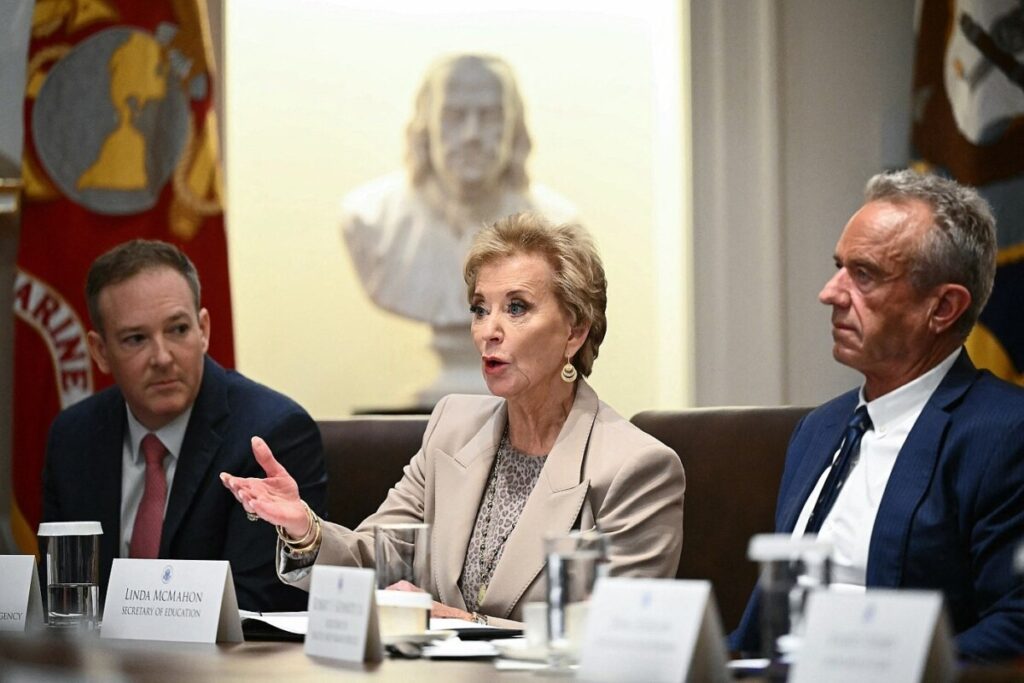
The Department of Education was established in 1979 by President Jimmy Carter, primarily to appease teachers’ unions. However, critics argue that it has failed to make meaningful improvements in American public education, despite a dramatic increase in its budget from $14 billion at its inception to an anticipated $268 billion for fiscal year 2024. As U.S. test scores continue to lag behind those of other countries and college costs soar, leaving many graduates burdened by debt, the call for reform has grown louder. Education Secretary Linda McMahon emphasized that the goal of this reorganization is to empower state and local education officials by reducing the federal government’s control and allowing more discretion in how educational funds are utilized.
Defenders of the Department of Education often invoke fears that dismantling the agency would jeopardize essential programs in local schools, yet McMahon counters that this shift merely ends a centralized bureaucracy that has historically micromanaged education at the state level. She reassures that funding for low-income students and students with disabilities, which predates the department’s existence, will remain intact, as will the commitment to protecting students’ civil rights. Currently, federal contributions account for only about 8.5% of local education funding, suggesting that while the federal government may not provide substantial financial support, it exerts significant control through mandates that can stifle innovation and reform. As Trump fulfills a campaign promise by advancing this agenda, he and McMahon are encouraged to rally Republican support in Congress to ensure the completion of these reforms, potentially reshaping the landscape of American education for years to come.
https://www.youtube.com/watch?v=tNQ3CxPzu1I
The Trump administration is moving forward with efforts to neuter the Department of Education. The move couldn’t come fast enough.
The Washington Post reported this week that various grant programs within the department will be moved under other Cabinet agencies. This includes the Office of Elementary and Secondary Education and the Office of Postsecondary Education, which will become part of the Labor Department. International Foreign Language Education will become part of the State Department.
It would take an act of Congress to eliminate the Education Department outright, but the White House does have leeway to downsize and reorganize its functions.
President Jimmy Carter created the department in 1979 as a sop to the teachers unions. Since then, it has done virtually nothing to improve the state of American public education while its budget has jumped from an original $14 billion to $268 billion in fiscal 2024. Meanwhile, U.S. test scores lag and the price of college has soared, leaving many graduates buried in debt.
Republicans from Ronald Reagan on have repeatedly vowed to dismantle the agency, but Trump is the first to follow through.
Education Secretary Linda McMahon noted that the goal is to give state and local education officials more discretion rather than to shackle them with the edicts that often accompany federal funding.
“The shutdown proved an argument that conservatives have been making for 45 years,” McMahon wrote in a recent op-ed for USA Today. “The U.S. Department of Education is mostly a pass-through for funds that are best managed by the states.”
Defenders of the department scare parents by claiming reforms will mean the end of vital programs at their local schools. Nonsense. “It simply means the end of a centralized bureaucracy micromanaging what should be a state-led responsibility,” McMahon explained.
“Funding for low-income students and students with disabilities predates the Education Department and will continue indefinitely. Protecting students’ civil rights is work that will never go away.”
Indeed, the federal government supplies only about 8.5% of local education spending. “But the feds need relatively little money to exert power,” writes Neal McCluskey of the Cato Institute. And that power burdens school districts with edicts and mandates that often discourage reform and experimentation while doing little to improve student outcomes.
Eliminating the Department of Education was one of President Donald Trump’s campaign promises, and he deserves credit for moving forward where other GOP leaders got cold feet. Trump and McMahon should next put heat on Republicans in Congress to finish the job.
Las Vegas Review-Journal/Tribune News Service
Editorial cartoon by Steve Kelley (Creators Syndicate)


