Russia’s new jet-powered strikes are testing Ukraine, but few of these weapons are actually in play, officials say
In a recent escalation of its military tactics, Russia has begun deploying jet-powered drones and guided glide bombs in its ongoing conflict with Ukraine. These advanced weaponry systems, which include the Geran-3 drone, represent a significant evolution in Russia’s approach to aerial warfare. The Geran-3, modeled after Iran’s Shahed-238, boasts a turbojet engine that allows it to reach speeds of up to 230 miles per hour, making it more challenging for Ukrainian air defenses to intercept. Ukrainian officials, including Lt. Col. Yurii Myronenko, have noted that while these weapons are currently being used in limited numbers, they appear to be part of a broader strategy to test and evaluate Ukraine’s defensive capabilities. Myronenko suggested that Russia may be assessing the feasibility of mass production based on these initial deployments.
Despite the introduction of these jet-powered systems, Ukrainian officials believe that Russia is struggling to produce them in large quantities, with Mykhailo Fedorov, Ukraine’s first deputy prime minister, indicating that the current usage remains relatively small. The Ukrainian military has confirmed that while there have been some large-scale attacks involving these new drones, they do not yet constitute a “massive use.” Moreover, Russian glide bombs, which are designed to be launched from aircraft at standoff ranges, have also been employed sporadically, complicating the air defense landscape for Ukraine. These glide bombs, equipped with precision guidance kits, pose a significant threat due to their small radar signatures and non-ballistic flight paths, which make interception increasingly difficult.
The shift towards jet-powered munitions signifies a strategic attempt by Russia to impose greater costs on Ukrainian air defenses. According to Patrycja Bazylczyk from the Center for Strategic and International Studies, the increased speed of these drones reduces the reaction time for defenders, presenting a formidable challenge. However, the trade-offs in weapon design are evident; while jet-powered drones can achieve higher speeds, they are also more expensive and may have shorter operational ranges compared to their propeller-driven counterparts. As the conflict continues, Ukraine is exploring the development of its own jet-powered interceptor drones to counter this emerging threat, highlighting the ongoing arms race between the two nations. The impact of these new weapons on the battlefield remains uncertain, but their introduction marks a notable shift in the dynamics of aerial warfare in the region.
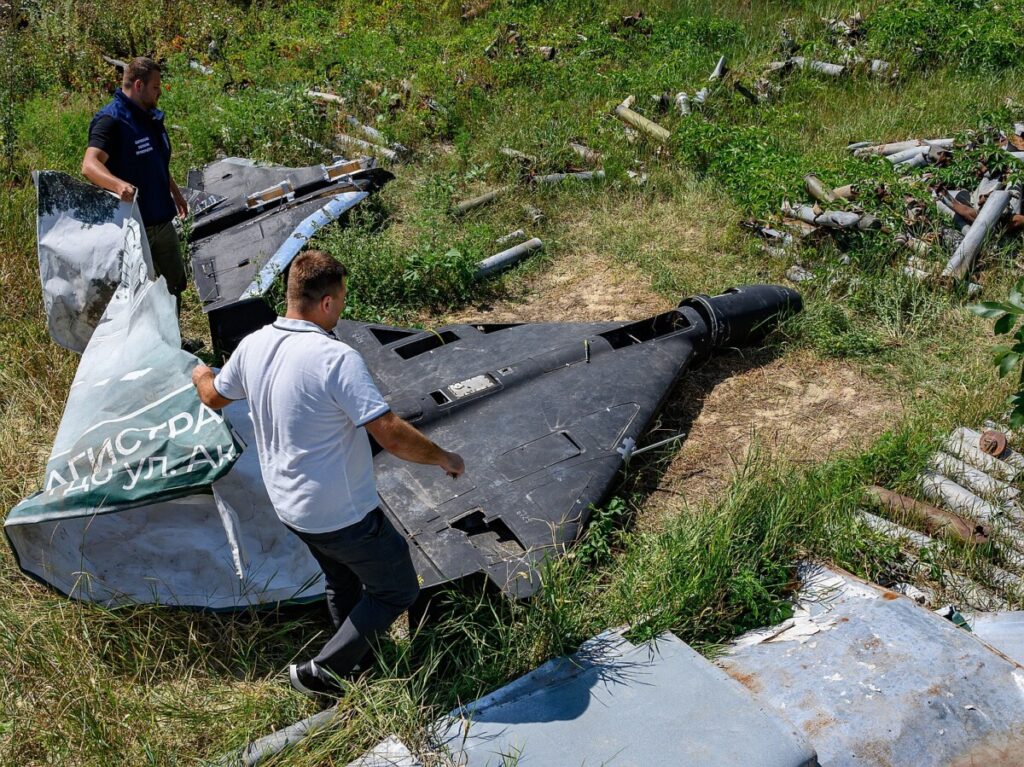
Russia has been using new weapons powered by jet engines to strike Ukraine.
Scott Peterson/Getty Images
Russia has been launching jet-powered drones and guided bombs in attacks against Ukraine.
Senior Ukrainian officials said that the weapons are being used to test Kyiv, with changing tactics.
While they pose a threat to air defenses, they are not being employed in large numbers.
Russia is using high-speed drones and guided glide bombs powered by jet engines to strike Ukraine, leaving defenders with very little time to react.
Senior Ukrainian officials told Business Insider that Russian tactics appear to be evolving with the introduction of these
jet-powered weapons
, testing Kyiv’s response, but for now, they are being used in limited numbers.
“I believe the enemy is testing our defenses and our countermeasures against these new systems to assess whether mass production is worth pursuing,” said Lt. Col. Yurii Myronenko, Ukraine’s deputy minister of defense for innovation.
The
Geran-3
, a Russian drone modeled after
Iran’s Shahed-238
, first showed up in Ukraine early this year and has been involved in attacks over the past few months.
The long-range drone is equipped with a turbojet engine, allowing it to travel at speeds of up to 230 miles per hour. This drone is a more advanced version of the
propeller-driven Geran-2
, although both are designed to carry explosive warheads, dive at their targets, and detonate on impact.
Myronenko, a former drone unit commander, said that the jet-powered Shaheds have been used alongside propeller-driven strike and
decoy drones
in multiple large-scale Russian attacks this fall.
“For now, the enemy is employing them in limited numbers,” he said, though he noted that one recent attack featured only jet-powered Shaheds — as many as 10 of them — and no propeller-driven drones at all, pointing to a potential evolution in Russian attacks.
Russia frequently uses Shahed-type drones to attack Ukraine.
Ukrainian President Volodymyr Zelenskyy/Screengrab via X
The Ukrainian military’s communications department told Business Insider that several
large-scale Russian attacks
have featured jet-powered drones, but only very few of them, explaining that what the country is seeing right now “cannot be called massive use.”
Mykhailo Fedorov, the first deputy prime minister of Ukraine and minister of digital transformation, suggested that Russia is struggling to mass-produce its jet-powered drones.
“It’s still a small-enough number,” he said, speaking through a translator. “They’re iterating, they’re testing, they’re changing their tactics.”
Russia’s defense ministry and its US embassy did not immediately respond to a request for comment on its jet-powered weapons and their use in Ukraine.
Glide bombs with more range
The Ukrainian military said that Russia is also periodically using jet-powered guided
glide bombs
against Ukraine, but not in large numbers, similar to the Geran-3 drones.
“Isolated launches of guided glide bombs with an increased flight range are observed in various areas of the front,” the military said, without getting into specifics.
Glide bombs are dumb bombs equipped with special kits that turn them into precision-guided munitions. These weapons can be launched from Russian jets at a standoff range beyond the reach of
Ukraine’s air defenses
. They have small radar signatures, non-ballistic trajectories, and short flight times, making them notoriously difficult to intercept.
Russian glide bombs are difficult for Ukrainian air defenses to intercept.
Russian Defense Ministry Press Service via AP
Reports began to emerge last month that Russia had been using glide bombs with turbojet engines to attack Ukraine. Myronenko described the situation as “complicated.”
“This significantly expands the geography of enemy attacks,” he explained. “We do have countermeasures against these bombs, but they do not always result in interception, and the longer the range, the greater the threat to civilians.”
The Ukrainian military said some Russian attacks have been intercepted by antiaircraft weapons, including missile systems, as well as
jets and helicopters
.
Electronic warfare
also works in some cases, though Ukraine’s HUR military intelligence agency said in September that the Geran-3 was built with
jamming-resistant technology
.
Fedorov said that Ukraine is looking into jet-powered
interceptor drones
to respond to the Geran-3 threat, adding that this technology is in the research and development phase. Ukraine has heavily invested in interceptor drones as a cost-effective means of defending against propeller-driven strike drones.
The tradeoffs of weapons design
Russia’s growing use of jet-powered weapons is part of a “strategy to impose costs on Ukrainian air defenses,” said Patrycja Bazylczyk, an associate director and associate fellow with the Missile Defense Project at the Center for Strategic and International Studies.
Propeller-driven drones can be destroyed by
truck-mounted machine guns
, as mobile Ukrainian air defense units have been doing for years, but these jet-powered drones, with their increased speed, make targeting and interception more difficult, she told Business Insider.
The aftermath of a Russian glide bomb and drone attack in Dobropillia, Ukraine.
Scott Peterson/Getty Images
Meanwhile, the jet-powered glide bombs, with their extended range, allow Russian planes to strike from greater distances well beyond the reach of Ukraine’s air defenses, which are
already struggling to counter glide bomb threats
.
Jet-powered drones and bombs, however, aren’t without their issues.
“Weapons design involves many tradeoffs,” Bazylczyk explained. “Opting for a jet engine prioritizes speed, reducing defender reaction times. But it’ll cost you: these jet-powered Shaheds are pricier and have shorter range than propeller-powered counterparts.”
Myronenko said Russia might be constrained in its ability to purchase the
jet engines
, which are more expensive and less readily available. He said Moscow’s ability to acquire the technology depends on the willingness of other countries to supply it.
While Ukraine has confirmed an overall uptick in the use of Russian jet-powered weapons, their impact on the battlefield and beyond remains to be seen, especially if the warhead size remains the same.
“Slapping a jet engine on a Shahed does not really change the weapon’s effect,” Bazylczyk said. “Just because you strap a motor to a bicycle doesn’t make it a Harley—it’s just an electric bike.”
Read the original article on
Business Insider


