US reportedly to launch new phase of operations against Venezuela – US politics live
In a significant escalation of tensions between the United States and Venezuela, the Trump administration has designated Venezuelan President Nicolás Maduro as a member of a foreign terrorist organization. This designation comes amid increasing military presence and operations by U.S. forces in the region, raising concerns about potential military intervention. Maduro, facing mounting pressure from both domestic and international fronts, has vehemently accused the U.S. of attempting to “bomb and invade” Venezuela, echoing fears of a renewed military conflict reminiscent of the U.S. involvement in Afghanistan. Just days before the U.S. announcement, Maduro cautioned President Trump against leading the nation into a protracted conflict, suggesting that such an endeavor would only result in further instability and suffering for the Venezuelan people.
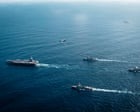
The backdrop to this diplomatic crisis includes the recent deployment of the USS Gerald R. Ford, the world’s largest aircraft carrier, to the Caribbean, which Maduro interpreted as a direct threat. Over the past two months, U.S. forces have intensified their operations, reportedly conducting lethal strikes on civilian vessels they allege are connected to drug trafficking. These pre-emptive strikes have resulted in over 80 fatalities, raising serious ethical questions about the U.S. military’s engagement in the region. The Trump administration has justified these actions under the guise of combating “narco-terrorism,” a term that has increasingly been applied to individuals and groups linked to drug trafficking in Latin America. As calls for expanded military action to unseat Maduro grow among U.S. hawks, the situation remains precarious, with the potential for further escalation looming large.
This evolving crisis highlights the complex interplay of international relations, domestic governance, and military strategy, as the U.S. grapples with the implications of its foreign policy decisions in Latin America. The situation not only affects Venezuela but also has broader ramifications for regional stability and U.S. relations with other Latin American nations. As the Trump administration weighs its options, the world watches closely, aware that any misstep could lead to a significant humanitarian and geopolitical crisis.
https://www.youtube.com/watch?v=9gZFtsMnZ1E
Trump administration labels Maduro as member of foreign terrorist organization and could impose fresh sanctions on country
Venezuela’s authoritarian president,
Nicolás Maduro
, has accused the US of seeking to “bomb and invade” the South American country.
Just 10 days ago, he warned Trump to not lead the US into an Afghanistan-style “forever war”. The comments came after the US Navy’s flagship aircraft carrier, the USS Gerald R Ford, the world’s largest,
arrived in the region
.
For the last two months, US
forces have amassed
outside Venezuela and carried out a series of
lethal strikes
on
civilian boats
. The Trump White House has ordered these actions in the name of fighting “
narco-terrorists
” – a label apparently applicable to anyone suspected of participating in drug trafficking near Latin American coastlines.
More than 80 people
have already been killed in these pre-emptive strikes, and war hawks are calling for expanded military action to depose the Venezuelan president, Nicolás Maduro.
Continue reading…


