Nvidia sales are ‘off the charts,’ but Google, Amazon and others now make their own custom AI chips
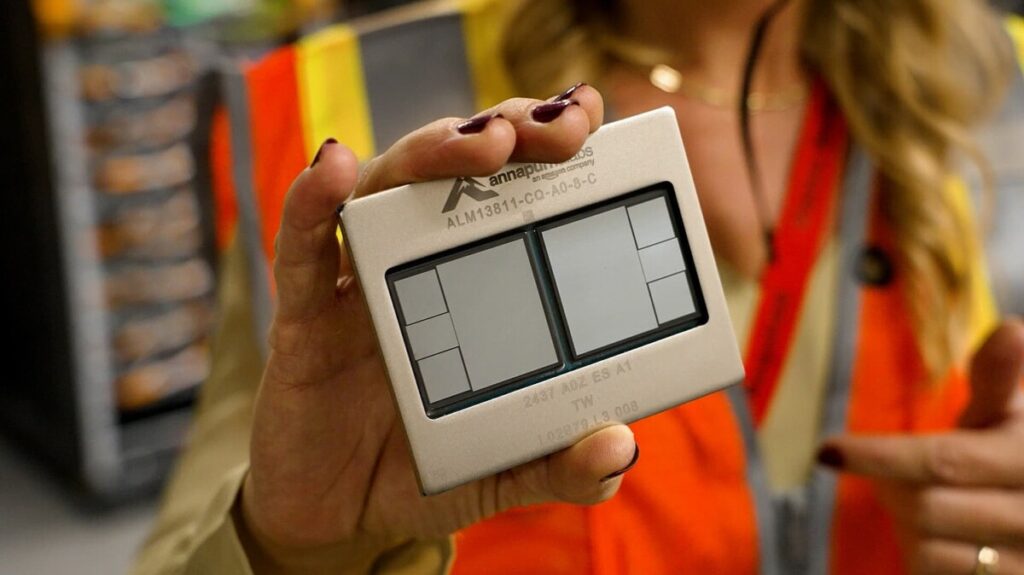
Nvidia has long reigned supreme in the AI chip market, thanks to its powerful GPUs that have become the backbone of many machine learning and artificial intelligence applications. However, a notable shift is occurring as major tech companies like Google, Amazon, Meta, Microsoft, and OpenAI are increasingly investing in custom Application-Specific Integrated Circuits (ASICs). These custom chips are designed specifically for particular tasks, allowing companies to optimize performance and efficiency for their unique AI workloads. This trend signifies a growing desire among tech giants to reduce reliance on Nvidia’s GPUs and enhance their competitive edge in the rapidly evolving AI landscape.
The move towards custom ASICs is driven by the need for specialized hardware that can handle the demands of advanced AI models. For instance, Google’s Tensor Processing Units (TPUs) have been tailored for deep learning tasks, significantly boosting the efficiency of their machine learning applications. Similarly, Amazon has developed its own Inferentia chips to optimize inference workloads for its cloud services. By creating these customized solutions, companies can achieve better performance, lower power consumption, and reduced latency, all of which are crucial for scaling AI operations. This shift not only reflects a strategic pivot to enhance in-house capabilities but also illustrates the broader trend of vertical integration in the tech industry, as companies seek to control more of their technology stack.
As the competition heats up, Nvidia is not sitting idle. The company continues to innovate, rolling out new architectures and products to maintain its leadership position. However, the rise of custom ASICs poses a significant challenge, as these tailored solutions can provide a level of efficiency and performance that general-purpose GPUs may struggle to match. This evolving landscape suggests that while Nvidia remains a dominant player, the increasing capabilities of custom chips from tech giants could reshape the future of AI hardware, leading to a more fragmented market where specialized solutions can coexist alongside traditional GPU offerings. As this battle for supremacy in AI chips unfolds, it will be fascinating to see how these developments impact the broader AI ecosystem and the innovations that emerge from it.
https://www.youtube.com/watch?v=RBmOgQi4Fr0
Nvidia is king in AI chips, but custom ASICs are gaining ground with Google, Amazon, Meta, Microsoft and OpenAI now making their own.