The Last Device You’ll Ever Need
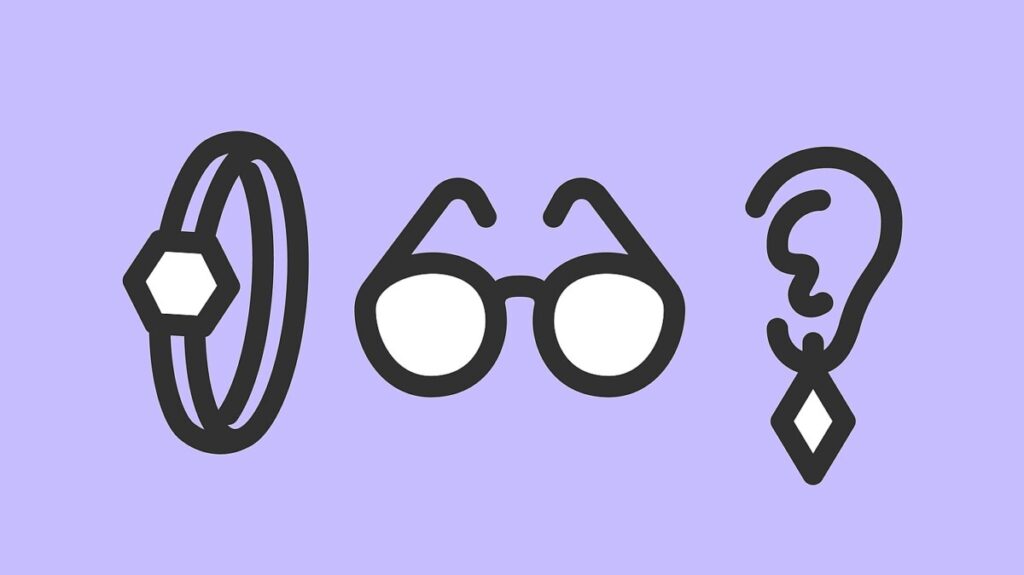
In a recent edition of *The Atlantic Daily*, the spotlight is on Meta’s latest innovation: smart glasses that aim to redefine how we interact with technology in our daily lives. The experience begins with music from The Weeknd as the user dons the glasses in a vibrant, skateshop-themed pop-up store in New York City. These glasses, paired with a unique wristband called the Neural Band, leverage AI to offer a range of functionalities, from navigation assistance to real-time transcription of conversations. However, the demonstration revealed some limitations, as the glasses struggled with commands, echoing a previous onstage failure during their debut. The glasses are marketed as a way to engage with AI in a more intuitive manner, allowing users to ask questions about their surroundings or even receive advice, like how long to store raw chicken in the fridge. Yet, the practicality of these features raises questions—why not simply consult a smartphone?
The article delves into the broader context of wearable AI technology, highlighting a surge of interest in devices that free users from traditional screens. While Meta’s glasses have sold around two million units, this figure pales in comparison to the tens of millions of smartwatches sold annually by Apple. The allure of a screenless world is tempered by skepticism, particularly given the failures of other AI devices, such as the Humane AI pin, which raised over $230 million but was met with harsh criticism and ultimately dissolved. The current landscape suggests that while the concept of AI-enabled wearables is enticing, the reality is that these devices often fall short of their promises. Furthermore, societal norms surrounding public use of such technology can lead to discomfort—summoning Meta’s chatbot requires saying “Hey, Meta,” which feels awkward in public settings.
Ultimately, the article paints a picture of a tech industry grappling with the challenge of creating a new category of devices that can coexist with our established reliance on smartphones and laptops. As companies like Meta and others race to innovate, the future of AI devices remains uncertain, caught between the promise of unchained digital interaction and the practicalities of everyday use. The dream of a screenless existence may still be just that—a dream—especially as users continue to gravitate towards the familiar comfort of their existing devices. As the author reflects on their ride home, surrounded by screens advertising the very glasses they just tested, it becomes clear that while the technology may evolve, the allure of traditional screens remains strong.
https://www.youtube.com/watch?v=nU7Zcgal8eo
This is an edition of The
Atlantic
Daily, a newsletter that guides you through the biggest stories of the day, helps you discover new ideas, and recommends the best in culture.
Sign up for it here.
The first thing that happened when I put on the glasses was that “Starboy,” the 2016 dance track by The Weeknd and Daft Punk, started blasting. Standing in a blue,
skateshop-themed room
in New York City—one of a few Meta pop-up stores across the country—I stared helplessly at the employee beside me whose instructions I could no longer hear.
The glasses I tried on are the tech giant’s latest attempt at “smart” eyewear, a subcategory of the internet-enabled wearable devices that entered the mainstream more than a decade ago. Powered by AI, they are operated with a second accessory called the Neural Band, a kind of fabric controller that snapped around my wrist and sensed my movements. Flicking through a floating digital menu, I could see roughly where I was on a rudimentary map of the city; I could snap a picture of my point of view; or I could enter a kind of live-dialogue mode, in which the glasses would transcribe real-time captions from other speakers in the room. I had some success with the first two functions and little with the third, which was finicky and slow—similar to how the glasses behaved during their
live, onstage debut
in September (“This is, uh … it happens,” said Meta CEO Mark Zuckerberg of the glasses’ failure to heed commands at the time).
But the real selling point was AI—embedded in the physical device is a more personalized version of Meta’s proprietary chatbot. Theoretically, wearers can point to objects in their field of vision and ask the glasses for live context (although that feature seemed to be hindered by spotty Wi-Fi when I tried it). When I asked aloud how long I could reasonably keep a package of raw chicken in my refrigerator, an answer appeared on the lens’ display: 1–2 days. True; although, why wouldn’t I just look that up on my phone?
The test-run gestured at something instructive about the ways we interact with our computers. As the boom in AI chatbots accelerates the shift to prompt-based computing, tech companies are racing to figure out how to give the text fields of ChatGPT and other large language models a physical shape—something people can manipulate without a keyboard, mouse, or conventional screen. Meta’s glasses are just one manifestation of this idea. One start-up is betting on an AI-enabled pendant necklace called the “Friend”; another, Sandbar, promises discretion in the form of a ring that detects even whispered commands. The pull of these concepts is that they might someday eliminate the need to type out prompts, freeing users from the thrall of screen life.
There’s a quasi-mystical quality to this tech; the creator of Friend has likened
his device to “a god”
(Pope Leo has
warned against this kind of talk
). But the perfect incarnation of AI may not yet exist. “As great as phones and computers are, there’s something new to do,” OpenAI CEO Sam Altman said during a filmed
conversation
with Jony Ive, who was a key designer at Apple during Steve Jobs’s tenure. (OpenAI and
The Atlantic
have a corporate partnership.) Ive teamed up with OpenAI earlier this year to do for prompt-based computing what the iPhone did for the mobile experience, reportedly working on a “
palm-sized
” AI device without a screen
.
Whatever its shape, it has already distinguished itself from its competitors in one crucial way:
It won’t be wearable
.
Lost in all the techno-optimism around AI’s physical form is whether anyone actually wants a new category of device. AI devices have been tried, and they have failed. Consider Humane, a company that raised more than $230 million to create an AI “pin.” It debuted last year to brutal reviews, and the company was scrapped and sold for parts less than a year later. “Everything that this pin does, a modern smartphone does better and faster,” the YouTuber
Marques Brownlee
said. A start-up called Rabbit launched an AI handheld last year that also flopped;
Tom’s Guide
recently reported that some of the company’s employees haven’t been paid in months. So far, Meta’s glasses appear to be the most successful of the new crop of physical AI products. As of February, the company had sold
2 million pairs
—far fewer than the reported “
tens of millions
” of smart watches Apple sells each year. The glasses also represent a relatively small source of income for Meta, which is now worth about $1.5 trillion.
The allure of a life unchained from screens, and the growing utility of chatbots, could drive more customers toward the nascent category of AI devices. But even if more customers start snapping them up, expecting them to unseat the smartphone or the laptop anytime soon is unrealistic: We’re simply too reliant on the screens we already have. There’s also an embarrassment factor to these devices. Meta’s chatbot is summoned by saying “Hey, Meta,” which I found actively unpleasant to articulate in a public space. Even though the Neural Band allows for some silent control via hand gestures, speaking queries aloud is usually simpler—and also somehow stranger. These devices don’t come cheap, either: Humane’s AI pin cost $699, plus $24 for a monthly subscription. Meta’s newest glasses and the accompanying band start at $799—the same starting price as a brand-new iPhone 17.
Whatever comes next in the race for the ultimate AI device will have to stand on its own, outside of the established phone-laptop dyad. But so far, the fantasy of a screenless world is just that—a fantasy. Without a way to persuade users to reject the screens they already have, an AI device will only add to the digital overload.
After returning the glasses to Meta’s staff, I took the R train back to my office. Within maybe a minute of getting on, nearly every screen in the car—from the oblong strips spanning its length to the bolt-on panels above the seats—flashed deep blue. I looked up; it was an ad for the glasses I’d just tried on. Everyone seated beneath it was on their phone.
Related:
The most reviled tech CEO in New York confronts his haters.
“I witnessed the future of AI, and it’s a broken toy.”
Here are three new stories from
The Atlantic
:
The Ghislaine Maxwell emails
Sophie Gilbert: President Piggy
Every state is a Border Patrol state.
Today’s News
President Donald Trump accused a group of Democratic lawmakers of sedition and
said their actions were “punishable by DEATH!”
after they released a video reminding troops that they should not obey illegal orders.
The United States labor market added a
stronger-than-expected 119,000 jobs in September
, though unemployment ticked up to 4.4 percent, according to a delayed report from the Labor Department. The news leaves the Federal Reserve with an unclear read on the economy ahead of its December meeting.
Border Patrol is wrapping up an
immigration-raid operation
in Charlotte, North Carolina, after arresting more than 250 people, according to Department of Homeland Security officials. The agency is preparing to shift
next to New Orleans
, where an effort targeting Louisiana and Mississippi—dubbed “Swamp Sweep”—is expected to begin after Thanksgiving, according to people familiar with the operation.
Evening Read
Jonah Rosenberg for The Atlantic
(Some) MAGA Girls Just Wanna Have Fun
By Elaine Godfrey
One night at a party in an East Village speakeasy, a pair of 20-somethings—high on youth and rail liquor—made their way to the bar’s single-occupancy bathroom, and proceeded to go at it. I know this because as I waited outside, the exuberant young man inside began to film the encounter. The bright light of his phone had reversed the effects of the bathroom’s one-way mirror to reveal a pantsless youth with a deeply unfortunate broccoli haircut, and a young woman in a
make america hot again
cap. When I mentioned the encounter to the event’s organizer, Raquel Debono, she clapped her hands and squealed, “I told you people find love at my parties!”
Debono’s path to party planning happened, in her telling, because she was bored. The MAGA gatherings she’d attended were stuffy. So last year, she started throwing parties under the auspices of a new movement—“Make America Hot Again”—to attract fun, sexy conservatives. The kind who might enjoy, say, low taxes
and
public fornication.
Read the full article.
More From
The Atlantic
Alexandra Petri: Women keep ruining the workplace!!
Democrats finally realize it isn’t 2016 anymore.
Sally Jenkins: How to fix the mess of college sports
A self-defeating reversal on Ukraine
The Trump steamroller is broken.
Radio Atlantic
: When Border Patrol comes to town
Culture Break
Illustration by Ben Kothe / The Atlantic
Read.
Ian Bogost on why
hotel-room cancellations disappeared
.
Explore.
In 2020, the professional chef Anita Lo
recommended tips for your Thanksgiving meal
.
Play our daily crossword.
Explore all of our newsletters here.
Rafaela Jinich contributed to this newsletter.
When you buy a book using a link in this newsletter, we receive a commission. Thank you for supporting
The Atlantic
.


