Read Epsteins emails as if you hacked into his Gmail account
The recent release of Jeffrey Epstein’s email documents by the House Oversight Committee has sparked widespread interest and debate, with major media outlets like *Saturday Night Live* and *The Daily Show* diving into the revelations contained within. Among the notable fallout from this document dump was the resignation of Larry Summers from OpenAI’s board, following the discovery of his frequent communications with Epstein. The email documents themselves consist of hundreds of individual text files, scanned PDFs, and images, making them challenging to navigate and analyze. However, the introduction of a new tool called Jmail has transformed how these emails can be accessed and understood.
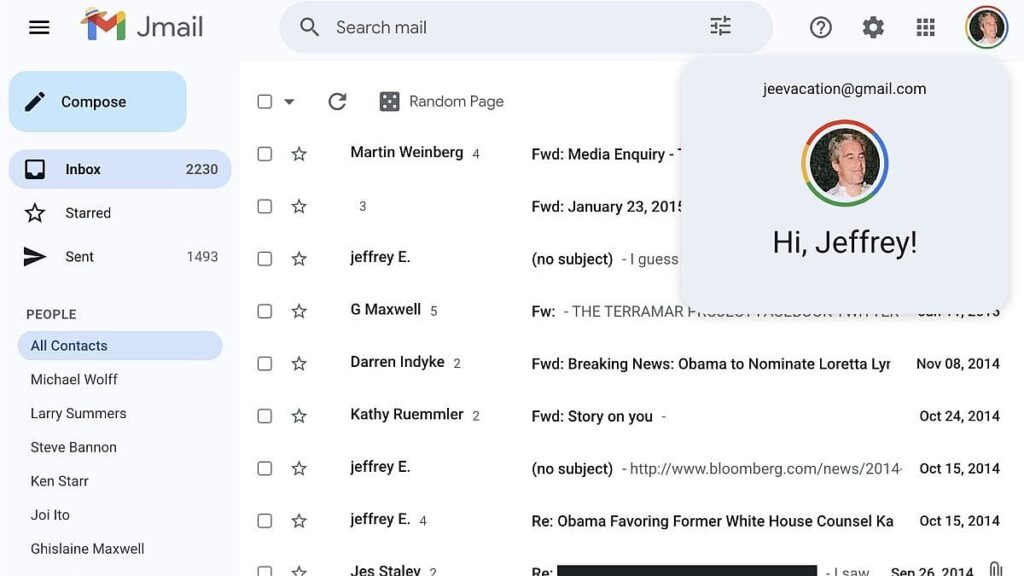
Created by developer Luke Igel and self-described “prankster” Riley Walz, Jmail mimics a Gmail interface, allowing users to explore Epstein’s emails in a visually engaging and intuitive manner. This innovative platform not only replicates the look and feel of a standard email inbox but also enhances user experience through its search functionality. Users can easily search for names, keywords, and specific information within the emails, making the task of sifting through the extensive document dump much more manageable. The interface categorizes emails into distinct sections, such as Inbox, Sent, and a unique Starred page that highlights the most intriguing messages as voted by users. Additionally, Jmail features a sidebar that acts as a contact list, showcasing notable individuals who interacted with Epstein, further contextualizing the relationships and networks surrounding him.
Jmail stands out as a remarkable blend of art and technology, serving as a valuable journalistic research tool that facilitates deeper exploration of a complex and troubling subject. By transforming a cumbersome document dump into an accessible and engaging format, Jmail not only aids researchers and journalists but also invites the public to engage with the content in a meaningful way. This project exemplifies how innovative web development can enhance the dissemination of important information, shedding light on the intricate web of connections tied to Epstein’s controversial legacy. As conversations around these revelations continue to unfold, Jmail offers a glimpse into the potential for technology to democratize access to information and encourage critical discourse.
By now, you’ve likely heard about the Jeffrey Epstein email document dump that was released last week by the House Oversight Committee.
Saturday Night Live
,
The Daily Show
, everyone has been talking about the emails and some of the more interesting revelations. OpenAI even
lost a member of its board
, Larry Summers, after he resigned following the email release, which revealed he was in constant contact with Epstein.
As released, the Epstein email documents are basically just hundreds of individual text files, scanned PDFs, and images containing the contents of those emails. It was hard to sift through — until now.
On Friday, creator Riley Walz, who
Wired
describes as a “prankster,” and developer Luke Igel released
Jmail
, a recreation of Jeffery Epstein’s email inbox. Jmail is essentially a Gmail clone interface that looks and acts as if you’re viewing Epstein’s emails via his jeevacation@gmail account through his actual email inbox.
This Tweet is currently unavailable. It might be loading or has been removed.
But Jmail isn’t just visually stunning in its presentation of these Epstein emails. It actually makes the emails incredibly easy to search through as well. The search box at the top of the page can actually be used to find names, keywords, and other information in specific emails. The Inbox and Sent pages separate the emails that Epstein both sent and received. The Starred page acts as a crowdsourced compilation of what visitors found to be the most interesting missives. A People section in the sidebar presents itself as a contact list of all the most notable individuals who interacted with Epstein in the emails included in this dump.
Jmail is really an ingenious project that combines art and web development to create a journalistic research tool.