Lucas: Women have nothing to lose but their gains
The current discourse surrounding women’s rights in Massachusetts has sparked a call for a new rallying slogan that reflects the evolving landscape of gender identity and representation. The phrase “Women’s rights are human rights” has long served as a foundational tenet of the women’s movement, but as societal dynamics shift, some argue that it may no longer suffice. Political commentator Peter Lucas suggests a reimagined slogan inspired by the famous line from the Communist Manifesto: “Women of the world, unite. You have nothing to lose but your gains.” This adaptation not only emphasizes the importance of solidarity among women but also highlights the potential threats to the hard-won rights and recognition that women have achieved over the years.
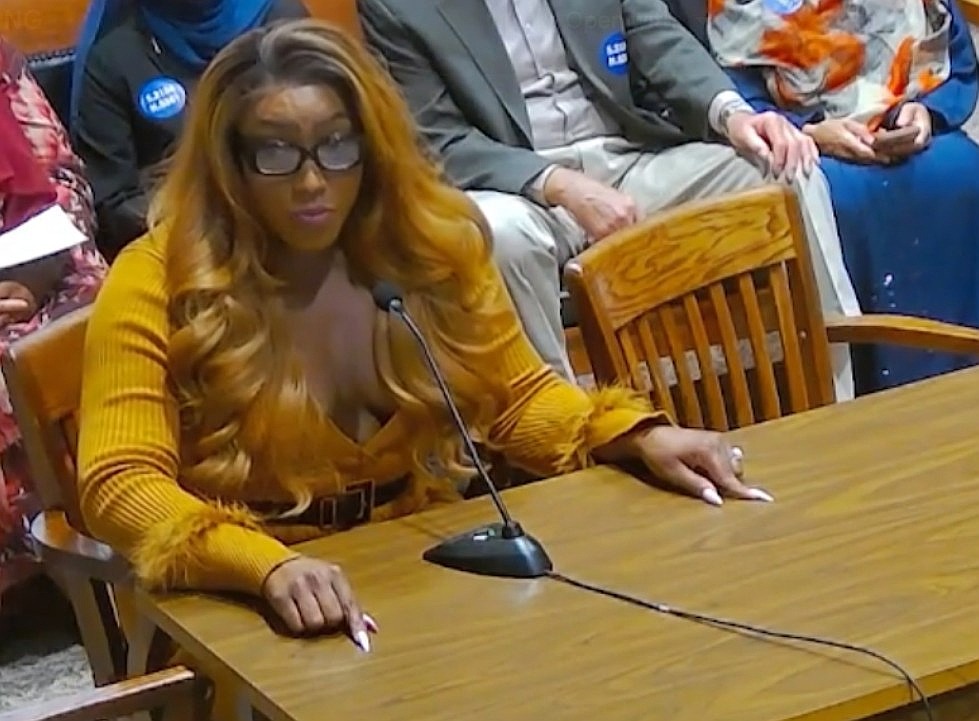
The recent controversy surrounding Governor Maura Healey’s appointment of Giselle Byrd, a transgender woman, to the Massachusetts Commission on the Status of Women has ignited a heated debate within feminist circles. Critics, including Republican state Rep. Alyson Sullivan-Almeida, have expressed concerns that Byrd’s appointment undermines the commission’s purpose, which is to advocate for biological women. The appointment comes at a time when legislation is being proposed to establish a separate commission focused on transgender issues, raising fears that the inclusion of transgender women may dilute the focus on cisgender women’s rights. Byrd’s appointment, which marks her as the first African American transgender person to hold a position on this commission, has not yet garnered public support from the Massachusetts Caucus of Women Legislators, indicating a division in the feminist community regarding representation and inclusivity.
Massachusetts has established itself as a matriarchal state, with women holding a significant majority of top statewide offices, including the governorship and key roles in the Attorney General’s office and the state legislature. This dominance has led to speculation about the potential for a “Commission on the Status of Men,” underscoring the shifting power dynamics in a state where women are increasingly at the forefront of governance. As the conversation around gender identity, representation, and women’s rights continues to evolve, it is clear that the feminist movement must adapt its messaging and strategies to address the complexities of contemporary society. The question remains: how can women unite to protect their gains while also embracing the diversity of experiences within the movement?
The Women’s Movement needs a new slogan.
“Women’s rights are human rights” is all right as far as it goes. But in these changing times, does it go far enough?
With all deference to Karl Marx and his rabble-rousing buddy Friedrich Engels, a new slogan should go something like this: “Women of the world, unite. You have nothing to lose but your gains.”
The quote is a knock-off from their Communist Manifesto, which called for a worldwide communist revolution to free workers from the oppressive boot of capitalism.
The rallying cry came from a pair of guys who never had a real job between them. Marx was a sometime journalist, which, as everybody knows, is not a real job, and Engels was the son of a rich mill owner.
The actual quote, which in 1848 shook the capitalist world, was, “Workers of the world, unite. You have nothing to lose but your chains.”
But why quibble?
The issue is the local reaction — or lack thereof — among women’s rights activists over Gov. Maura Healey’s appointment of Giselle Byrd, a former man, to the state’s Commission on the Status of Women. Byrd is the executive director of a regional theater company.
The 19-member commission, created in 1998, is, according to its website, “dedicated to the advancing of women’s rights and opportunities, promoting equality and providing a voice for women and girls across the state.”
It does not say anything about people born as men, as Byrd was, transitioning into a woman.
The flap over the appointment, which was made in August, came to the forefront in view of pending legislation, filed by Sen. Patricia Jehlen of Somerville, that would create a separate commission on transgender people.
Some believe that such a commission would weaken the authority and the gains made by the existing women’s commission.
Others like Republican state Rep. Alyson Sullivan-Almeida of Plymouth told the Herald that Healey’s appointment of Byrd “makes no sense” in the first place.
She asked, “Out of nearly three and a half million biological girls and women in the Commonwealth of Massachusetts, Gov. Healey couldn’t identify a qualified biological woman to appoint to the Massachusetts Commission on the Status of Women?”
Of course she could, but she appointed Byrd anyway, pointing out that former Gov. Charlie Baker appointed a transgender woman to the commission in 2016.
Byrd, the second appointee, is, however, the first African American transgender person to be named to the commission.
While popular in some quarters, the Byrd appointment has yet to be publicly endorsed by the Massachusetts Caucus of Women Legislators, a bipartisan group made up of female members of the House and Senate.
All the talk of the appointment of Byrd to the women’s commission may be academic anyway.
Face it. We live in a one-party, matriarchal state to begin with — the Commonwealth of Massachusetts, now known as Massachusetts the Matriarchal State.
Women run the state.
Things are so one-sided that some solon will soon be filing legislation calling for the creation of a Commission on the Status of Men.
Consider that five of the six top statewide offices are held by women. They are Gov. Healey, the state’s first openly gay governor; Lt. Gov. Kim Driscoll, Attorney General Andrea Campbell, state Treasurer Deborah Goldberg, and state Auditor Diana DiZoglio.
There is also Senate President Karen Spilka and Boston Mayor Michelle Wu.
The only guy hanging around is Secretary of State Billy Galvin, 74, and it is only a matter of time before a woman, transgender or not, takes him out.
Not that there is anything wrong with it.
Yeah, right.
Veteran political reporter Peter Lucas can be reached at: peter.lucas@bostonherald.com


