Making progress is more than making policy – what Mamdani can learn from de Blasio about the politics of urban progress
In a historic election, Zohran Mamdani has emerged victorious as the mayor-elect of New York City, set to take office on January 1, 2026. His grassroots campaign resonated deeply with working-class New Yorkers, promising ambitious initiatives such as universal childcare, rent freezes, and free public transportation. However, the ambitious nature of these proposals has sparked skepticism among critics, including former President Donald Trump and establishment Democrats, who label his platform as overly radical and potentially impractical. The New York Times has cautioned that Mamdani risks following in the footsteps of previous progressive leaders, such as former Mayor Bill de Blasio, who, despite making bold promises, ultimately faced significant disillusionment among constituents.
The comparison to de Blasio highlights a critical paradox in progressive politics. While de Blasio successfully implemented key policies like universal pre-K and a $15 minimum wage, his tenure was marred by persistent unpopularity and a disconnect from the grassroots movements he once championed. His failure to adapt to the changing landscape of progressive politics, particularly the rise of anti-corporate sentiments exemplified by figures like Alexandria Ocasio-Cortez, contributed to his decline. As Mamdani prepares to govern, he must navigate the complexities of urban politics, ensuring that he remains engaged with the grassroots movements that propelled him to victory. This involves maintaining a robust ground game, protecting local autonomy against external pressures, and fostering a social compact that resonates with all New Yorkers.
Mamdani’s vision for a dignified life for every resident is a powerful narrative that could unify the city around shared values. However, as he transitions from the campaign trail to governance, he must balance the poetic ideals of his platform with the pragmatic realities of urban management. The challenges ahead are formidable, but with a commitment to continuous political engagement and a focus on the needs of the community, Mamdani has the potential to redefine the progressive agenda in New York City. His success will depend not only on delivering tangible policy outcomes but also on reaffirming the promise of dignity and equity for all New Yorkers, a promise that resonates deeply in a city marked by stark economic divides.
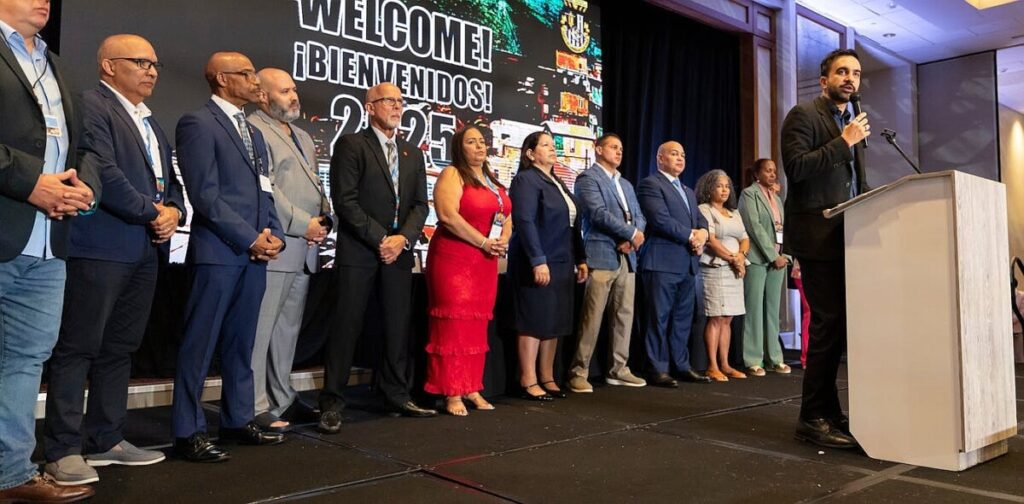
New York City Mayor-elect Zohran Mamdani speaks in San Juan, Puerto Rico, on Nov. 8, 2025.
AP Photo/Alejandro Granadillo
After
a decisive election win
, Zohran Mamdani will become mayor of New York on Jan. 1, 2026. His
impressive grassroots campaign
made big promises
targeted at working-class New Yorkers
: universal child care, rent freezes and faster, free buses.
Nevertheless,
questions remain
about whether Mamdani’s policies are
economically
and
practically
feasible.
Critics, from
President Donald Trump
to
establishment Democrats
, condemned his platform as radical and unrealistic. And
The New York Times
warns that Mamdani risks becoming the latest “big-city civic leader promising bold, progressive change” to “mostly deliver disappointment.” Among past offenders, it lists former New York Mayor Bill de Blasio.
But the comparison to de Blasio reveals a paradox.
As candidate for mayor in 2013, after the
Occupy Wall Street movement
against economic inequality, de Blasio campaigned on the core progressive tenet of tackling
inequality
through social welfare and the
redistribution
of wealth.
De Blasio’s promises – strikingly similar to Mamdani’s – included
universal pre-K
,
rent freezes
and a
US$15 minimum wage
. De Blasio
delivered on all three
.
So what was the “disappointment” the Times so confidently cites?
New Yorkers today
remember
de Blasio not for his policies but for
his persistent unpopularity
.
Over two terms, de Blasio alienated many New Yorkers and
became a pariah
among
Democratic politicians
. A committed progressive, he is perceived to have lost touch with the movements and communities that he hoped to lead.
Maybe the question is not whether Mamdani’s policies are realistic, but what it actually takes to win over citizens with a progressive vision. De Blasio himself cautions that it takes more than policy.
He recently said
that he “often mistook good policy for good politics, a classic progressive error.”
As
a scholar of public policy
, I think that policy achievements are neither self-evident nor self-sustaining. In my research on urban governance, I have found that it takes continuous political work to maintain local belief in urban progress and its leaders.
Based on an analysis of de Blasio’s two terms, I have identified three key respects in which his politics fell short.
Keep up the ground game
Many accounts of de Blasio’s unpopularity emphasize his personal flaws. Open and humorous in person, he was described by critics – and even some supporters – as
stubborn, didactic and self-righteous
. His designs on higher offices – first governor, then president –
repeatedly backfired
.
But for someone elected with the support of progressives, de Blasio’s bigger problem was losing touch with local progressive politics. He missed the rise of
the anti-corporate left in Queens in 2018
, led by Rep. Alexandria Ocasio-Cortez – so much so that
his team miscalculated
and agreed to place an Amazon headquarters near her district.
And while de Blasio successfully ended his predecessor Mike Bloomberg’s
racially discriminatory stop-and-frisk policing
–
feuding with the New York Police Department
in the process – he later alienated progressives,
including his own staff
, with his tepid response to the Black Lives Matter protests in 2020.
Many New Yorkers remember former Mayor Bill de Blasio for his unpopularity.
AP Photo/Seth Wenig
The contours of progressive politics can shift under one’s feet. But as a veteran of street-level politics, Mamdani has the skills to respond to, and keep shaping, the city’s progressive movement. A dynamic “ground game” – on the model of his
walk of the length of Manhattan
– will likely remain as important in governing as it was in campaigning.
Protect local autonomy
In New York, hostility between the city’s mayor and the governor is
a time-honored tradition
. De Blasio and former Gov. Andrew Cuomo famously
took hostility to the extreme
.
Early in de Blasio’s first term, while seeking state funding for universal pre-K,
de Blasio angered Cuomo by insisting on
funding it through a tax on the city’s wealthy. Lacking necessary state approval, de Blasio eventually accepted a different state funding source. Universal pre-K became de Blasio’s cornerstone achievement, but the lasting feud with Cuomo remained a problem, even
compromising the city’s plans to address the COVID-19 pandemic
.
Critics also thought de Blasio could have been tougher on Big Tech. Letting a
Google-backed
consortium run the city’s free Wi-Fi program without meaningful oversight left the city with a
privacy scandal
and
serious financial deficits
.
In trying to attract Amazon’s headquarters, de Blasio’s administration offended New Yorkers’ sensibilities by allowing the company to
bypass local development review processes
. Though famously byzantine, these processes were created to ensure
local control over development decisions
. One could not simply bulldoze them aside.
In another case, and to his credit, de Blasio was quick to see the need to regulate Uber’s explosive growth, but
it took years to overcome
the company’s
aggressive opposition campaign
.
Though some progressives wish
mayors ruled the world
, U.S. cities have traditionally depended on states, the federal government and private companies for capital and resources.
As I
and
others
have shown, and de Blasio’s experiences attest, these outside players can undermine the progressive ideal of a city that seeks to redistribute economic benefit.
Mayoral powers are limited, but Mamdani can use his popularity to protect New York City’s capacity for self-government from outside interference, while cooperating strategically with the state when necessary. Gov. Kathy Hochul’s endorsement of Mamdani,
driven by a shared interest in universal child care
, was a start. United, they stand a better chance of defending local – city and state – autonomy against
threats from President Donald Trump
.
Meanwhile, there is
little evidence
that it pays for cities to court private businesses with expensive incentives – a common but contested city practice. Instead,
following mayors elsewhere
, Mamdani might pressure tech companies to end union-busting practices and thereby ensure local workers’ right to organize.
Supporters for Democratic mayoral candidate Zohran Mamdani watch returns during election night, Nov. 4, 2025, in New York.
AP Photo/Yuki Iwamura
Lead with the social compact
Though de Blasio delivered many progressive policies, he was unable to keep alive his campaign promise to end New York’s “
tale of two cities
” – the stark divide between extreme wealth and poverty.
A major,
self-admitted
failure was on homelessness, especially among
single adults
. Homelessness among this group grew despite increased spending on
homeless services
, creating the impression that de Blasio was insufficiently concerned with
the welfare of his city’s most beleaguered residents
.
Such inconsistencies loomed large in the public discussion. Over time, de Blasio’s administration could no longer convince the public that its energies were being channeled toward a coherent vision of progress.
I believe that urban governance is about clarifying the rights and responsibilities that urban residents can expect to have, what I think of as the
social compact
between the city and its subjects. De Blasio’s growing unpopularity weakened his ability to show that his policy achievements amounted to upholding a tacit progressive promise to guarantee basic economic rights for all.
Former New York Gov. Mario Cuomo, father of losing mayoral candidate Andrew Cuomo,
often said
: “You campaign in poetry. You govern in prose.” While campaigning, Mamdani offered a poetic vision for a new social compact in New York.
“City government’s job,”
he has said
, “is to make sure each New Yorker has a dignified life, not determine which New Yorkers are worthy of that dignity.”
Many commentators insist that Mamdani must now abandon poetry and deliver the policy. But that is only partly right.
New Yorkers will disagree about the details, but the election results suggest that they want to believe in the promise of a dignified life for all. Mamdani’s ability to lead New York City – and a wider post-Trump progressive movement – will be a matter of setting an example in rearticulating and reaffirming what that promise means, to him and to his city.
Nicole West Bassoff does not work for, consult, own shares in or receive funding from any company or organization that would benefit from this article, and has disclosed no relevant affiliations beyond their academic appointment.


