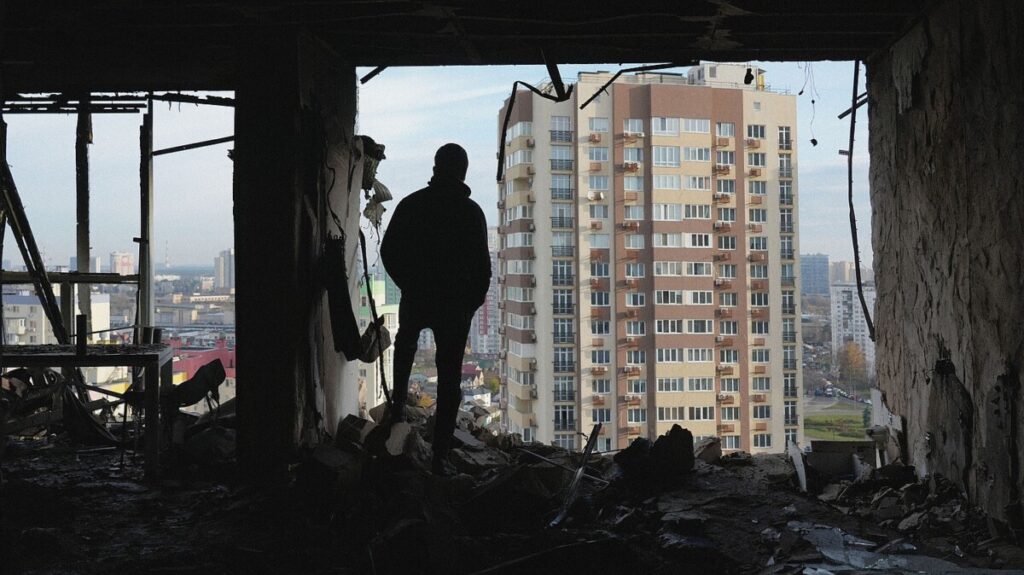
Trump’s Devastating Plan for Ukraine
In a surprising turn of events, former President Donald Trump appears to be advocating for a controversial 28-point peace plan concerning the ongoing conflict between Ukraine and Russia. This plan, reportedly negotiated by Trump’s envoys in collaboration with a close confidant of Russian President Vladimir Putin, raises significant concerns about its implications for Ukraine’s sovereignty and security. The details, which have not been publicly disclosed by the Trump administration, suggest that Ukraine would be required to make substantial territorial concessions, including ceding the Donetsk and Luhansk provinces to Russia—territories that have been hotly contested since the onset of the war in 2022. Furthermore, the proposed terms would see the Ukrainian military significantly reduced, while the Russian military would face no corresponding limitations. This one-sided approach not only undermines Ukraine’s ability to defend itself but also risks legitimizing Russia’s aggressive territorial expansion and destabilizing the post-World War II global security framework established by the United Nations.
Despite previous rhetoric suggesting a more supportive stance towards Ukraine, Trump’s actions indicate a troubling pivot. For months, he has oscillated between offering U.S. assistance to Ukraine and making contradictory statements that seem to favor Russian interests. Recently, he expressed tentative support for a bipartisan bill aimed at imposing severe sanctions on Russia, yet simultaneously moved forward with a peace plan that could transform Ukraine into a Russian vassal state. This dual approach raises questions about Trump’s true intentions, as he publicly projects a willingness to assist Ukraine while privately negotiating terms that would significantly weaken it. If implemented, this plan could lead to the lifting of international sanctions on Russia, allowing it to rebuild its military capabilities and potentially reignite its ambitions in Ukraine.
The implications of Trump’s peace proposal extend beyond Ukraine’s borders, threatening to erode the foundational principles of international law and order that have governed Europe since the end of World War II. Should European allies be coerced into accepting this deal, they would be undermining their own security and the principles of sovereignty and territorial integrity. While the fate of this proposal remains uncertain, it signifies a pivotal moment in U.S.-Russia relations and highlights Trump’s apparent desire to collaborate with Putin, even at the cost of Ukraine’s independence. The international community watches closely as the potential ramifications of this plan unfold, with Ukraine’s future hanging in the balance.
Sign up for our
newsletter about national security
here
.
For all the recent talk about Donald Trump growing more sympathetic toward Ukraine, and of the president being more willing to pressure Russia for concessions, nothing of the sort turned out to be true. According to multiple news outlets, Trump
has blessed
a 28-point plan to end the war between the two countries. The plan was negotiated by his envoys in conjunction with a
top Vladimir Putin confidant
. The deeply troubling details now circulating show what Trump wants: to help the Russian president—who started the war by launching an unprovoked invasion in 2022—and to weaken Ukraine, perhaps fatally.
The Trump administration has not yet made the terms of its proposal public. According to news reports, Ukraine would have to cede more land to Russia—including all of Donetsk and Luhansk provinces—than the Russians have been able to conquer to this point. The Ukrainian armed forces would be cut in half; so far, there are no indications that the size or capabilities of the Russian military would be restricted. Ukraine would have to give up long-range weaponry that currently allows it to hit targets deep inside Russia and hamstring the economy that funds Putin’s war machine. The United States and other nations would legally recognize Crimea and the other seized parts of Ukraine as Russian territory—thereby rewarding Putin’s efforts to expand his borders by force and destroying the post–World War II global-security system that the United Nations was created to preserve. No foreign peacekeepers would be allowed on Ukrainian soil.
In exchange for giving up land and its ability to defend itself, Ukraine would be offered toothless security guarantees by the United States—much like the never-enforced guarantees that it received when it gave up nuclear weapons after gaining independence in the 1990s. The points in the deal appear to be so lopsided in Putin’s favor that they might as well have been dictated by Moscow.
[
Thomas Wright: A self-defeating reversal on Ukraine
]
For months now, Trump has been obscuring his own intentions in a blizzard of contradictory statements and gestures—moves that in some cases seemed to offer U.S. assistance to Ukrainians’ efforts to maintain their freedom and democracy. In October, Trump imposed modest
sanctions
on the Russian oil industry, ostensibly to bring Putin to the negotiating table.
In recent months, Trump has been under bipartisan pressure to support a bill, proposed by Senators Lindsey Graham and Richard Blumenthal, that would enable the White House to impose devastating sanctions on countries and companies that do business with Russia. Graham, normally a Trump ally, has described the bill as a
“sledgehammer”
to use against Russia. But the president did not appear to want such a tool and long danced around whether he would support a vote on the bill.
Then, just this week, Trump told reporters that the
Graham-Blumenthal bill would be
“okay with me.” The statement came as the president was poised to sign off on the 28-point plan, which threatens to transform Ukraine into a Russian vassal state. In other words, Trump was publicly offering hope to pro-Ukrainian voices while privately getting ready to reward Putin.
If Trump forces Ukraine and its allies in Western Europe to accept a peace deal that ratifies Russia’s territorial gains—giving Putin even more than he was able to conquer, and requiring no real concessions of him at all—it will amount to a complete rehabilitation of the Russian president in the international sphere. It will be as if Russia had done nothing wrong at all by invading a sovereign state and seizing a large part of its territory—everyone slaps one another on the back and gets on with business.
If a peace deal leads to the end of international sanctions on Russia, that country will be able to rebuild its military in the coming years and try to take the rest of Ukraine when it feels it is ready. Conquering Ukraine has always been Putin’s plan. Now the United States is setting him up to try again.
[
Thomas Wright: Why Trump’s Ukraine peace efforts keep failing
]
Ukraine’s fate is not yet sealed, and many obstacles could prevent this deal from being implemented. The unstable government that Trump oversees could veer off course (as it has repeatedly in the worldwide tariff fight). Also, even if Trump demands that Ukraine and the rest of Europe accept his plan, they are hardly guaranteed to do so. Trump will be asking Europeans to take part in their own potential destruction, to tear down many of the principles, such as respect for the rule of law and internationally recognized borders, upon which post-1945 Europe was built.
No matter what, though, Trump’s plan represents a clarifying moment. The deal almost certainly delivers what he has always wanted. He wants to work with Putin, even if that means devastating Ukraine, and now he no longer cares who knows it.


