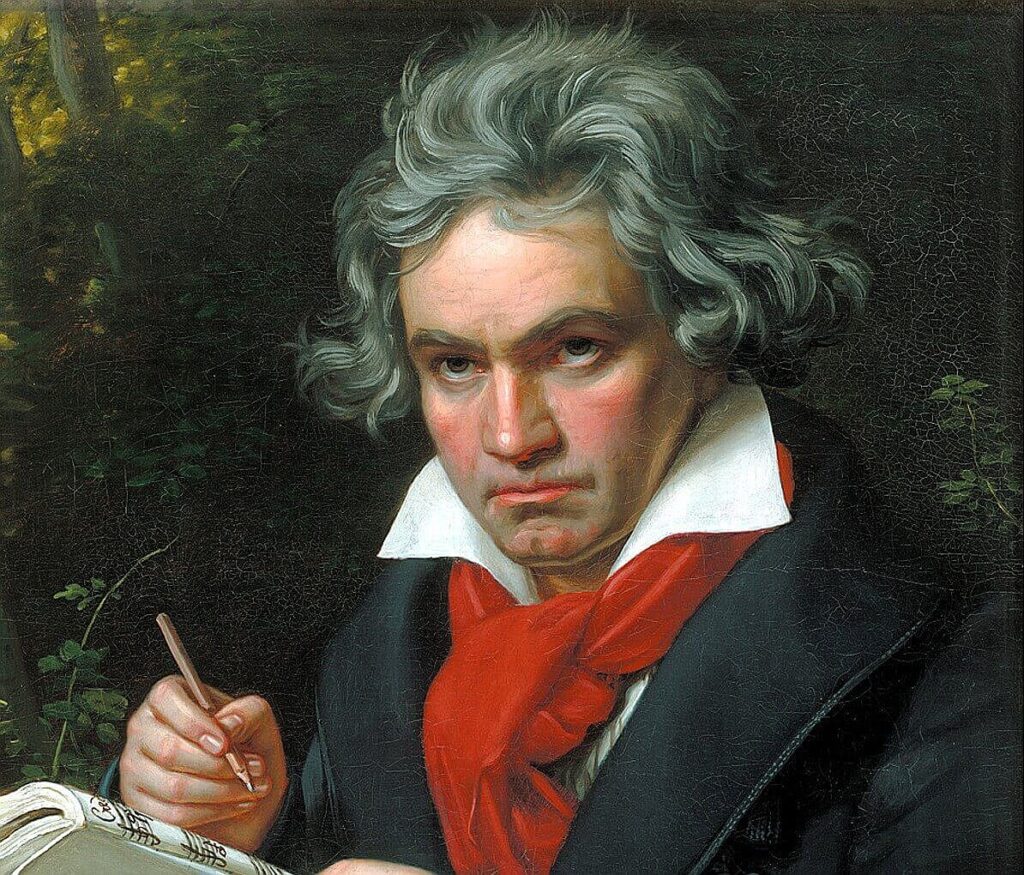
Ludwig van Beethoven
Ludwig van Beethoven (1770 – 1827) stands as a monumental figure in the world of classical music, often regarded as one of the greatest composers in history. His innovative approach to composition marked a significant transition in the musical landscape, moving away from the constraints of the Classical period and paving the way for the Romantic era. Prior to Beethoven, composers typically focused on creating music for specific purposes, such as religious services, educational settings, or social entertainment. However, Beethoven revolutionized this paradigm by infusing his works with deep emotional expression and personal narrative, allowing music to serve as a profound medium for individual expression and human experience.
Beethoven’s influence is evident in his diverse body of work, which includes symphonies, sonatas, concertos, and chamber music. His Symphony No. 9, featuring the iconic “Ode to Joy,” exemplifies his ability to blend complex musical structures with universal themes of brotherhood and joy. This symphony, completed in 1824, was groundbreaking not only for its scale and ambition but also for its incorporation of vocal soloists and a choir, a departure from traditional symphonic form. Furthermore, Beethoven’s late string quartets and piano sonatas showcase his experimentation with form and harmony, pushing the boundaries of what music could convey. His struggle with deafness, which began in his late 20s, only intensified his resolve to compose, leading to some of his most profound works during his later years, such as the “Hammerklavier” Sonata and the late quartets, which reflect a deep introspection and innovative spirit.
Beethoven’s legacy extends beyond his compositions; he is often viewed as a symbol of artistic genius and resilience. His life story, marked by personal challenges and triumphs, resonates with many, inspiring generations of musicians and composers. His ability to transform personal adversity into transcendent art has made him a timeless figure in cultural history. As we continue to celebrate Beethoven’s contributions to music, we recognize not only his technical mastery but also his profound impact on the emotional and philosophical dimensions of musical expression. His works remain a cornerstone of the classical repertoire, influencing countless artists and captivating audiences worldwide, ensuring that his spirit endures in the hearts of music lovers for centuries to come.
https://www.youtube.com/watch?v=W-fFHeTX70Q
Ludwig van Beethoven (1770 – 1827) is one of the greatest composers in history. His work marked a turning point for composers, who had previously written primarily for religious services, to teach, or to entertain at social functions. But Beethoven’s […]