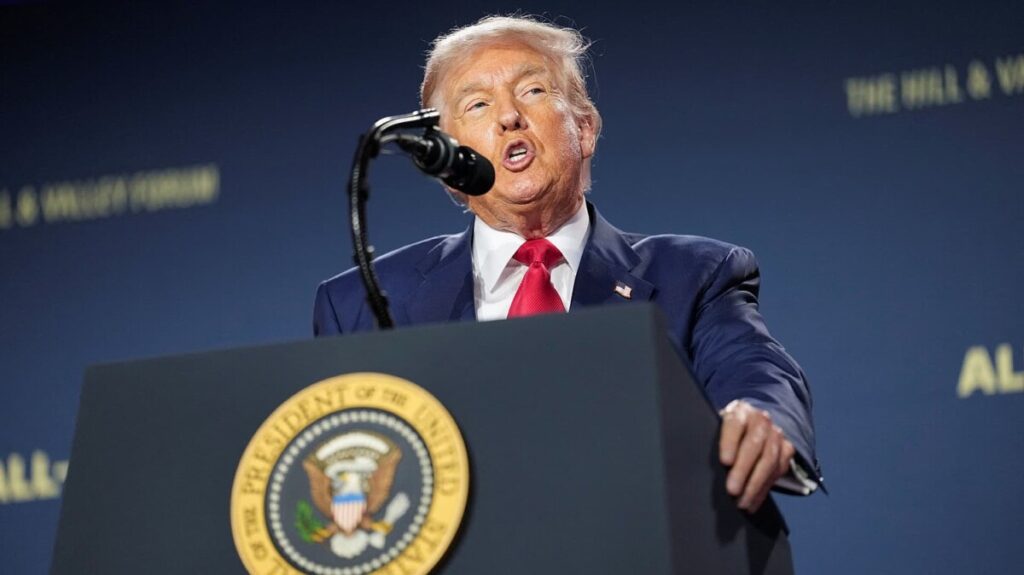
White House crafting executive order to thwart state AI laws
In a significant move towards establishing a unified approach to artificial intelligence regulation, a draft proposal has emerged following former President Donald Trump’s call for a single federal standard. Trump emphasized the need for a cohesive regulatory framework that transcends the current fragmented landscape, which often sees varying regulations across the 50 states. This patchwork of state laws can lead to confusion and inconsistency for businesses and innovators operating in the AI sector, potentially stifling innovation and complicating compliance efforts. By advocating for a singular federal standard, Trump aims to streamline the regulatory process and foster an environment that encourages the responsible development and deployment of AI technologies.
The draft proposal reflects a growing recognition among policymakers of the critical need for a comprehensive federal approach to AI governance. As artificial intelligence continues to evolve and permeate various industries, from healthcare to finance, the absence of a centralized regulatory framework poses significant challenges. For instance, companies developing AI-driven solutions may face different compliance requirements depending on the state in which they operate, complicating their ability to scale and innovate. Furthermore, the lack of uniform standards raises concerns about ethical considerations, data privacy, and consumer protection. The draft seeks to address these issues by proposing guidelines that would ensure consistency across states while also promoting innovation and safeguarding public interests.
Key stakeholders, including tech companies, regulators, and civil society organizations, have been closely monitoring the development of this draft. While some view the push for a federal standard as a necessary step towards fostering innovation and competitiveness in the global AI landscape, others express concerns about the potential for overregulation and the stifling of creativity. Balancing the need for regulation with the imperative to promote technological advancement will be a central challenge as discussions around this draft continue. As the conversation unfolds, it will be crucial for lawmakers to engage with a diverse array of voices to create a framework that not only encourages innovation but also addresses the ethical and societal implications of AI technology.
https://www.youtube.com/watch?v=pSHZ76uB3Cc
The draft surfaced after President Donald Trump called for a single federal standard on AI “instead of a patchwork of 50 State Regulatory Regimes.”