Noncanonical agonist-dependent and -independent arrestin recruitment of GPR1 | Science
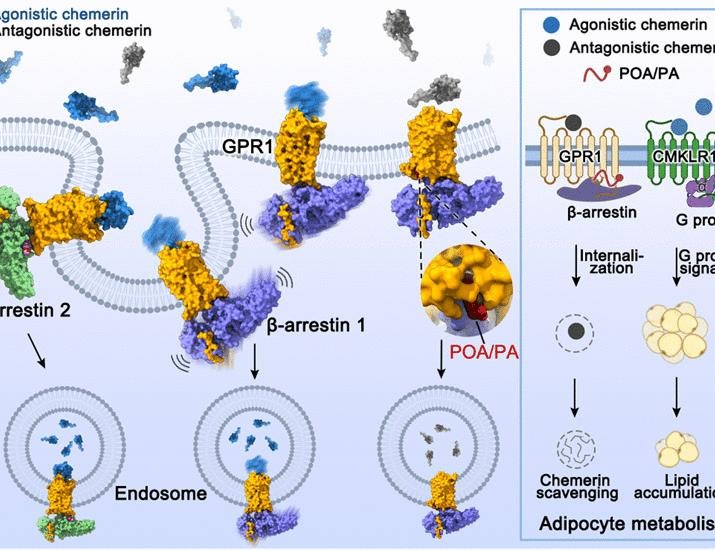
G protein-coupled receptors (GPCRs) are integral membrane proteins that play a critical role in cellular signaling, influencing a wide array of physiological processes. These receptors are characterized by their ability to interact with G proteins, which are heterotrimeric guanine nucleotide-binding proteins. Upon activation by various ligands, GPCRs can initiate multiple downstream signaling pathways, leading to diverse cellular responses. This versatility is underscored by the fact that different GPCRs exhibit distinct preferences for signaling pathways, which can result in varied biological outcomes. For example, the chemerin receptor GPR1 has garnered attention for its unique signaling properties, particularly its interaction with arrestins, which are proteins that mediate receptor desensitization and internalization.
Recent studies have highlighted the significance of arrestin-mediated signaling in the context of GPR1. Unlike traditional G protein signaling that typically leads to rapid responses, arrestin engagement can initiate alternative signaling cascades that contribute to prolonged cellular effects. This is particularly relevant in the context of chemokine signaling, where GPR1 is involved in immune responses and inflammation. The dual signaling mechanisms—G protein-dependent and arrestin-mediated—allow for a more nuanced regulation of cellular activities, which is vital for maintaining homeostasis and responding to external stimuli. For instance, the ability of GPR1 to activate both G proteins and arrestins could have implications for the development of targeted therapies, as manipulating these pathways may enhance therapeutic efficacy while reducing side effects.
Moreover, the exploration of GPR1’s signaling pathways opens up new avenues for research into receptor pharmacology and drug design. Understanding how different ligands can preferentially activate G protein versus arrestin pathways could lead to the development of biased agonists—compounds that selectively activate one pathway over another. This concept of biased signaling is gaining traction in the field of pharmacology, as it holds the potential to create drugs that are more effective and have fewer adverse effects. As researchers continue to unravel the complexities of GPCR signaling, the chemerin receptor GPR1 stands out as a prime candidate for further investigation, promising insights that could revolutionize the way we approach the treatment of various diseases, particularly those linked to immune dysfunction and inflammatory responses.
G protein (heterotrimeric guanine nucleotide–binding protein)–coupled receptors have diverse signaling properties with differential preferences for downstream pathways. Certain receptors, such as the chemerin receptor GPR1, undergo arrestin-mediated …


