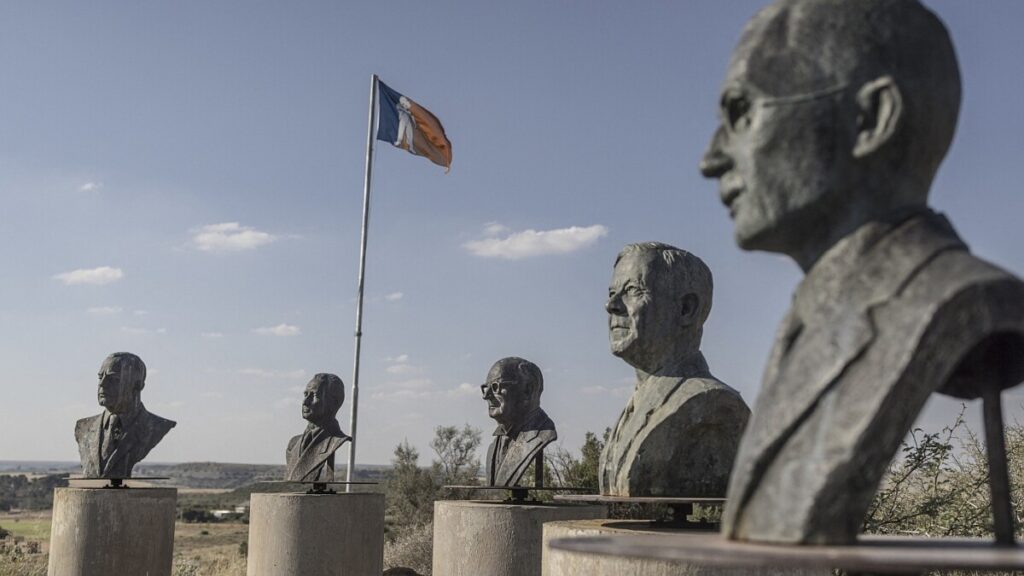
Who are Afrikaners, the group at the center of Trump’s dispute with South Africa?
In recent statements, former President Donald Trump has revived the controversial and widely discredited narrative that Afrikaners in South Africa are experiencing a “white genocide.” This claim, which has been heavily criticized for its inaccuracy and sensationalism, suggests that white farmers and Afrikaner communities are systematically targeted for violence and displacement. Despite numerous investigations and reports indicating that violent crime in South Africa affects all racial groups and is not specifically targeting white individuals, Trump’s assertions have reignited tensions within a nation still grappling with the legacies of apartheid.
The context surrounding Trump’s remarks is crucial, as South Africa has made significant strides toward reconciliation since the end of apartheid in 1994, yet it continues to face challenges related to economic inequality, land reform, and social cohesion. Critics argue that Trump’s rhetoric not only misrepresents the realities on the ground but also exacerbates racial divisions in a country that is striving for unity and healing. For instance, the South African government has initiated land reform policies aimed at addressing historical injustices, but these efforts are often mischaracterized by those who claim they are leading to violence against white farmers. The narrative of “white genocide” has been linked to far-right extremist groups and has been used to justify acts of violence and hate against marginalized communities.
Moreover, Trump’s comments have drawn condemnation from various South African leaders and activists who emphasize the importance of accurate discourse in fostering a peaceful society. The South African Human Rights Commission has highlighted that the majority of violent crime in the country is driven by socioeconomic factors rather than racial animus. By perpetuating falsehoods about a so-called “white genocide,” Trump risks inflaming tensions and undermining the progress made since apartheid. As South Africa continues to navigate its complex social landscape, the need for responsible dialogue and a commitment to truth becomes increasingly vital to ensure a stable and equitable future for all its citizens.
Trump has repeated debunked claims that Afrikaners are facing a “white genocide” in South Africa. Critics say the false statements are causing conflict in a country still recovering from apartheid.
(Image credit: Marco Longari)


