Creator ad spending is set to hit $37 billion this year and is growing 4x as fast as the overall media industry
In a significant shift within the advertising landscape, spending on creators is projected to reach a staggering $37 billion in the United States by the end of 2023, marking a 26% increase from the previous year, according to a recent report by the Interactive Advertising Bureau (IAB). This surge underscores the growing importance of influencer marketing as traditional advertising formats, particularly linear TV, continue to lose their audience share. The creator economy is now expanding at a pace four times faster than the overall media industry, indicating a robust trend where brands are increasingly recognizing the value of collaborating with social media influencers. For context, the largest digital ad segment tracked by the IAB last year was search, totaling $102.9 billion, while the anticipated spending on creators in 2025 is nearly three times the amount reported in 2021, a period when social media engagement soared during pandemic lockdowns.
Several factors are driving this shift towards creator-led advertising. Zoe Soon, an IAB VP, highlights three key reasons: creators possess a built-in distribution network to effectively serve ads across social channels, they maintain significant cultural relevance among younger audiences, and they excel in reaching “ad-avoidant” Gen Z consumers at a time when traditional marketing channels are becoming less effective. Interestingly, the survey conducted by the IAB revealed that mid-tier influencers, those with follower counts between 50,000 and 500,000, are the most sought-after by brands, with 61% of respondents indicating they hired these creators. This preference stems from their ability to balance driving sales with generating broad brand awareness, making them a compelling choice for marketers.
Moreover, the integration of artificial intelligence (AI) into marketing strategies is becoming increasingly prevalent. The IAB report indicates that approximately 75% of brands are either currently utilizing or planning to incorporate AI tools in their marketing efforts, primarily for tasks such as content editing and optimizing creator partnerships. This technological advancement aids marketers in analyzing consumer data, identifying resonant messaging, and understanding trending topics, ultimately enhancing their strategies in the creator economy. As brands navigate the evolving landscape of advertising, the emphasis on creator collaborations and the strategic use of AI signal a transformative era in how companies engage with audiences, ensuring that they remain relevant in an increasingly digital world.
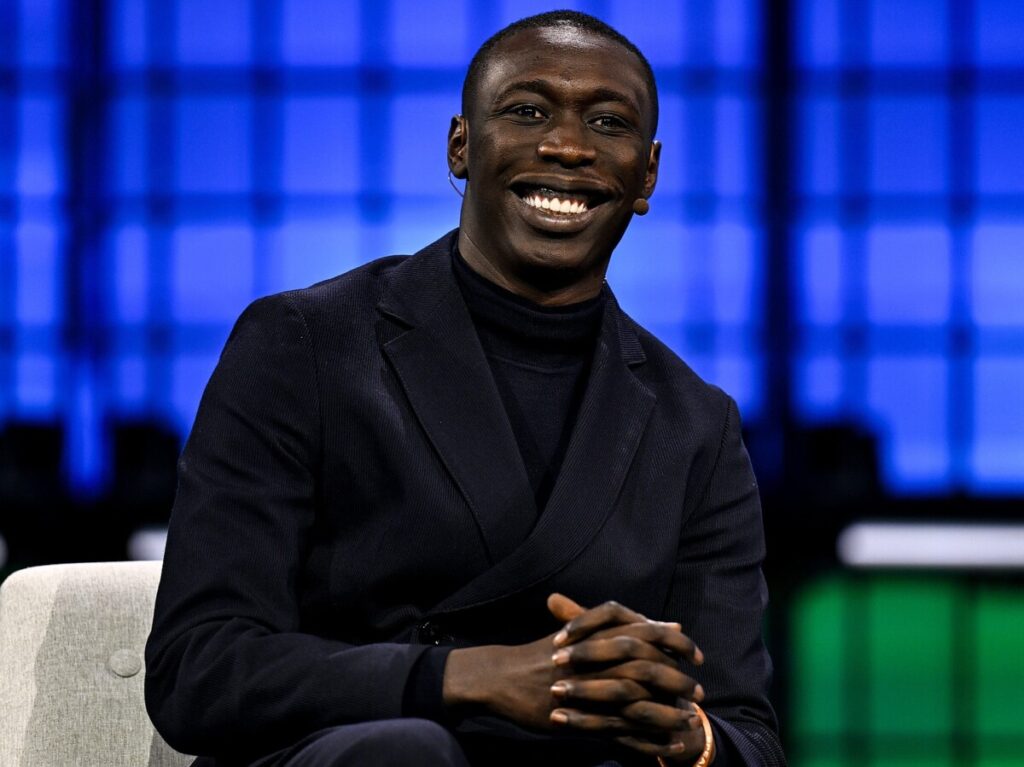
TikTok’s most followed creator Khaby Lame.
Sam Barnes/Sportsfile for Web Summit via Getty Images
Advertiser spending on creators is expected to hit $37 billion in 2025, according to a new IAB report.
The category’s growth comes as legacy formats like linear TV lose audience.
More marketers consider creators a “must buy” than other emerging categories, such as commerce apps.
Marketers are racing to
work with creators
this year, with US ad spending in the category estimated to hit $37 billion by year’s end, according to a new report from the Interactive Advertising Bureau.
That’s up 26% year-over-year.
The vertical is growing four times as fast as the overall media industry, per IAB’s analysis.
For context, the largest digital ad segment tracked by the IAB last year was search, at $102.9 billion.
The 2025 spending estimate on creators is nearly triple the amount from 2021, when social-media consumption was booming amid the pandemic lockdown.
There are three things driving the spike in interest in creators among brands, said Zoe Soon, an IAB VP who focuses on emerging advertising channels like the creator economy and gaming.
First, influencers have a “built-in distribution” network to serve ads across social channels. Second, they have proven cultural relevance among young people. And third, they have the ability to connect with “ad-avoidant” Gen Z consumers at a time when there are “diminishing places that you can reach them,” Soon said.
Creators are now considered more of a “must-buy” than other emerging ad categories like connected TV and commerce media among the roughly 450 US ad spending decision-makers who responded to the IAB’s survey between July and August.
IAB earlier projected connected TV ad spending would hit $26.6 billion in 2025.
“Creator content is outperforming brand-led content across almost all metrics,” Dontae Mears, an SVP of influencer marketing at Weber Shandwick, told Business Insider.
Here are three key takeaways from IAB’s report:
1. The creator ads business is eating up spending from legacy channels
A few years ago, it was tough to get a brand advertiser to put more than an experimental budget behind influencer campaigns. That’s not true today. Marketers know they have to invest in creator content if they want to reach some audiences, even if it’s harder to scale than a campaign run on Facebook or Google.
As legacy formats like
linear TV lose audience
share each year, marketers have to adapt.
If creators are “driving the cultural zeitgeist,” and you have other channels that advertisers are not seeing as effective anymore, “it makes sense that they start moving those dollars over,” said Chris Bruderle, IAB’s VP of industry insights and content strategy.
2. Mid-tier creators reign supreme
Mid-tier influencers with between 50,000 and 500,000 followers were the most commonly hired by respondents to IAB’s survey.
Sixty-one percent of respondents said they hired mid-tier influencers, followed by 55% who said they worked with either macro influencers (500,000 to 1 million followers) or micro creators (10,000 to 50,000 followers).
VIPs and celebrities were the least popular, with 30% of respondents saying they worked with the cohort.
The IAB’s Soon attributed the popularity of mid-tier creators to their ability to drive sales for brands while also having enough scale to generate some broad brand awareness.
3. AI is top of mind for marketers
While creators can offer authenticity to marketers, AI is still very much in play among those who responded to the IAB’s survey.
According to the IAB, about three in four brands are either already using or planning to use AI tools. A bulk of that use is going toward tasks like editing content, writing creator partnership briefs, and A/B testing. Lower on the list: working with “synthetic creators” — otherwise referred to as virtual or
AI influencers.
“AI is really helping us develop the right strategy,” Mears said. “Being able to analyze a lot more of that initial input data of who’s the consumer that we’re going after, what are the kind of messages that resonate with them, what are the trending topics, what are the cultural sparks?”
That work then helps guide partnership briefs and planning, he said.
Read the original article on
Business Insider


