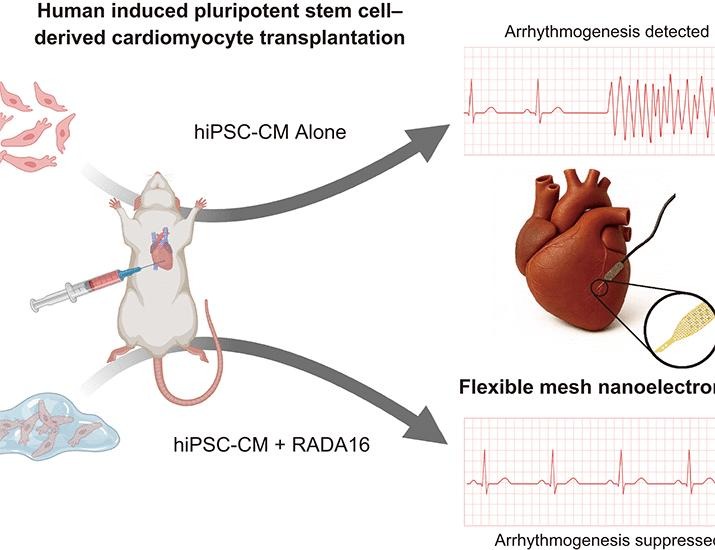
Flexible nanoelectronics reveal arrhythmogenesis in transplanted human cardiomyocytes | Science
In recent research, scientists have explored the promising potential of transplanting human induced pluripotent stem cell-derived cardiomyocytes (hiPSC-CMs) as a treatment for heart failure, a condition that affects millions globally. Heart failure is characterized by the heart’s inability to pump blood effectively, leading to severe health complications. The advent of hiPSC technology allows for the generation of heart cells from reprogrammed skin or blood cells, offering a renewable source of cardiomyocytes that can be used to repair damaged heart tissue. However, a significant challenge remains: the risk of arrhythmogenic automaticity, where the transplanted cells may develop irregular electrical activity, potentially leading to life-threatening arrhythmias.
The study delves into the mechanisms behind this arrhythmogenic behavior and seeks to identify ways to mitigate these risks. Researchers conducted experiments to observe the electrical properties of hiPSC-CMs in vitro, revealing that while these cells can integrate into existing cardiac tissue and exhibit functional characteristics of heart cells, they also possess a propensity for spontaneous electrical activity. This automaticity can disrupt the heart’s normal rhythm, posing a serious concern for patients receiving such transplants. To address this issue, the team investigated various strategies, including genetic modifications and pharmacological interventions, to enhance the safety and efficacy of hiPSC-CM transplantation.
By understanding the underlying causes of arrhythmogenic automaticity, the researchers aim to refine the transplantation process, making it a safer and more effective option for treating heart failure. Their findings not only contribute to the growing body of knowledge on stem cell therapy for cardiac conditions but also highlight the importance of addressing potential complications in regenerative medicine. As the field advances, the hope is that with continued research and innovation, hiPSC-CMs can be harnessed to significantly improve outcomes for patients suffering from heart failure, transforming the landscape of cardiac care.
The transplantation of human induced pluripotent stem cell–derived cardiomyocytes (hiPSC-CMs) offers a potential treatment for heart failure, but arrhythmogenic automaticity can arise from these transplanted cells. In this study, we investigated the …


