Want to make America healthy again? Stop fueling climate change
Climate change is increasingly recognized not only as an environmental crisis but as a significant public health threat. While discussions around health often focus on immediate concerns like vaccines and healthcare costs, the long-term impacts of climate change on human health are becoming more urgent. Extreme heat, worsened air quality, and the spread of infectious diseases are just a few of the ways climate change is jeopardizing lives. For instance, heat-related deaths have surged globally, with a reported increase of 23% from the 1990s to the 2010s, resulting in over half a million deaths annually. The Pacific Northwest heat dome in 2021 exemplified this trend, claiming hundreds of lives. Moreover, cities like Miami, Houston, and Phoenix are projected to experience even more extreme temperatures, which could threaten human survival.
The health risks associated with climate change extend beyond heat. Increased rainfall and storm intensity contribute to flooding, leading to injuries during cleanup, mold exposure, and mental distress. Wildfires, exacerbated by rising temperatures, not only degrade air quality but also release toxic pollutants that can cause respiratory issues and cardiovascular problems. Furthermore, the warming climate is altering the habitats of disease-carrying insects, facilitating the spread of illnesses like dengue fever and chikungunya in regions previously considered safe. Vulnerable populations, including the elderly, those with preexisting conditions, and lower-income communities, bear the brunt of these health risks due to limited resources and higher exposure rates.
Addressing these challenges requires concerted action from both individuals and governments. Individuals can adopt healthier lifestyles that reduce their carbon footprints, such as biking or using public transport, and embracing plant-based diets. However, systemic change is crucial; governments must implement policies that protect public health while addressing climate change. This includes creating safe working conditions for outdoor laborers, establishing cooling centers during heat waves, and investing in renewable energy sources. Unfortunately, current U.S. policies are moving away from these necessary changes, favoring fossil fuel industries that compromise public health. To safeguard the future, it is imperative that the nation confronts climate change head-on and integrates health considerations into climate policies.
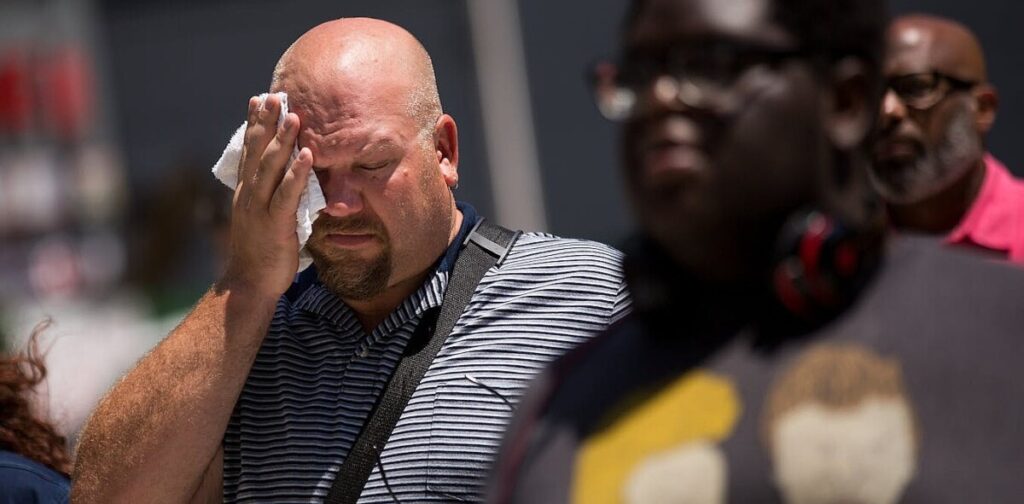
Extreme heat can threaten human health, but it’s only one way climate change puts lives at risk.
Drew Angerer/Getty Images
If you’ve been following recent debates about health, you’ve been hearing a lot
about vaccines
, diet, measles, Medicaid cuts and
health insurance costs
– but much less about one of the
greatest threats to global public health
: climate change.
Anybody who’s fallen ill during a heat wave,
struggled while breathing wildfire smoke
or been
injured cleaning up from a hurricane
knows that climate change can threaten human health. Studies show that heat, air pollution, disease spread and food insecurity linked to climate change are worsening and
costing millions of lives around the world each year
.
The U.S. government formally recognized these risks in 2009 when it determined that
climate change endangers public health and welfare
.
However, the Trump administration is now moving to
rescind that 2009 endangerment finding
so it can reverse U.S. climate progress and help boost fossil fuel industries, including lifting limits on greenhouse gas emissions from vehicles and power plants. The administration’s arguments for doing so are
not only factually wrong
, they’re deeply dangerous to Americans’ health and safety.
Health risks and outcomes related to climate change.
World Health Organization
As
physicians
,
epidemiologists
and
environmental health
scientists
who study these effects, we’ve seen growing evidence of the connections between climate change and harm to people’s health. More importantly, we see ways humanity can improve health by tackling climate change.
Here’s a look at the risks and some of the steps individuals and governments can take to reduce them.
Extreme heat
Greenhouse gases from vehicles, power plants and other sources
accumulate in the atmosphere, trapping heat
and holding it close to Earth’s surface like a blanket. Too much of it causes global temperatures to rise, leaving more people exposed to dangerous heat more often.
Most people who get minor heat illnesses will recover, but more extreme exposure, especially without enough hydration and a way to cool off, can be fatal. People who work outside, are elderly or have underlying illnesses such as heart, lung or kidney diseases are often at the greatest risk.
Heat deaths have been rising globally,
up 23%
from the 1990s to the 2010s, when the average year saw more than half a million heat-related deaths. Even in the U.S., the Pacific Northwest heat dome in 2021 killed
hundreds of people
.
Climate scientists predict
that with advancing climate change, many areas of the world, including U.S. cities such as
Miami
,
Houston
,
Phoenix
and
Las Vegas
, will confront many more days each year hot enough to threaten human survival.
Extreme weather
Warmer air holds more moisture, so climate change brings increasing rainfall and storm intensity, worsening flooding, as
many U.S. communities have experienced
in recent years. Warm ocean water also
fuels more powerful hurricanes
.
Increased flooding carries health risks,
including drownings, electrocution
and water contamination from human pathogens and toxic chemicals. People cleaning out flooded homes also face risks from mold exposure, injuries and mental distress.
Flooding from hurricanes and other extreme storms can put people at risk of injuries during the cleanup while also triggering dangerous mold growth on wet wallboard, carpets and fabric. This home flooded up to its second flood during Hurricane Irma in 2017.
Sean Rayford/Getty Images
Climate change
also worsens droughts
, disrupting food supplies and causing respiratory illness from dust and dry conditions as well as wildfires. And rising temperatures and aridity dry out forest and grasslands, making them
more vulnerable to catching fire
, which creates other health risks.
Air pollution
Wildfires, along with other climate effects, are also
worsening air quality
around the country.
Wildfire smoke is a toxic soup of
microscopic particles
(known as fine particulate matter, or PM2.5) that can penetrate deep in the lungs and
hazardous compounds
such as lead, formaldehyde and dioxins generated when homes, cars and other materials burn at high temperatures. Smoke plumes can travel
thousands of miles downwind
and trigger
heart attacks
and elevate
lung cancer risks
, among
other harms
.
Meanwhile, warmer conditions
favor the formation of ground-level ozone
, a
heart and lung irritant
. Burning of fossil fuels also generates dangerous air pollutants that cause a host of health problems, including
heart attacks, strokes
,
asthma flare-ups
and
lung cancer
.
Infectious diseases
Because they are cold-blooded organisms, insects are directly influenced by temperature. So as temperatures have risen, mosquito biting rates have risen as well. Warming also shortens the development time of disease agents that mosquitoes transmit.
Mosquito-borne
dengue fever has turned up
in Florida, Texas, Hawaii, Arizona and California. New York state just saw its first
locally acquired case of chikungunya virus
, also transmitted by mosquitoes.
As global temperatures rise, regions are becoming more suitable for mosquitoes to transmit dengue virus. The map shows a suitability scale, with red areas already suitable for dengue transmissions and yellow areas becoming more suitable.
Taishi Nakase, et al., 2022
,
CC BY
And it’s not just insect-borne infections. Warmer temperatures increase diarrhea and foodborne illness from
Vibrio cholerae and other bacteria
and heavy rainfall increases
sewage-contaminated stormwater overflows
into lakes and streams. At the other water extreme, drought in the
desert Southwest increases the risk of coccidioidomycosis
, a fungal infection known as valley fever.
Other impacts
Climate change can threaten health in numerous other ways.
Longer pollen seasons
can increase
allergen exposures
. Lower crop yields can reduce access to
nutritious foods
.
Mental health can also suffer, with
anxiety, depression
and
post-traumatic stress
following
disasters
, and
increased rates of violent crime and suicide
tied to high-temperature days.
New York and many other cities now open cooling centers during heat waves to help residents, particularly older adults who might not have air conditioning at home, stay safe during the hottest parts of the day.
Angela Weiss/AFP via Getty Images
Young children
,
older adults
,
pregnant women
and people with preexisting medical conditions are among the highest-risk groups. Often, lower-income people are also at greater risk because of higher rates of chronic disease, higher exposures to climate hazards and fewer resources for protection,
medical care
and recovery from disasters.
What can people and governments do?
As an individual, you can reduce your risk by following public health advice during heat waves, storms and wildfires; protecting yourself against tick and mosquito bites; and spending time in
green space that improves your mental health
.
You can also make healthy choices that reduce your carbon footprint, such as:
Walking, biking or using public transit instead of driving, since more physical activity
reduces chronic disease risks
.
Rebalancing your diet from meat-heavy to plant-forward, which can cut your risk of
heart disease
and lower greenhouse gas
emissions from meat production
.
Making your home more energy-efficient and opting for electric rather than gas- or oil-powered heating and cooking, which can reduce emissions while
improving indoor air quality
.
However, there are limits to what individuals can do alone.
Actions by governments and companies are also necessary to protect people from a warmer climate and stop the underlying causes of climate change.
Workplace safety can be addressed through rules to
reduce heat exposure for people who work outdoors in industries such as agriculture and construction
. Communities can open
cooling centers
during heat waves, provide
early warning systems
and design
drinking water systems
that can handle more intense rainfall and runoff, reducing contamination risks.
Governments can ensure that public transit is available and not overly expensive to reduce the number of vehicles on the road. They can promote clean energy rather than fossil fuels to cut emissions, which can also save money since the
cost of solar energy has dropped spectacularly
. In fact, both
solar
and wind energy are
less expensive than fossil fuel energy
.
Yet the U.S. government is currently going in the opposite direction, cutting support for renewable energy while
subsidizing the fossil fuel industries that endanger public health
.
To really make America healthy, in our view, the country can’t ignore climate change.
Jonathan Levy receives funding from the National Institutes of Health, the Federal Aviation Administration, the City of Boston, and the Mosaic Foundation.
Howard Frumkin has no financial conflicts of interest to report. He is a member of advisory boards (or equivalent committees) for the Planetary Health Alliance; the Harvard Center for Climate, Health, and the Global Environment; the Medical Society Consortium on Climate Change and Health; the Global Consortium on Climate and Health Education; the Yale Center on Climate Change and Health; and EcoAmerica’s Climate for Health program—all voluntary unpaid positions.
Jonathan Patz receives funding from the National Institutes of Health. He is affiliated with the Medical Society Consortium for Climate and Health, and its affiliate Healthy Climate Wisconsin.
Vijay Limaye is affiliated with the Natural Resources Defense Council.


