Shutdown recovery: FAA will only require airlines to cancel 3% of flights this weekend
The air travel landscape is showing signs of recovery as the Federal Aviation Administration (FAA) announced a reduction in mandatory flight cancellations at the nation’s busiest airports. Effective Saturday morning, airlines will only need to reduce 3% of their departures at 40 major airports, a significant improvement from the previous requirement of 6% that was enforced on Friday. This shift comes in the wake of the recent government shutdown, which had severely impacted air traffic control staffing and operations, leading to a chaotic travel environment. During the shutdown, the FAA had to implement mandatory flight cancellations to manage the strain on air traffic control facilities, which were grappling with staffing shortages as controllers went weeks without pay.
The situation has notably improved since the reopening of the government on Wednesday night, with the FAA reporting a dramatic drop in staffing issues—from 81 triggers to just four in a week. This is a promising development, especially with the Thanksgiving travel rush approaching, which airlines anticipate will be record-breaking this year. While the FAA’s restrictions still mean that hundreds of flights may be canceled over the weekend, the overall cancellation rate has remained lower than expected, with data from FlightAware indicating that only about 2% to 3% of flights were canceled at major hubs like Chicago O’Hare and Atlanta Hartsfield-Jackson. Airlines have also been proactive, offering flexible travel waivers during the FAA’s restrictions and are likely to return to more standard ticket policies as conditions stabilize.
As travelers prepare for the busy holiday season, the easing of flight restrictions is a welcome sign. With airlines only canceling around 160 flights for Saturday, it appears that both the FAA and airlines are committed to ensuring smoother travel experiences. The situation remains fluid, but the FAA’s monitoring of staffing and flight performance over the weekend will be crucial in determining whether airlines can fully restore their schedules in the coming days. For those planning to travel, this news offers a glimmer of hope for a less stressful journey as the holiday season approaches.
The outlook for air travel keeps improving.
Late Friday, the Federal Aviation Administration announced it would reduce the number of flights airlines would have to cancel at the nation’s busiest hubs.
Starting Saturday morning, airlines will only have to trim 3% of departures at
40 major airports
across the country.
To be clear, that will still likely mean a few hundred daily flight cancellations this weekend.
But it’s a big improvement from the 6% of flights that carriers were supposed to scrap on Friday — and the 10% of flights airlines would’ve had to cut if the government shutdown
hadn’t come to an end.
During the final week of the shutdown, the FAA
implemented mandatory flight cancellations
to alleviate the burden on air traffic control facilities, which battled short staffing as controllers went weeks without pay.
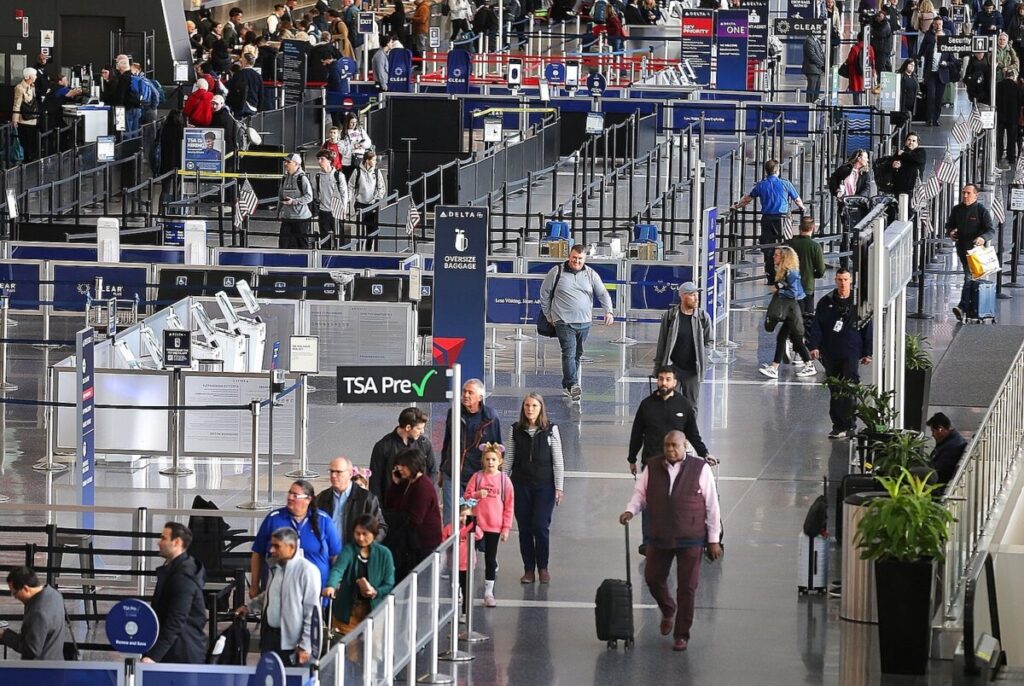
Crowds pack Terminal 3 at Chicago’s O’Hare International Airport (ORD). JIM VONDRUSKA/BLOOMBERG VIA GETTY IMAGES
But staffing — and flight numbers — got dramatically better this week, especially as the government officially reopened on Wednesday night.
On Thursday, the FAA reported just four so-called “staffing triggers” at air traffic facilities, the FAA said. Last Saturday, there were 81, on what turned out to be a day of
mass chaos at airports.
The Trump administration said it would monitor staffing and flight performance over the weekend before potentially allowing airlines to operate their full schedules next week.
It’s an encouraging sign with just a week to go until the unofficial start of the Thanksgiving travel rush, which airlines had projected to be a record-breaker.
Read more:
Government reopens: Can air travel recover in time for Thanksgiving?
Control tower at Ronald Reagan Washington National Airport (DCA). ANDREW CABALLERO-REYNOLDS/AFP VIA GETTY IMAGES
We should point out: while airlines were technically supposed to cut 6% of flights at 40 major airports on Friday, FlightAware data shows the cancellation rates were actually far lower.
According to FlightAware, airlines canceled roughly 2% to 3% of departures at big hubs like Chicago’s O’Hare International Airport (ORD), Hartsfield-Jackson Atlanta International Airport (ATL) and Dallas Fort Worth International Airport (DFW) — among many others.
Flight delays on Friday were also just a fraction of what we saw last weekend.
Most airlines c
ontinued to offer flexible travel waivers
while the FAA’s restrictions were in place. It’s likely carriers will restore more normal ticket policies once the restrictions end.
Airlines seemed to anticipate the FAA would relax its restrictions a bit. As of 5:30 p.m. EST, carriers had only canceled around 160 flights for Saturday, per FlightAware.
Related reading:
When is the best time to book flights for the cheapest airfare?
The best airline credit cards
What exactly are airline miles, anyway?
6 real-life strategies you can use when your flight is canceled or delayed
Maximize your airfare: The best credit cards for booking flights
The best credit cards to reach elite status
What are points and miles worth? TPG’s monthly valuations
Editorial disclaimer: Opinions expressed here are the author’s alone, not those of any bank, credit card issuer, airline or hotel chain, and have not been reviewed, approved or otherwise endorsed by any of these entities.


