Gen Z is bringing back one of the most divisive dining trends of the 2010s
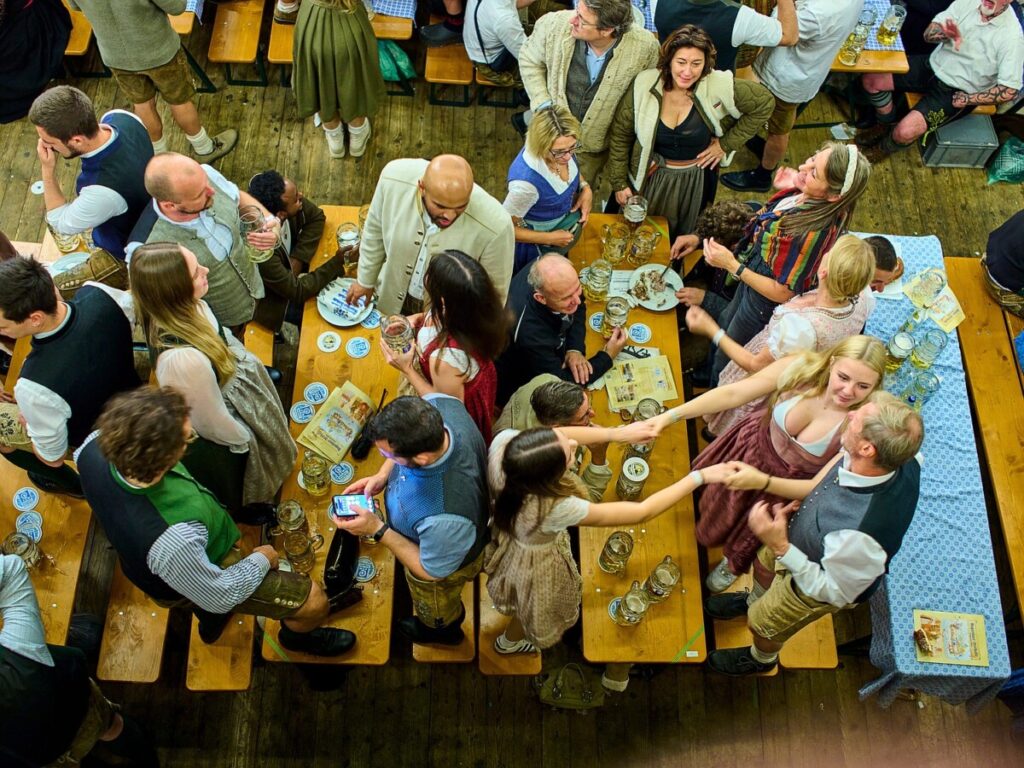
Communal dining, a trend that has seen peaks of popularity in the 1980s and early 2000s, is experiencing a resurgence among Gen Z. This generation, often characterized by their digital upbringing, is now embracing the concept of shared tables as a means to foster real-world connections post-pandemic. According to a recent report by the online reservation service Resy, a striking 90% of Gen Z diners report enjoying communal tables, a stark contrast to only 60% of baby boomers. This shift highlights a generational revival of a dining format that has historically divided opinions, with some seeing it as a cozy way to socialize and others as a source of social anxiety.
The appeal of communal dining for Gen Z lies in its ability to transform dining into a shared experience. As Pablo Rivero, CEO of Resy and Tock, explains, communal tables create an environment where diners can engage in group conversations without the pressure of being the sole focus. This is particularly comforting for those who may feel socially anxious or have primarily interacted online. The format not only encourages new connections—63% of diners reported meeting new people at communal tables—but also offers practical benefits, such as shared plates that make dining more affordable and provide opportunities to explore new flavors. Moreover, the long tables serve as excellent backdrops for social media sharing, appealing to a generation that values both experience and aesthetic.
The trend’s resurgence also reflects a broader cultural shift towards valuing human connection in an age of rapid technological advancement. Restaurateurs like Donnie Madia point out that communal dining has historically thrived in times of social disconnection, such as after the 9/11 attacks and the 2008 financial crisis. In a similar vein, the COVID-19 pandemic has led many to seek intimacy and connection in dining experiences. As Ashley Mitchell, vice president of marketing for East Coast Wings + Grill, notes, Gen Z is not just looking for meals but for experiences that foster genuine connections. This desire for tangible social interactions is evident in their growing preference for dinner parties and supper clubs over traditional nights out, indicating a shift back toward communal dining as a vital part of their social landscape.
https://www.youtube.com/watch?v=4FN-4mDsEPk
Communal dining, a divisive trend that experienced surges of popularity in the 1980s and early 2000s, is making a comeback.
Peter Schatz/Getty Images
Gen Z is bringing back the polarizing trend of shared tables and communal dining.
Though often the butt of jokes, the trend experienced surges in popularity in the 1980s and 2000s.
In the post-pandemic era, shared tables offer an easy way for digital natives to socialize.
Where diners once recoiled from the idea of rubbing elbows with strangers,
Gen Z
is pulling their chairs a little closer.
According to new data from the online reservation service company Resy, 90% of Gen Z diners say they enjoy communal tables, compared to just 60% of boomers, highlighting a generational revival of one of the restaurant world’s most polarizing trends: seating multiple groups of diners together at large banquet tables.
For a generation raised online but hungry for real-world connection,
sharing a table with strangers
has become less about awkward proximity and more about the promise of controlled socialization, and the potential for a new friend — or even a date.
“Share plates have become the new standard, especially among Gen Z, and communal tables are the perfect setting for that — they naturally turn dinner into a shared experience,” Pablo Rivero, CEO of Resy and Tock and Senior Vice President of Global Dining at American Express, said. “You never know who you’ll be seated next to; that’s the fun of it!”
Resy’s report found 63% of respondents feel that communal tables are great for meeting new people, with half saying they’ve had interesting conversations with someone they otherwise wouldn’t have spoken to while dining with strangers. One in three said they’d met a new friend this way, and one in seven said they’d landed a date.
Communal dining
has long split the room — literally. The format has been a punchline in the FX comedy “You’re the Worst,” and IFC’s “Portlandia,” where characters endured forced intimacy and awkward small talk over shared seating. For some diners, the idea of brushing elbows with strangers feels less like rustic charm and more like a social anxiety experiment, but not everyone sees it that way.
Michael Della Penna, chief strategy officer at the digital advertising research firm InMarket and parent of two Gen Z kids, told Business Insider that, for members of a notably
anxious generation
, the communal environment offers a social buffer, “because you don’t have to be the focus or the initiator of the conversation.”
“You are benefiting, because it’s a group conversation, and you can add to that conversation in a safer way,” Della Penna said. “It’s especially comforting for some of those folks who may have felt like they don’t have the social skills, or are a bit shyer, or have been kind of digital-only for so long. It’s a safe step back to connecting and being social where you don’t have the heavy weight of carrying the entire conversation.”
Communal dining also offers a few other perks, Della Penna said: shared plates are often a more affordable way to dine, they provide customers with low-risk opportunities to try new flavors, and the in-person experience is seen as a better value than drive-thru or take-out options.
For those who want to share their meal on social media, long communal tables also make a great photo op, he said.
Intimate, in-person, and built for sharing
Communal dining has a history that spans thousands of years, but its popularity has fluctuated, with waves of enthusiasm following periods of intense social disconnection. Donnie Madia, a Chicago-based restaurateur and partner of the 12-time James Beard award-winning restaurant group One Off Hospitality, told Business Insider.
“Back in 2001, after the tragedy in New York, people wanted to be together. They wanted to be intimate, and to be in smaller spaces, and interaction was really important,” Madia, who played himself in an episode of FX’s hit show “The Bear,” said. “The same thing happened in 2008 after the financial crisis — once people started to come back to the restaurants, they wanted that festive feeling of being communal and dining together.”
Madia says the turn toward communal dining is one toward human connection — and is especially important in the post-COVID era, as well as in an age of exponentially accelerating technological advancement.
For Gen Z, which is also
turning its back on AI
and spearheading a
resurgence of flip-phones
, communal dining appears to be part of a broader recalibration toward the tangible: shared experiences that can’t be downloaded, duplicated, or filtered.
Gen Z is also responsible for a surge in
dinner parties
and
supper clubs
as they trade nights out on the town for more intimate social gatherings that feel personal and affordable, while still delivering the connection and atmosphere they crave.
“Gen Z is driving a shift back toward communal dining because they crave experiences as much as meals,” Ashley Mitchell, vice president of marketing for East Coast Wings + Grill and Sammy’s Sliders, told Business Insider.
Mitchell added, “They grew up online, but they’re intentionally seeking real-world connection, and restaurants have become that gathering space again. For them, sharing a table isn’t just practical seating — it’s part of the social experience.”
Read the original article on
Business Insider