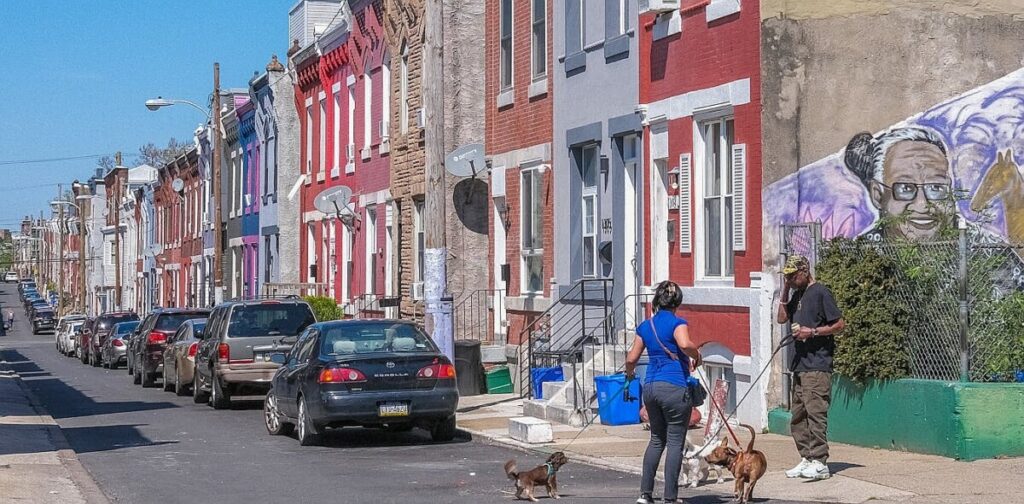
Black and Latino homeowners in Philly face discrimination when appraisers assess their properties
Home appraisal bias is a significant issue that exacerbates racial wealth disparities in the United States, particularly affecting Black and Hispanic communities. Research indicates that homes in predominantly Black or Hispanic neighborhoods are frequently appraised below their market value compared to similar homes in predominantly white neighborhoods. This bias in appraisals not only undermines the financial stability of families in these communities but also contravenes the Fair Housing Act of 1968, which prohibits housing discrimination based on race, color, and other factors. Appraisals play a critical role in securing mortgages, influencing loan terms, and ultimately determining the wealth accumulation potential for homeowners. For instance, if an appraisal undervalues a property, it can lead to higher mortgage costs or even denial of loans, further entrenching economic inequalities.
In Philadelphia, the problem of appraisal bias is particularly pronounced. Studies utilizing data from the Home Mortgage Disclosure Act (HMDA) reveal that collateral—often determined by appraisals—is a more frequent reason for denied cash-out refinance applications in nonwhite neighborhoods. This trend highlights a systemic issue where homeowners of color are unfairly disadvantaged when seeking to leverage the equity in their homes. The lack of diversity among appraisers—94% of whom are white—may contribute to these biased evaluations. The situation calls for urgent action, as both local governments and nonprofit organizations are increasingly tasked with addressing these disparities in the absence of robust federal oversight. Philadelphia’s Home Appraisal Bias Program aims to tackle this issue by promoting diversity among appraisers, enhancing transparency in the appraisal process, and educating consumers about their rights and options.
To combat appraisal bias effectively, several solutions are proposed. Increasing transparency in the appraisal industry is paramount; establishing a national database akin to the HMDA for appraisals could provide valuable insights into discriminatory practices. Homeowners must also be educated about the appraisal process, including their right to contest appraisals they believe are inaccurate. Local initiatives, such as public awareness campaigns, can further empower individuals to understand and navigate the appraisal landscape. Although recent federal actions have diminished the enforcement of the Fair Housing Act, it remains critical for individuals who experience appraisal bias to report these incidents to local or state agencies. By documenting these occurrences, communities can work towards accountability and a more equitable housing market. As the conversation around racial equity in housing continues, it is essential for all stakeholders to engage in meaningful dialogue and action to dismantle the systemic barriers that perpetuate inequality.
Home appraisal bias contributes to racial wealth disparities and violates the Fair Housing Act.
Jeff Fusco/The Conversation U.S.
,
CC BY-SA
For most families, owning a home is the primary way
to accumulate wealth
and transfer that wealth to future generations.
But in Philadelphia and
other U.S. cities
, studies have shown that if you live in a Black or Hispanic neighborhood, your home is more likely to be
appraised below its market value
when compared to homes in non-Hispanic white neighborhoods. This is called home appraisal bias.
An appraisal represents an expert opinion
of the value of a home
. It is determined by a licensed professional who applies industry standard rules and practices.
The appraisal is critical to securing a mortgage to purchase a home or to refinancing an existing mortgage. It can determine whether an applicant gets a mortgage and influence how much the mortgage costs. For example, if a borrower must take out a mortgage for more than 80% of a property’s value, they may be required to pay for private mortgage insurance in some cases. Getting the appraisal value right is key to ensuring that homebuyers and those seeking to refinance a mortgage can do so under fair and equal conditions.
We are two academics who study
urban places
and
the people who live in them
. Together, we have more than 80 years of experience working at federal civil rights agencies, teaching at research universities and consulting for the housing industry, city and state agencies, and nonprofits.
Most recently we have been working with Philadelphia Mayor Cherelle Parker on a plan to
reduce racial bias in home appraisals in Philly
.
Fair Housing Act of 1968
In 1968, President Lyndon Johnson signed the
Fair Housing Act
, which made it unlawful to deny housing based on race, color, religion or national origin. Congress added sex in 1974 and handicap and familial status in 1988.
The Fair Housing Act was passed just seven days
after the assassination of the Rev. Martin Luther King Jr.
and two months after the release of the
Kerner Commission report
. This federal report examined the causes of racial violence in the U.S. in the 1960s and concluded, “Our nation is moving toward two societies, one black, one white, separate and unequal.”
Passage of the Fair Housing Act did not end housing discrimination. But over the years,
residential segregation has declined slowly
, and the most egregious and overt discriminatory acts, such as
cross burnings and blockbusting
, rarely happen anymore.
In recent years, attention has focused on racial disparities in home valuation established by appraisals. This reflects, in part, some high-profile, public allegations of racial bias in appraising revealed through homeowners’ “
whitewashing” of their homes
.
Whitewashing describes how a Black homeowner who receives a low appraisal removes all signs that a Black person lives in a home, replaces family photos with photos of white people, and has a white friend at home when a second appraiser arrives, giving the impression that it is the home of a white family. Bias is revealed when the second appraisal produces a higher value than the first.
The fact that
94% of appraisers and assessors in the U.S. are white
may be a contributing factor.
Appraisal discrimination is unfair, contributes to racial wealth disparities and violates the Fair Housing Act.
Home appraisal bias is a national issue
Multiple studies establish that homes in Black and brown neighborhoods across the U.S., all else equal, are
valued less than comparable homes in white neighborhoods
. Appraisal bias is just one factor in this, as are historical and contemporary
redlining
and real estate practices, individual choices and other factors.
One way to identify appraisal discrimination would be to compare how often appraisals are below agreed-upon sale prices in nonwhite neighborhoods compared to white neighborhoods. Our research has documented that
appraisals themselves
are sometimes
biased representations of home values
.
Nationally, the percentage of appraisals below the sale price is
substantially greater in nonwhite neighborhoods
than in white neighborhoods. There is no apparent reason that appraisals should be systematically higher or lower than sale prices in nonwhite or white neighborhoods.
It’s a Philly issue too
Appraisal bias also persists in Philadelphia, as we’ve demonstrated in our own analyses using the
Federal Housing Finance Agency’s uniform appraisal dataset
, or UAD.
The UAD is the only neighborhood-level source of information on home appraisal activity. However, the dataset reports less than half of census tracts in Philadelphia because the FHFA often suppresses data due to privacy concerns. In tracts with few transactions, reporting the data could identify individual homeowners.
Earlier this year, we employed a different approach
using 2021-24 lending data
from the
Home Mortgage Disclosure Act
. HMDA is an annually released federal database containing detailed information on most mortgage applications in the U.S. The data includes race, mortgage characteristics, property value, location and other details.
We wanted to understand whether there was a pattern of denied applications for cash-out refinance mortgages where the lender’s single reason for denial was collateral, which is generally established by the appraisal. Cash-out refinance mortgages are loans that pay off the homeowner’s existing loan and allow that homeowner to additionally borrow some of the equity they have in their home.
Our study shows that it was substantially more frequent that collateral was the single reason for that denial in nonwhite neighborhoods and for nonwhite homeowners.
This was the case whether the homeowner was seeking a conventional mortgage or a mortgage insured by the Federal Housing Administration. FHA borrowers frequently have lower credit or a lower down payment than a conventional borrower and pay an insurance fee that compensates for the higher risk they represent.
These two Philadelphia-based studies used different methodologies to arrive at the same conclusion, which we shared in a September 2025 report for the nonprofit Reinvestment Fund, where one of us is a senior adviser. That conclusion is this: Whether you want to buy a home or access the stored wealth in the home you already own in Philadelphia,
you are disadvantaged in the valuing of the real estate
if you are a person of color or if the home is located in a mostly Black or Hispanic neighborhood.
Possible solutions
Remedies are available, but in the current political climate the burden is increasingly on local governments, nonprofit advocacy groups and industry actors rather than the federal government.
More transparency:
The home appraisal industry is opaque. While the uniform appraisal dataset provides some insight into appraisal bias, much of its data
is not public
. Further, the U.S. Department of Housing and Urban Development has not included neighborhood-level appraisal data for Federal Housing Administration transactions.
A national database of appraisals, similar to the HMDA database for loan applications, would improve transparency and accountability. While the HMDA did not eliminate lending discrimination, it is a
valuable tool to uncover and address discrimination
.
Get informed:
A fair appraisal ensures that homeowners have an independent, accurate, expert opinion of the value of their home. But homeowners must understand how that opinion was derived and how they can contest that opinion of value when appropriate. Some lenders now allow an owner to get a second opinion if the owner feels the appraised value is inaccurate.
Raise public awareness:
Local officials can inform the public about the nuts and bolts of appraisals and outline what can be done when bias occurs. Philadelphia is taking steps. The city’s
Home Appraisal Bias Program
is working to
increase diversity of local appraisers
, enhance appraisal transparency and educate consumers.
File a complaint:
HUD has substantially pulled back from combating appraisal bias, including
disbanding the Biden-era PAVE Task Force
, which was making progress on the issue. The Trump administration has further impaired enforcement of the Fair Housing Act through layoffs and the
withdrawal of critical policies
long found to be effective in fighting housing discrimination.
Nevertheless, those who believe they have been subjected to appraisal bias can file complaints with HUD or their state or local fair housing agencies. This will at least create a record of the frequency of the issue.
Given the
reduced role of the federal government
today, there is an extra burden on state and local civil rights agencies and nonprofits to ensure alleged violations are investigated and, when appropriate, prosecuted.
Read more of our stories about
Philadelphia and Pennsylvania
, or sign up for our Philadelphia
newsletter on Substack
.
The authors do not work for, consult, own shares in or receive funding from any company or organization that would benefit from this article, and have disclosed no relevant affiliations beyond their academic appointment.


