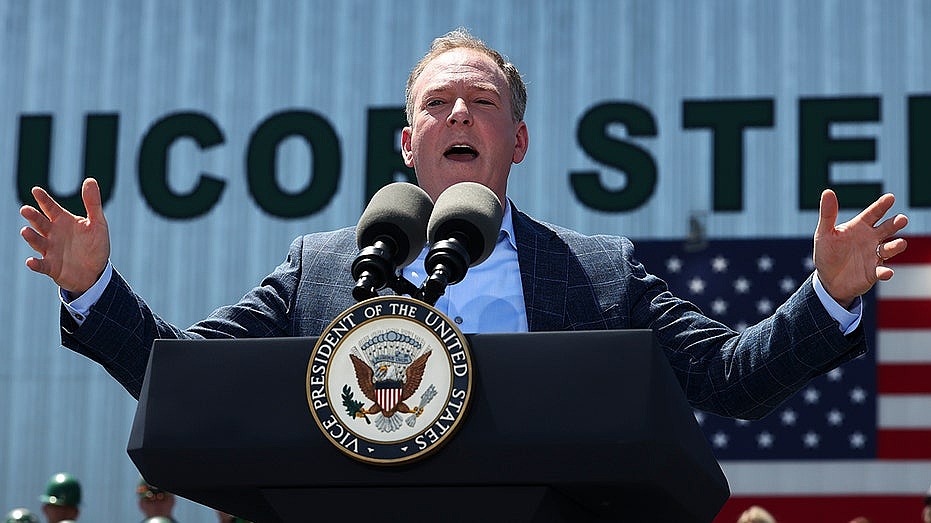
EPA chief wraps national tour as critics slam deregulation agenda
In a significant conclusion to his extensive nine-and-a-half month tour across all 50 states, Environmental Protection Agency (EPA) Administrator Lee Zeldin has engaged with communities affected by the agency’s policies, promoting various reforms aimed at addressing pressing environmental issues. Zeldin’s tour culminated on Friday, during which he not only solicited feedback from business owners, trade workers, and residents but also announced several key initiatives. Among these reforms is a landmark agreement with Mexico to halt the flow of untreated wastewater from the Tijuana River into Southern California, a problem that has plagued the region for decades. This move is seen as a critical step towards protecting public health and restoring the local economy, which has suffered due to beach closures and waterborne illnesses linked to the sewage spills.
Zeldin’s tour also highlighted his commitment to expediting the cleanup of nuclear waste in Missouri, with a new directive that aims to cut two years off the timeline for the West Lake Landfill Superfund Site cleanup. This site has been a major environmental concern since it became contaminated with radioactive waste. In addition, Zeldin rescinded a previous emissions rule that complicated states’ abilities to seek relief from foreign air pollution impacts, a decision welcomed by officials in states like Arizona and Utah. Furthermore, Zeldin announced new actions to support farmers and truckers reliant on diesel engines, addressing concerns over stringent emissions controls that have led to performance issues in their vehicles. His administration is collaborating with the U.S. Small Business Administration to encourage manufacturers to revise emissions control software, aiming to alleviate the financial burden on these essential workers.
However, Zeldin’s initiatives have sparked controversy and criticism from environmental advocates. Critics argue that his tenure has been marked by significant rollbacks of environmental protections, including the fast-tracking of new pesticides containing harmful “forever chemicals” and the weakening of regulations on toxic air pollution. Organizations like the Environmental Working Group have voiced concerns that Zeldin’s actions represent a retreat from scientific and public health standards, potentially jeopardizing the safety of drinking water and air quality. Legal challenges have emerged against the EPA under Zeldin’s leadership, with groups like Earthjustice Action filing lawsuits to contest regulatory rollbacks, including the proposed repeal of the Greenhouse Gas Reporting Program. These advocates emphasize that the climate crisis is intrinsically linked to public health, and they urge the EPA to uphold its foundational mission of safeguarding the environment and human health. As Zeldin promotes what he describes as a “great American comeback,” the debate continues over the balance between economic interests and environmental stewardship.
Environmental Protection Agency (EPA) Administrator Lee Zeldin just capped off a nine-and-a-half month 50-state tour around the country talking to various folks impacted by his agency’s policies.
Zeldin completed his tour Friday after having made numerous reforms while on the road, including an agreement with Mexico to stop their wastewater from continuing to flow into the United States, a new directive that will help expedite the cleanup of nuclear waste in Missouri, rescission of an emissions rule and new guidance on diesel exhaust fuel aimed at helping farmers and truckers.
Meanwhile, Zeldin also visited sites of major environmental disasters, such as
East Palestine, Ohio,
which is still dealing with the after-effects of a major chemical spill that happened during the Biden administration, and Los Angeles, which has recently seen several devastating wildfires.
NEWSOM PUSHES CLIMATE RECORD ABROAD AS CALIFORNIANS SHOULDER AMERICA’S HIGHEST GAS COSTS
“From business owners to trade workers, elected officials to residents impacted by environmental challenges, I’ve been soliciting feedback on any and every way the Trump EPA can fix everything,” Zeldin said after the culmination of his tour
.
One of the accomplishments Zeldin is touting includes a July Memorandum of Understanding to address sewage spillage from the Tijuana River. Raw sewage has been flowing into Southern California from Mexico for decades, which Zeldin’s EPA said has led to beaches being forced to close, harm to the region’s economy and sickness on either side of the border.
EPA administrator Zeldin also released an “EPA Region 7 Status Update for West Lake Landfill Superfund Site” located in Bridgeton, Missouri and Coldwater Creek. The update cut two years off the initial start date of the project, according to the EPA. The waste is scheduled to be entirely cleaned up by 2038.
Another reform includes rescinding guidance from the “Preparation of Clean Air Act Section (CAA) 179B Demonstrations for Nonattainment Areas Affected by International Transport of Emissions.” Zeldin’s EPA said that the guidance made it “unnecessary difficult” for states to prove that foreign air pollution was harming Americans, not theirs, and seek regulatory relief under the Clean Air Act. Zeldin said this was of major concern for elected officials and business owners in Arizona and Utah.
Part of this reform will include a reevaluation of a determination by the federal government of how much international emissions are impacting residents in the Wasatch Waterfront area, in Utah.
FLARING CLIMATE PROTESTS BECOMING MORE CONFRONTATIONAL AS FREE SPEECH TESTED GLOBALLY
Zeldin also announced in Iowa that new action would be taken to “protect” farmers, truckers and other individuals who need to operate diesel-fueled engines during his trip. In conjunction with the
U.S. Small Business Administration,
the government is pushing engine and equipment manufacturers to revise emissions control system software in existing vehicles and equipment that has been compelling sudden speed and power losses and costing businesses a lot of money in order to comply with strict regulations.
“Together we are empowering the great American comeback,” Zeldin insists in a video his team posted to social media about the conclusion of his tour. However, there are some folks who disagree with Zeldin.
“Administrator Zeldin is supposed to safeguard the environment and public health, yet under his watch the Trump EPA is fast-tracking new pesticides — including several containing PFAS ‘forever chemicals’ that build up in our bodies and never break down,” Alex Formuzis, spokesperson for the Environmental Working Group, told Fox News Digital. “At the same time, he is tearing apart core protections on toxic air pollution, contaminated drinking water, hazardous industrial discharges, and even bedrock legal decisions that allow the EPA to regulate greenhouse gas emissions from tailpipes and smokestacks under the Clean Air Act.”
Zeldin was “alarmingly right” about enacting one of the “biggest de-regulatory action[s]” in history, Formuzis added, calling it “a wholesale retreat from facts, science and environmental and public health protection.”
“Hardly an agenda to make Americans healthy,” he added.
Environmental groups have sued Zeldin’s EPA and the Trump administration over many of their regulatory rollbacks. Earthjustice Action and WE ACT for Environmental Justice have recently challenged Zeldin’s bid to scrap federal greenhouse-gas reporting rules in a Nov. 3 filing.
“The
climate crisis
is a public health crisis, and EPA’s proposed repeal of the Greenhouse Gas Reporting Program will exacerbate both,” the groups wrote. “At a time when millions of Americans are losing access to healthcare and millions more are seeing polluting data centers and energy generators built in their backyards, it is imperative that EPA uphold its mission to protect human health and the environment.”