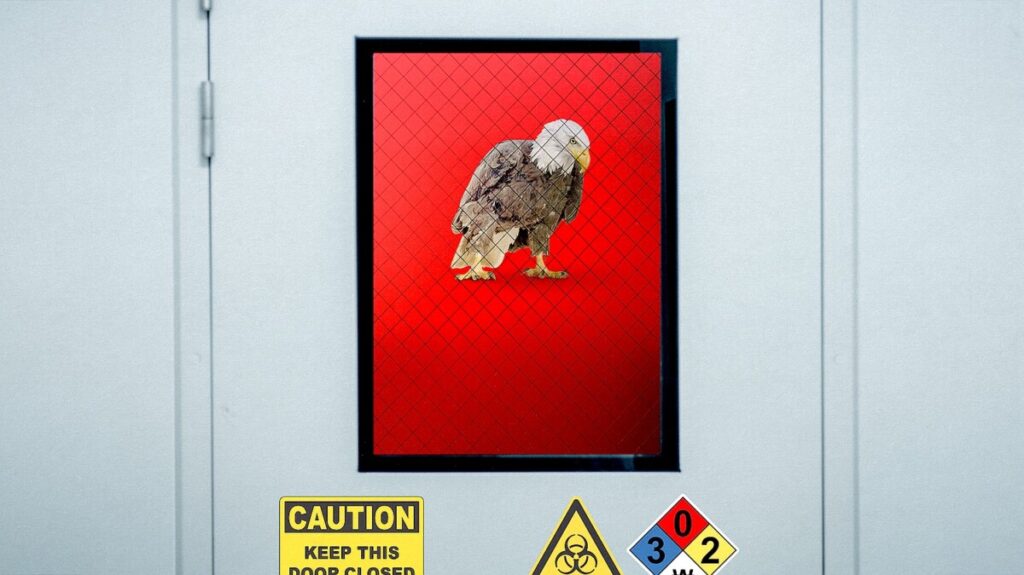
Trump’s Animal-Research Plan Has a Missing Step
Animal rights advocates and the U.S. government have historically been at odds, particularly regarding the substantial subsidies for meat and dairy production, as well as the billions spent on animal research each year. However, recent developments under the Trump administration indicate a potential shift towards a more collaborative approach. In April, the Food and Drug Administration (FDA) announced a significant reduction in animal testing requirements for a widely used class of drugs, claiming this would expedite the drug development process and ultimately lower costs for consumers. Following this, the National Institutes of Health (NIH) pledged to decrease animal use in biomedical research, prompting a positive response from organizations like PETA, which even sent flowers to NIH Director Jay Bhattacharya in appreciation of these efforts.
Despite these promising initiatives, there remains a critical gap in tracking the total number of animals used in U.S. laboratories, complicating the assessment of the government’s progress. While the FDA and NIH have made commitments to explore alternative methods, such as human-focused approaches and AI technologies, the current regulatory framework under the Animal Welfare Act only accounts for a limited number of species, excluding many commonly used in research, such as mice and rats. This lack of comprehensive data means that while the administration can tout its efforts to reduce animal testing, the actual impact may be obscured, as there is no clear measurement of how many animals are involved in research activities across the country. The NIH’s new funding initiatives prioritize non-animal methodologies, but the absence of consistent tracking could allow laboratories to continue existing practices without significant change.
The complexity of animal research reporting is further compounded by varying definitions and reporting standards across institutions. While the USDA collects data on certain species, many smaller animals, including millions of rodents, fall outside this purview. Estimates suggest that between 10 million and 20 million rodents are used annually, but other assessments indicate numbers could be as high as 111 million. This inconsistency in data collection hampers transparency and public understanding of animal research’s scale and ethics. As the Trump administration looks to modernize scientific research, the potential for technological advancements to replace animal models is promising, yet the ability to measure progress remains limited without a robust system for tracking animal use in research. The bipartisan Federal Animal Research Accountability Act aims to address these shortcomings by mandating comprehensive reporting, but the White House has not yet publicly endorsed this effort. As the conversation around animal rights and scientific research evolves, the need for transparent measurement and accountability remains paramount.
https://www.youtube.com/watch?v=lZUZ5UJ_5tM
Animal-rights groups have long been at odds with the U.S. government, which subsidizes meat and dairy production and spends
billions
of dollars on animal research every year. But in some ways, they’ve found themselves seeing eye to eye with the Trump administration. This year, the White House has broadcast its intent to greatly reduce animal experimentation in the United States. In early April, the
Food and Drug Administration
announced that it would require less testing on animals for the development of a widely used class of drugs—an approach, the agency says, that should speed up the drug-development process and eventually lower drug prices. Weeks later, the
National Institutes of Health
declared its intention to reduce the use of animals in biomedical experiments in the United States; in response, PETA sent
flowers
to NIH Director Jay Bhattacharya.
These initiatives, if they come to fruition, could prove quite popular. A recent
Gallup poll
shows that the proportion of Americans who approve of medical testing on animals has been dropping for decades. But it will be difficult for voters—and the administration—to understand the actual effects of the government’s efforts, because no one is tracking the total number of animals used across U.S. labs.
For centuries, animals have been humans’ primary models for understanding how our bodies work and react to drugs and other chemicals. Blood transfusions, antibiotics, cardiac pacemakers, organ transplantation, insulin for diabetes, and inhalers for asthma all resulted from animal research. (Even amid the NIH’s new push to use alternatives, its leaders have said that the practice is
vital to advancing scientific knowledge
.)
But in an April “
roadmap
” for reducing animal testing of human treatments, the FDA stated that the practice has proved to be a poor predictor of success for human drugs, particularly for diseases such as cancer and Alzheimer’s. Over the summer, the
NIH announced
that new funding opportunities would prioritize “human-focused” approaches
—
including clinical trials, cells in test tubes, and AI-based approaches—over animal tests. And in September, the agency announced $87 million in funding for the
establishment of a center to develop
new approaches using organoids, tiny 3-D tissue models that mimic human organs.
Nicole Kleinstreuer
, the NIH acting deputy director leading the efforts to invest in nonanimal methodologies, recently told me that she and her team are “doing a deep dive” into specific NIH grants, starting with those that use dogs and cats, in order to understand the role of animal models in the studies and “eliminate those programs wherever possible.”
In the United States, two federal agencies collect lab-animal numbers. Under the Animal Welfare Act, any facility that experiments on certain species must
report its annual usage to the Department of Agriculture
, which compiles a summary on its website; in 2024, it tallied more than 775,000 animals, including some
40,000 dogs and 100,000 primates
. But the AWA’s definition of
animal
excludes most creatures used in research—most mice and rats, and all fish, insects, and cephalopods—which animal-rights activists are no less keen to protect than dogs and primates. A separate law requires most federally funded labs to report an “
average daily inventory
” of all vertebrate species to the NIH. But the reports are infrequent (typically every four years, according to Ryan Merkley, the director of research advocacy at the research-ethics nonprofit Physicians Committee for Responsible Medicine), not published, and inconsistent: Some labs count individual mice, for instance, while others count
cages
of mice or racks of cages. (A spokesperson for the NIH’s Office of Extramural Research, who did not provide their name, told me that the agency “strongly encourages” researchers to be transparent about their animal use in their published work.) Animals in labs that don’t use any species covered by the Animal Welfare Act and don’t report to the NIH aren’t counted by the government at all.
[
Read: A new declaration of animal consciousness
]
This system could allow the Trump administration to talk a big game about animal testing without enacting policies that force labs to meaningfully change their practices. Thus far, the White House hasn’t publicly proposed any changes to federal policy for tracking research animals. “The
FDA
and NIH’s historic action to phase out costly and outdated animal testing in new clinical trials reflects the Administration’s commitment to modernizing our scientific research apparatus,” the White House spokesperson Kush Desai told me via email. An FDA spokesperson told me that the agency’s regulatory mission “does not include counting, reporting, and publicly sharing numbers of animal usage in the United States.”
Industry experts and animal-rights organizations have tried to come up with their own estimates, but they vary wildly. The National Association for Biomedical Research, a lobbying group whose members conduct or support animal research, says that some
95 percent of warm-blooded lab animals are rodents
, which, combined with the USDA’s 2024 data, suggests that somewhere between 10 million and 20 million rodents are used in labs each year. But in a
controversial
2021
paper
, Larry Carbone, who worked for four decades as a laboratory-animal veterinarian, used documents from the NIH and other large institutions to estimate that more than 111 million rats and mice were used in U.S. labs from 2017 to 2018.
Some universities and other research facilities say they have good reason not to publicize the number of animals they experiment on. For one thing, they risk more intense criticism from animal-rights groups. Sally Thompson-Iritani, an assistant vice provost at the University of Washington, has worked in animal research for more than 30 years. She told me that animal-rights activists once gathered to protest at her home, shouting and holding signs she described as vulgar. Still, in early 2024, Thompson-Iritani started posting her
university’s animal numbers
online after someone from an animal-activist group convinced her that sharing the data (a practice more common in the European Union and the United Kingdom) would demonstrate openness.
Counting animals also takes time and money. A representative from Virginia Tech
said last year
that the additional facility managers, researchers, comptrollers, and machines required to publicly report additional data on animal experimentation would cost the school almost $2 million. Animal caretakers—who might be tasked with counting—already tend to be overworked. Plus, their jobs are especially vulnerable to funding reductions: In its efforts to slash funding for scientific research, the Trump administration has been keen on limiting so-called indirect costs, which can include spending on vets, food, care, housing, and other services that improve research animals’ lives. That could limit the resources available not just for potential tracking of animals used in research, but also for keeping those animals in (at the very least) acceptable conditions. Margaret Landi, a retired veterinarian who worked for a major pharmaceutical company for decades and is now in bioethics, told me she’s concerned that the administration’s cuts to scientific research will set research-animal welfare back 30 years.
[
Read: How many times can science funding be canceled?
]
Even with these possible costs, if the administration is serious about tracking its progress on reducing animal research, the NIH could require comprehensive, public reporting on animals from federally funded labs. This is what the bipartisan
Federal Animal Research Accountability Act
, introduced in the House of Representatives in May, would do. The White House declined to comment on the bill, citing delays in communications due to the government shutdown.
Perhaps one day, technological advances will make animal models obsolete; lately, the White House has been promoting AI’s potential to replace some animal testing. But in the meantime, Americans’ ability to gauge progress toward that goal will be limited. For a problem to be managed, it must first be reliably and transparently measured. Scientists understand that best of all.


