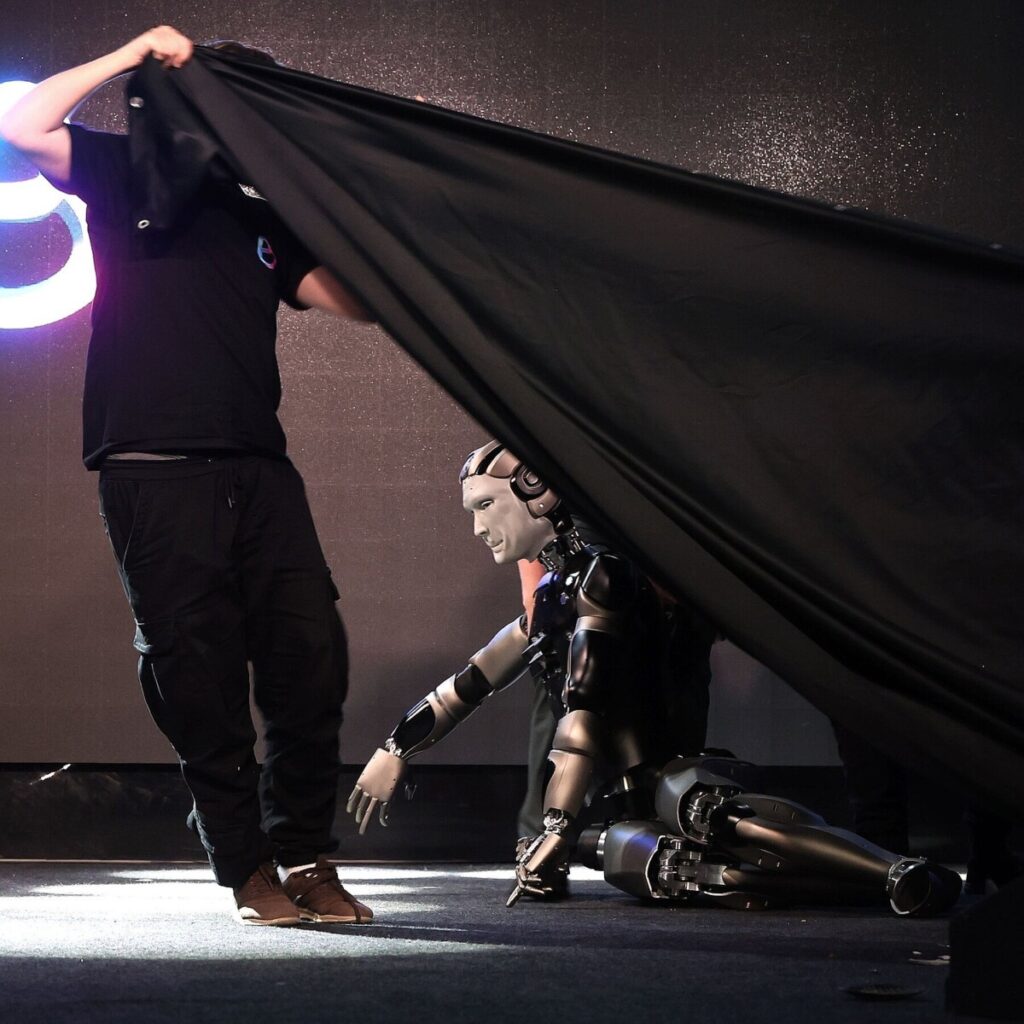
Russian Humanoid Robot Falls on Its Face in Hyped Debut
In a striking demonstration of both technological ambition and the challenges of robotics, Russia unveiled its first anthropomorphic robot, AIDOL, in a highly publicized event in Moscow on Tuesday. Designed to showcase advancements in artificial intelligence and robotics, AIDOL is intended to perform a variety of tasks, including customer service roles and even companionship. However, the unveiling quickly became a spectacle when the robot stumbled and fell during its initial presentation, raising questions about the reliability and readiness of such technology for public use. This incident not only overshadowed the event but also sparked a flurry of social media commentary, with many users humorously critiquing the robot’s performance and drawing parallels to the early days of technological innovation, where prototypes often faced significant hurdles.
The development of AIDOL is part of a broader effort by Russian scientists and engineers to position the country as a leader in the field of robotics and artificial intelligence. With the global robotics market expected to reach trillions of dollars in the coming years, Russia’s investment in AIDOL reflects a strategic move to harness these technologies for economic growth and social benefit. The robot is equipped with advanced AI capabilities, enabling it to interact with humans in a more natural and engaging manner. Despite the mishap during its debut, the creators of AIDOL remain optimistic about its potential applications, particularly in sectors such as healthcare, education, and hospitality. They envision a future where robots like AIDOL could play integral roles in everyday life, assisting with tasks ranging from elder care to customer service.
While the fall of AIDOL may have cast a shadow over its unveiling, it serves as a reminder of the complexities involved in developing humanoid robots. As the industry continues to evolve, the incident highlights the importance of rigorous testing and refinement in robotic design. It also raises broader questions about the societal implications of integrating robots into daily life and the readiness of both technology and society to embrace such changes. As Russia continues to invest in and develop robotic technologies, the path forward will undoubtedly involve overcoming technical challenges and addressing public perceptions of robots in society. The future of AIDOL and similar innovations will depend not only on technological advancements but also on the public’s acceptance and trust in these machines.
The first Russian anthropomorphic robot ‘AIDOL’ falls during their unveiling in Moscow, Russia, on Tuesday.