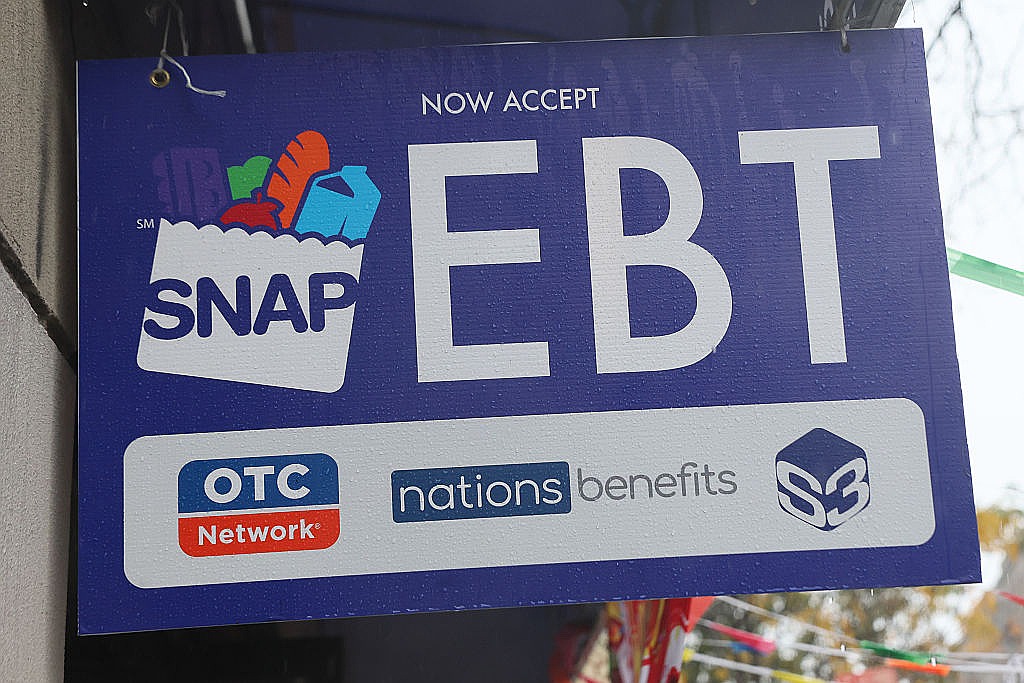
Cal Thomas: The hunger games
In a striking reflection of food insecurity in the United States, approximately 42 million Americans—12.3% of the population—are currently relying on the Supplemental Nutrition Assistance Program (SNAP), previously known as food stamps. This staggering statistic highlights a troubling reality in the wealthiest nation in the world, where the prevalence of food aid should be a source of embarrassment rather than pride. The SNAP program is now facing significant challenges due to the ongoing government shutdown, with President Trump announcing that only 50% of benefits will be covered for November, leaving recipients in a precarious situation as funding hangs in the balance. Federal judges have intervened, ordering the restoration of funds, yet the uncertainty remains a pressing issue for millions of families.
The root of the reliance on SNAP can be traced back to various systemic issues, including waste, fraud, and errors within the program. The U.S. Department of Agriculture (USDA) estimates that around 11.7% of SNAP benefits—approximately $10.5 billion—are classified as “improper payments,” which include both fraudulent activities and administrative mistakes. Notably, there has been a sharp increase in fraudulent transactions, with a 55% rise reported between the end of fiscal 2024 and the beginning of fiscal 2025. Addressing these issues could garner bipartisan support, particularly if the focus shifts toward eliminating waste and ensuring that those who are able to work are fulfilling job training requirements. The article suggests that instead of a blanket reliance on government assistance, there should be a concerted effort to empower individuals toward financial independence, while still providing necessary support to the most vulnerable, such as the elderly and those with disabilities.
Furthermore, the article raises questions about familial responsibility, arguing that adult children should support their aging parents before seeking government aid. It critiques the political landscape, where Senate Democrats are accused of leveraging SNAP and other essential services to gain political advantage during the shutdown, complicating efforts to find a resolution. The narrative concludes with a call for accountability among politicians, who may prioritize their political survival over meaningful solutions to pressing issues like food insecurity. The author posits that if lawmakers were to focus on resolving problems rather than exploiting them for political gain, the reliance on government assistance could diminish, ultimately benefiting both the country and its citizens.
There are an estimated
42 million
people receiving food aid from the Supplemental Nutrition Assistance Program (
SNAP
), formerly known as food stamps. The figure represents
12.3 percent
of the U.S. population, according to the USDA. In the richest nation on Earth that is not something to brag about. It is, or ought to be, a disgrace.
SNAP is a casualty of the government “shutdown,” though two federal judges have
ordered
the Trump administration to restore funds to the program. On Monday, President Trump said he will use a contingency fund to cover only
50 percent
of SNAP benefits for November, but none after that if the government doesn’t open.
Now would be a good time to ask why so many Americans seek food assistance. A starting point that should get political support (at least from Republicans) would be the elimination of mistakes, waste and fraud in the SNAP program.
The U.S. Department of Agriculture (USDA), which administers SNAP for the states,
estimates
that in fiscal year 2023 approximately 11.7 percent of SNAP benefits, or about $10.5 billion, were “improper payments,” including fraud and other errors. While overpayments from household errors and administrative mistakes make up the largest portion of these improper payments, the USDA and other experts also report significant issues with benefit trafficking and recent surges in theft. For example, a 55 percent increase in fraudulent transactions occurred between the fourth quarter of fiscal 2024 and the first quarter of 2025.
The first food assistance programs were
established in 1939
during the administration of Franklin D. Roosevelt. Like so many other government programs, when the Depression ended and the need for food assistance subsided, the programs continued and new people were added, even during periods of prosperity.
Following the elimination of improper payments, there should be a focus on the able-bodied who are not working. There is a work and job training requirement for people receiving SNAP benefits. Whether those without children are meeting that requirement should be investigated. The goal should be to wean people off government assistance and toward financial independence. The elderly and those with physical or mental disabilities who qualify, should continue receiving food assistance.
Whatever happened to children caring for their parents who are in need? Adult children with resources should be required to help their parents before turning to the government.
Senate Democrats, most of whom have refused to vote to open the government, continue to use SNAP – as well as air traffic controllers and other vital services – to extort political capital from Republicans. So far it appears to be working. A recent
Quinnipiac
poll found that voters blame Republicans slightly more than Democrats for the shutdown.
Too many Americans believe they are entitled to other people’s money and that it is government’s responsibility to take care of every citizen (and some non-citizens) from cradle to grave. Maybe Congress should be listed among those who are “non-essential” and have their pay suspended. Watch how quickly the government would open again should that occur.
Nearly every problem has a solution. The problem for politicians is that if they solve a problem, they no longer have an issue with which to bash the other party. As long as holding on to political office remains their top priority, nothing will change. More people will come to rely on government, which will help the Democrats, but it will be bad for the country and the people who have become addicted to government.
Readers may email Cal Thomas at
tcaeditors@tribpub.com
. Look for Cal Thomas’ latest book “A Watchman in the Night: What I’ve Seen Over 50 Years Reporting on America” (HumanixBooks).


