Jonah Goldberg: Can socialism ever be more than just a fad in America?
In recent months, there has been a notable resurgence of interest in socialism among American voters, as highlighted by various polls indicating a significant decline in support for capitalism. An NBC poll revealed that a majority of registered voters now harbor unfavorable views toward capitalism, while a Gallup poll from September showed a similar trend, with support for capitalism waning. This shift has led to a flurry of media commentary, including a segment on an NPR podcast titled “How socialism got sexy.” Notably, the appeal of democratic socialism has been championed by figures like New York City mayor-elect Zohran Mamdani, suggesting a growing acceptance of these ideas, particularly in urban areas. However, the enthusiasm for socialism may not extend far beyond the confines of major cities like New York, as evidenced by the contrasting electoral success of candidates who distanced themselves from socialist labels in neighboring regions.
Despite the rising popularity of socialism in polls, critics argue that these findings are often misleading and reflect a momentary trend rather than a substantive ideological shift. Polling methodologies can yield drastically different results based on wording, and the current political climate—especially under a Republican administration—may skew perceptions of capitalism negatively. The association of capitalism with unpopular policies and figures, particularly during Donald Trump’s presidency, has contributed to this decline in favorability. Moreover, the brand of capitalism promoted by Trump, characterized by significant government intervention and favoritism toward certain industries, blurs the lines between traditional capitalism and state capitalism, leading to further disillusionment among voters.
The author, Jonah Goldberg, cautions against overinterpreting these polls as indicators of a genuine ideological transformation among the American populace. He highlights the complexity of defining socialism and suggests that many who express favorable sentiments toward it may not possess a coherent understanding of its principles or implications. Ultimately, Goldberg posits that while the current “vibes” may favor socialism, the real test will come when proponents of socialism are tasked with governance. History suggests that the practical implementation of socialist policies often leads to disillusionment, which could temper the current enthusiasm for socialism and reaffirm capitalism’s place in American society.
https://www.youtube.com/watch?v=rs0DeBs2KTA
Here we go again.
Socialism is making a comeback, according to friend and
foe
alike. A new
NBC
poll
now suggests that a majority of registered voters don’t like capitalism.
A Gallup poll in September also found that support for capitalism was
slipping
. A Data for Progress poll around the same time showed that — after asking some decidedly leading questions about democratic socialism — people liked democratic socialism. Still,
Politico
combined the results to declare: “Capitalism is out … and socialism is in.” And just this week, an NPR podcast dedicated a segment to explaining “
How socialism got sexy
.”
This has happened
before
. In 2018,
Gallup
found for the first time that a majority of Democrats had a more favorable view of “socialism” than of “capitalism.” And we got
similar headlines as a result
. No doubt such polls partly explain why Democratic presidential primary candidates overwhelmingly ran in the Bernie Sanders lane in 2020. Joe Biden, the candidate who mostly avoided that lane, however, won the nomination.
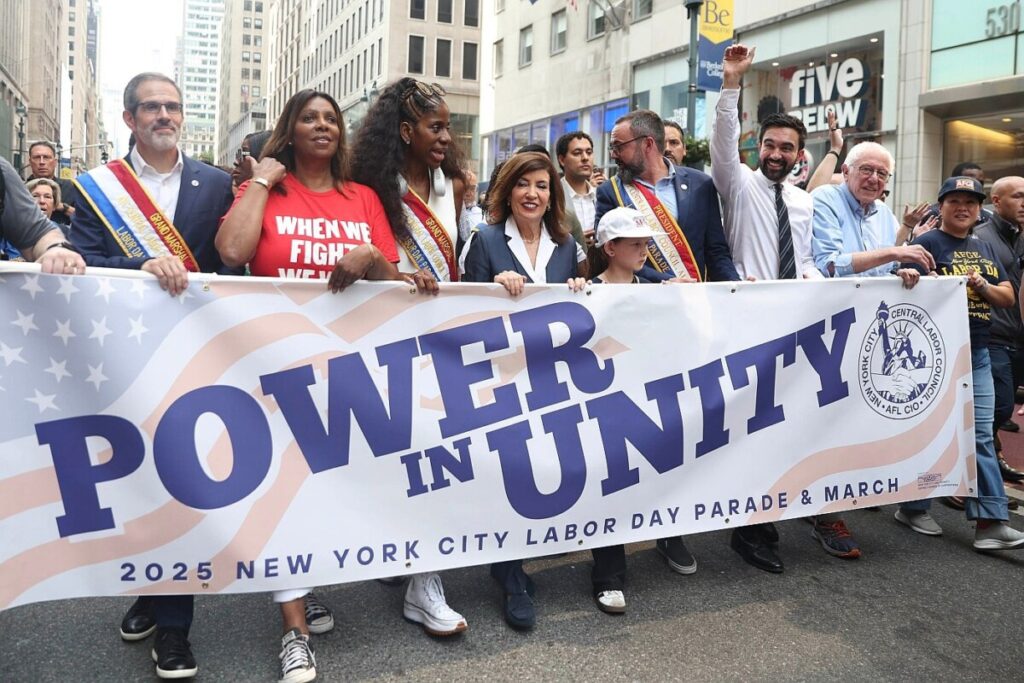
Like Sanders, New York City mayor-elect Zohran Mamdani describes himself as a democratic socialist. His popularity has driven many to claim that democratic socialism is popular too. It may well be, especially in New York City. But what plays in NYC may not have legs far outside the Big Apple. Indeed, Mikie Sherrill, the Democratic gubernatorial candidate in neighboring New Jersey, which shares much of the same media market, didn’t run as a democratic socialist and beat primary candidates who more or less did.
But punditry is not my aim here. My problem is with these periodic, poll-driven, “socialism is coming” fads.
For starters, issue polling — even when done well — is not very reliable. Change one word and you’ll get very different
results
. For decades, if you call a program “welfare,” Americans won’t like it. Call it “assistance to the poor” and Americans like it whole a lot more.
It’s also difficult to keep other issues from influencing issue polling. Capitalism’s popularity dropped — particularly among Democrats — during President Trump’s first term. It has dropped again during his second term. Is it really so hard to imagine people associating capitalism with the avowed party of capitalism? When that party is in power and is unpopular, it shouldn’t be surprising that the thing it claims to stand for is (slightly) less popular too?
And then there’s the messy fact that Trump’s brand of capitalism isn’t exactly the uncut free market stuff (that I like). It’s not socialism, but it’s definitely close to “
state capitalism
” — a system involving massive government interventions in the economy, usually on behalf of favored industries. Most serious libertarians would rather eat glass than call Trump’s program of massive tariffs, cronyism, industrial planning and partial government ownership of industries “capitalism.”
There’s a famous —
and widely attributed
— line that the problem with socialism is socialism, but the problem with capitalism is capitalists. When the administration is run from the top by private-jet-flying billionaires seemingly getting richer with insider deals and literally
cosplaying “The Great Gatsby”
at a time when SNAP benefits are running out for 40 million Americans, you’d think capitalism would be in even worse odor.
But take Trump out of it. When the status quo is unpopular, if you call the status quo “capitalism” they’ll have problems with it. Call the economic status quo “capitalism” and a lot of people will choose option number two, whether you call it “socialism” or not.
It’s not like the new “socialists” have cracked the books in their free time and suddenly have a newfound respect for Karl Marx, Sidney Webb, Michael Harrington or some other socialist thinker.
Socialist intellectuals have a hard enough time agreeing on what socialism is. The best definition the very well-read editors of the socialist journal Dissent could come up with in 1954 was
“socialism is the name of our desire.”
The idea that millions of Americans have a fully formed and coherent understanding of the concept, never mind know how to implement socialism, is preposterous. Asking people if they like socialism or capitalism is a “vibes” question and little more.
Of course, socialists are entitled to be happy about improving vibes. But the best way to make Americans sour on socialism is to put socialists in charge — which is why I’m not too worried about America becoming a socialist country.
Jonah Goldberg is editor-in-chief of The Dispatch and the host of The Remnant podcast. His Twitter handle is
@JonahDispatch
.


