Indigenous People Take the Stage at COP30 Climate Talks in Belém, Brazil
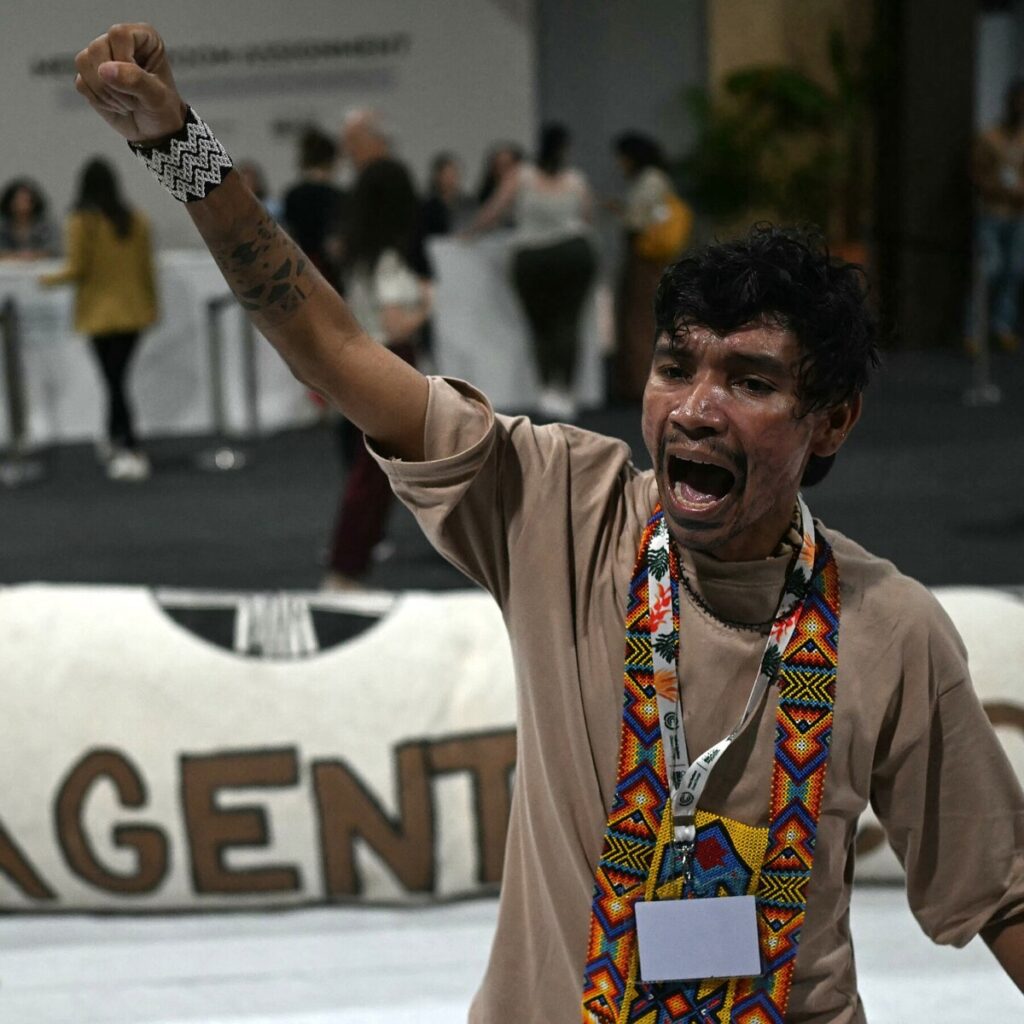
On Thursday, a powerful Indigenous rights demonstration took place in Belém, Brazil, drawing attention to the ongoing struggles faced by Indigenous communities in the region. The protest was marked by striking visuals, including a large snake prop that symbolized the dangers posed by deforestation and the encroachment of agribusiness on Indigenous lands. The snake, often associated with deceit and destruction in various cultures, served as a poignant reminder of the threats that these communities face as they fight to protect their ancestral territories from exploitation and environmental degradation.
The demonstration coincided with significant political discussions in Brazil regarding land rights and environmental policies, particularly under the current administration, which has been criticized for its stance on Indigenous issues. Activists highlighted the urgent need for stronger protections for Indigenous lands, especially in the Amazon, which is facing unprecedented levels of deforestation. Organizers of the protest emphasized that the fight for Indigenous rights is not only about preserving culture and heritage but also about safeguarding the environment, as these communities are often the best stewards of their lands. The event brought together diverse groups, including environmentalists, human rights advocates, and Indigenous leaders, all united in their call for justice and recognition of Indigenous sovereignty.
As Brazil grapples with the complexities of balancing economic growth with environmental preservation, the demonstration in Belém serves as a critical reminder of the voices that must be heard in this dialogue. The use of symbolism, such as the snake, captures the urgency and emotional weight of the situation, illustrating the interconnectedness of Indigenous rights and environmental health. The protest not only raises awareness of the challenges faced by Indigenous peoples in Brazil but also calls for a collective responsibility to protect these vital ecosystems for future generations. As the world watches, the need for solidarity with Indigenous movements becomes increasingly pressing, highlighting the importance of advocacy and action in the fight against climate change and for human rights.
An Indigenous rights demonstration on Thursday in Belém, Brazil. The snake in the background was a prop with a meaning.


