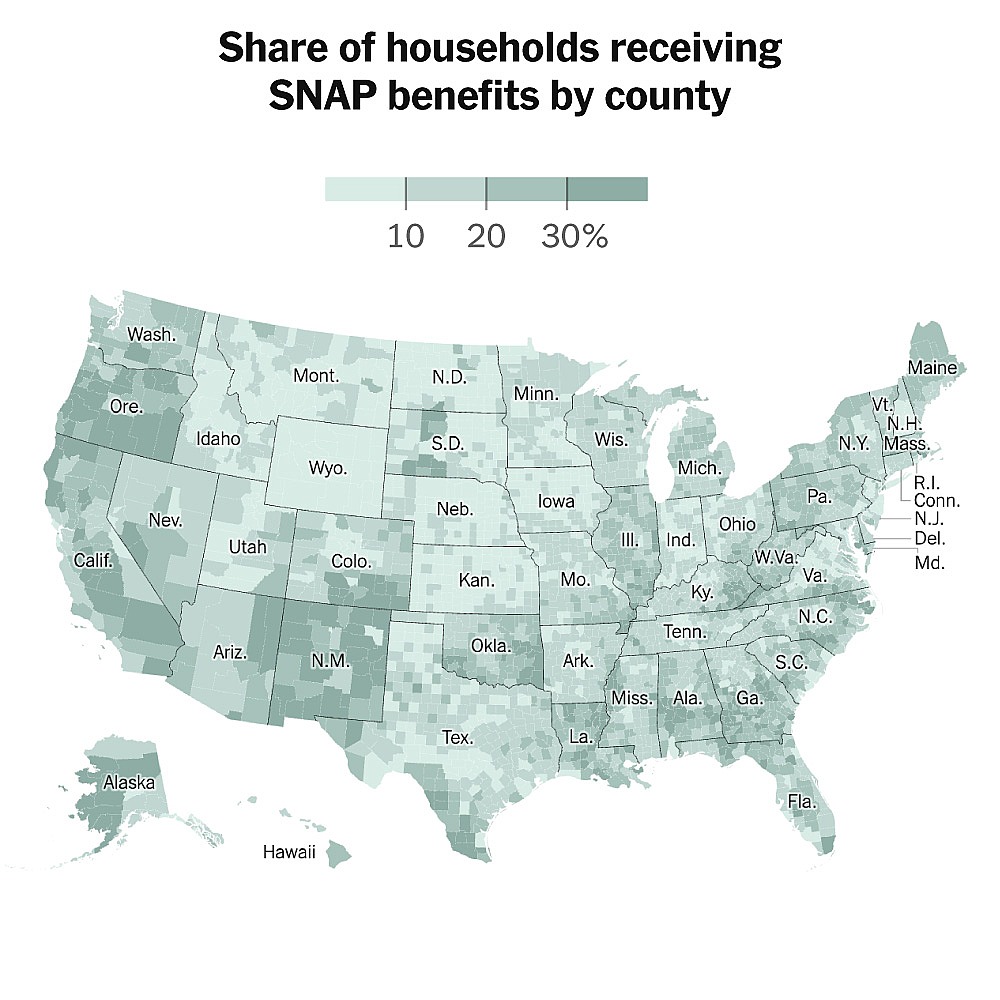
SNAP Map: Here’s Who Will Be Affected by Disruptions to Food Aid
A recent analysis reveals that a significant number of Supplemental Nutrition Assistance Program (SNAP) recipients reside in Democratic districts, highlighting a complex relationship between food assistance programs and political representation in the United States. According to the data, approximately 70% of SNAP beneficiaries are located in areas represented by Democratic lawmakers. This statistic underscores the reliance on social safety nets in urban and suburban regions, where poverty rates can be disproportionately higher due to various socioeconomic factors. For instance, large metropolitan areas, often governed by Democratic officials, tend to have higher living costs, contributing to the increased need for food assistance among residents.
However, the reach of SNAP extends far beyond party lines, affecting individuals and families across the political spectrum. While Democratic districts may host a larger percentage of SNAP recipients, the program is designed to assist those in need, regardless of their political affiliation. In fact, many rural areas, which are typically represented by Republican officials, also have significant numbers of SNAP participants. States like Kentucky and West Virginia, known for their Republican leadership, show high dependency on SNAP benefits, indicating that food insecurity is a pervasive issue that transcends political boundaries. This highlights the critical role of SNAP in addressing hunger and poverty in diverse communities across the nation.
The SNAP program is not only a vital resource for millions of Americans but also serves as a barometer for understanding broader economic challenges. As inflation and rising food prices continue to impact households, the demand for assistance is likely to grow, prompting discussions on the importance of maintaining and potentially expanding the program. Policymakers from both parties are urged to recognize the essential nature of SNAP in combating food insecurity and ensuring that all Americans have access to nutritious food, regardless of their political representation. The data underscores a crucial conversation about how to best support vulnerable populations and the importance of bipartisan efforts to strengthen social safety nets in a rapidly changing economic landscape.
More SNAP recipients live in Democratic districts. But the program touches every corner of the country.