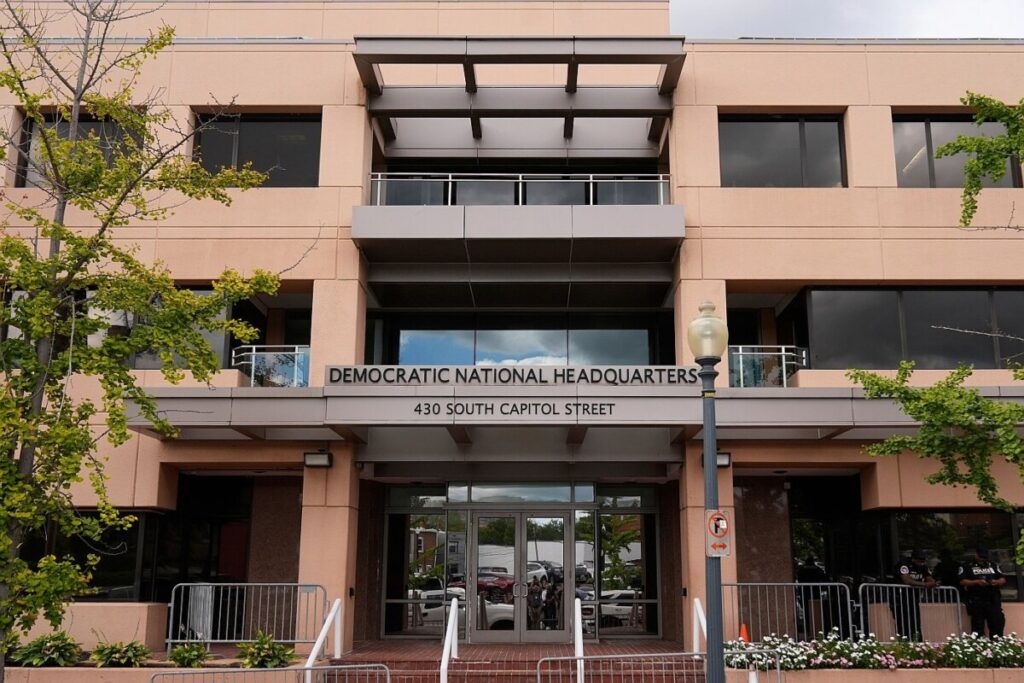
Editorial: Return to work order ‘shocking’ says irate DNC staff
In the wake of the COVID-19 pandemic, many companies have been grappling with the return-to-office (RTO) dilemma, and the Democratic National Committee (DNC) is no exception. As the party prepares to have its staff return to the office five days a week starting in February, a significant backlash has emerged from unionized employees who describe the mandate as “shocking” and “callous.” This pushback comes on the heels of recent electoral victories, with DNC staff asserting that their hard work during the midterm elections should afford them some flexibility in their work arrangements. Their concerns are compounded by broader economic challenges, which they attribute to policies from the previous Trump administration. The union’s leadership expressed dismay at the timing of this directive, emphasizing that the organization should be more understanding of its employees’ circumstances.
While the DNC’s RTO order aligns with a growing trend among U.S. employers—where a significant percentage of workers are now required to be in the office a set number of days each month—many employees continue to resist this shift. A recent Pew Research Center poll indicated that 75% of workers face mandates to return to physical offices, a notable increase from earlier in 2023. The DNC’s predicament reflects a larger issue in corporate America: the financial strain of maintaining office spaces that are underutilized. Critics argue that the DNC’s insistence on in-person work demonstrates a disconnect from the realities faced by workers outside the political sphere. Neera Tanden, a former senior adviser to President Biden, pointed out that with democracy at stake, a collective effort in the office should be expected. This sentiment was echoed by Republican National Committee staff, who questioned whether the DNC’s complaints stem from a sense of entitlement rather than a genuine concern for the democratic process.
The situation highlights a growing divide between the political elite and everyday workers, illustrating the complexities of navigating office culture post-pandemic. With some employees contemplating resignation in response to RTO mandates, the DNC’s leadership may need to reassess its approach to employee engagement and work-life balance. As the debate continues, it raises important questions about the expectations placed on workers in high-stakes environments like Washington, D.C., and whether these expectations are in line with the evolving landscape of work in America. The DNC’s struggle to balance operational needs with employee satisfaction serves as a microcosm of the broader challenges facing organizations in a post-COVID world.
Do you remember when going to work at the office was the norm? Up until the pandemic forced companies to overhaul the workplace by having employees work from home, having an office view that didn’t include one’s kitchen was how things got done.
The COVID years are over, and companies have been calling workers back in to physical offices. There has been pushback, but few as dramatic as the staffers at the Democratic National Committee. The union is livid over the Democratic Party’s new directive to show up to the office and work in-person five days a week starting in February, the New York Post reported.
The order, they say, is “shocking” and “callous.”
“DNC staff worked extremely hard to support historic wins for Democrats up and down the ballot last Tuesday, and this change feels especially callous considering the current economic conditions created by the Trump administration,” DNC staff union leadership said in a statement first reported by the New York Times.
Donald Trump is making it hard for DNC staff to return to the office?
Staffers may feel that their support for “historic wins” should earn them the right to stay home with a laptop, but the DNC is facing the same problem as many companies issuing RTO orders. The DNC pays rent for its Washington, DC HQ. No one wants to pay rent for unused space. It’s not sustainable.
A collective bargaining agreement reached in July allows DNC workers to “request to work remotely on occasion.”
For some, “on occasion” means “days ending in ‘y’.”
The bickering is a bad look.
“If you think democracy is on the line – working in the office is not a big ask. And there are plenty of other people willing to step up. Get yourselves together people,” Neera Tanden, who was a senior adviser to former President Joe Biden, wrote on X.
An excellent point. To hear Democrats tell it, the country is a sneeze away from Armageddon with Donald Trump at the helm. Shouldn’t that engender an “all hands on deck” attitude toward work?
“This is hilarious. DNC staffers are ‘shocked’ at being expected to show up to work during a midterm campaign cycle,” Republican National Committee press secretary Kiersten Pels mused. “Is this a political committee or a daycare?”
This says a lot about the Beltway Bubble — the reality of life outside it is all but unknown. According to a Pew Research Center poll, about 75% of workers were required to be in the office a certain number of days per week or month as of October 2024, up from 63% in February 2023.
Some companies allow for remote work, and the number of people working from home is higher than it was pre-COVID. That’s not to say all workers like going back to the office. A poll conducted by Bamboo HR found that 28% of workers would consider quitting due to a return-to-office mandate.
Quitting is an option, but so is realizing that working in DC politics doesn’t render one impervious to the same issues affecting workers across the country. Capitol Hill pols have been rightly slammed for their “rules for thee but not for me” attitude.
Apparently, that starts at the staff level.
Editorial cartoon by Steve Kelley (Creators Syndicate)


