Trump was already cutting low-income energy assistance – the shutdown is making things worse as cold weather arrives
As the cold months approach, many Americans, particularly those in the Northeast, are bracing for the financial burden of rising home heating oil prices. With the government shutdown exacerbating the situation, states are delaying the distribution of winter energy assistance funds, leaving vulnerable households in precarious positions. A recent national survey revealed that nearly 25% of Americans struggled to pay their energy bills in the past year, with many resorting to unsafe heating practices to save money. This alarming trend is expected to worsen, as projections indicate that by 2025, nearly 75% of Americans will be anxious about increasing energy costs. Each year, utility companies disconnect power to over three million households due to unpaid bills, highlighting the severe impact of energy insecurity on families across the nation.
The issue has caught the attention of political leaders, including President Donald Trump, who declared a national energy emergency on the first day of his second term in 2025. Despite this acknowledgment, the administration’s proposed budget for 2026 eliminated funding for the Low Income Home Energy Assistance Program (LIHEAP), which has historically provided critical support to low-income households struggling with energy costs. In fiscal year 2023, LIHEAP allocated $6.1 billion in assistance, helping approximately 5.9 million households avoid utility disconnections. However, with the recent layoffs of LIHEAP staff, the program’s ability to effectively distribute funds is significantly hindered, raising concerns about the impending winter and the potential for increased cold-related fatalities.
As communities grapple with these challenges, many families are forced to rely on a patchwork of local nonprofits and faith-based organizations for support. While these charitable services are vital, they often lack the capacity to meet the overwhelming demand for assistance. For instance, in South Carolina, United Way received over 16,000 calls for help with utility bills in just one year. The looming threat of cuts to LIHEAP and other federal assistance programs puts millions of Americans at risk, particularly in low-income and marginalized communities. As the winter months draw near, advocates are calling for expanded federal support and innovative solutions to ensure that all Americans can afford to heat their homes safely and adequately.
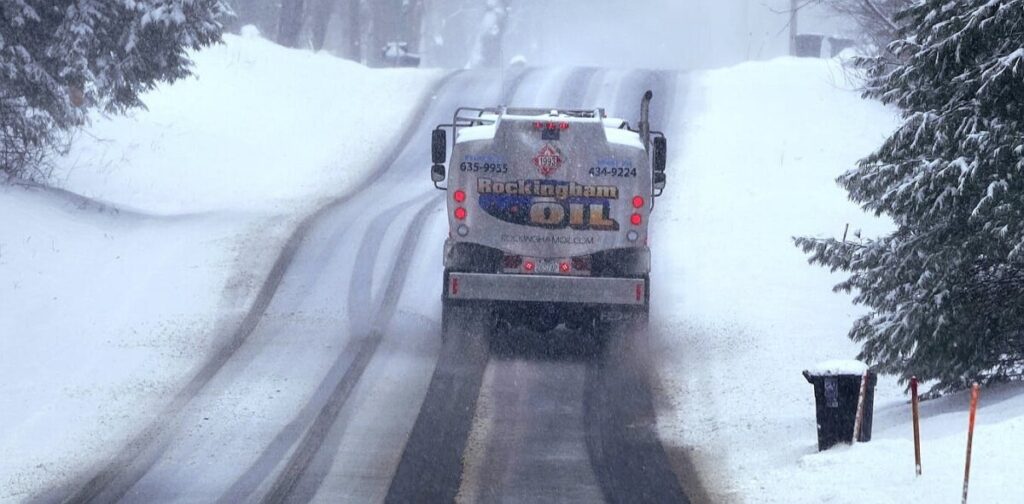
Home heating oil, used in furnaces across the Northeast, is expensive, leading some people to keep homes at unhealthy temperatures.
AP Photo/Charles Krupa
As fall turns to winter and temperatures begin to drop, millions of people across the U.S. will struggle to pay their
rising
energy bills. The government shutdown is making matters even worse: Several
states have pushed back
the start of their winter energy assistance because their federally allocated funds had yet to show up.
Even with the
prospect of Congress ending the shutdown
, widespread federal layoffs mean it would likely take time to restore funding.
A 2023 national survey found that nearly
1 in 4
Americans were unable to pay their full energy bill for at least one month, and nearly 1 in 4 reported that they
kept their homes at unsafe temperatures
to save money. By 2025, updated polling indicated nearly 3 in 4 Americans are
worried about rising energy costs
.
Conservative estimates suggest that utilities shut off power to
over 3 million
U.S. households each year because the residents cannot pay their bills.
This problem of high energy prices isn’t lost on the Trump administration.
On the first day of his second term in 2025, President Donald Trump declared a national energy emergency by
executive order
, saying that “high energy prices … devastate Americans, particularly those living on low- and fixed incomes.”
Secretary of Energy Christopher Wright raised concerns about utility disconnections and outlined a mission to “
shrink that number, with the target of zero
.”
Yet, the administration’s 2026
budget proposal zeroed out funding
for the Low Income Home Energy Assistance Program, or LIHEAP, the federal program that administers funding to help low-income households pay their utility bills. While there appears to be continued bipartisan support for LIHEAP in Congress, on April 1, 2025, the administration
laid off the entire staff
of the LIHEAP office. These layoffs hinder the ability of the federal government to release LIHEAP funds, even when the government reopens.
Russ Anderson of Waldoboro, Maine, wears a shawl to help keep warm as he speaks with a reporter in 2023 about the importance of federal programs to help low-income households like his heat their homes. For someone getting by on less than $1,000 a month from Social Security, heating aid could save him the equivalent of three monthly payments, he told The Associated Press.
AP Photo/Robert F. Bukaty
Many people already struggle to cobble together enough help from various sources to pay their energy bills. As
researchers
who study
energy
insecurity
, we believe gutting the federal office responsible for administering energy bill assistance will make it even harder for Americans to make ends meet.
The high stakes of energy affordability
We work with communities in South Carolina and Tennessee where many residents struggle to heat and cool their homes.
We see how high energy prices force people to
make dangerous trade-offs
. Low-income households often find themselves choosing whether to buy necessities, pay for child care or pay their utility bills.
One elderly person we spoke with for our research, Sarah, explained that she routinely forgoes buying medications in order to pay her utility bill.
Unfortunately, these stories are increasingly common, especially in
low-income communities and communities of color
.
Shrinking resources for assistance
LIHEAP, created in 1981, provides funding to states as block grants to help low-income families pay their utility bills. In fiscal year 2023, the program distributed
US$6.1 billion
in energy assistance, helping some
5.9 million households
avoid losing power connections.
The program’s small staff played
critical roles
in disbursing this money, providing implementation guidelines, monitoring state-level fund management and tracking and evaluating program effectiveness.
A long line of utility customers wait to apply for help from the Low-Income Energy Assistance Program in Trenton, N.J., in 2011. In 2023, around 6 million households benefited from LIHEAP.
AP Photo/Mel Evans
It is unlikely that other sources of funding can fill in the gaps if states do not receive LIHEAP funds from the federal government. The program’s funding has never been high enough to meet the need. In 2020, LIHEAP provided assistance to just 16% of eligible households.
Our research has found that, in practice, many households rely on a range of local nonprofits, faith-based organizations and informal networks of family and friends to help them pay their bills and keep the heat on in winter.
For example, a research participant named Deborah reported that when faced with a utility shut-off, she “drove from church to church to church” in search of assistance. United Way in South Carolina received over
16,000 calls
from people seeking help to pay their utility bills in 2023.
These charitable services are an important lifeline for many, especially in the communities we study in the South. However, research has shown that faith-based programs
do not have the reach
of public programs.
Without LIHEAP, the limited funds provided by nonprofits and the
personal connections that people patch together
will be stretched even thinner, especially as other charitable services, such as food banks, also
face funding cuts
.
What’s ahead
Although Congress has chosen to fund LIHEAP for 2026, the government shutdown threatens the program’s ability to reach families in time for the cold months ahead. While summer heat is on the rise, cold-related deaths have been
trending up
as well. Cold snaps in
early 2024
and
again in 2025
left several people dead from hypothermia. These are preventable deaths that continued LIHEAP assistance could help avoid.
These threats to LIHEAP—especially coming alongside uncertainty about federal food assistance—put the goal of energy affordability for all Americans – and Americans’ lives – in jeopardy. Until
more affordable energy sources
, such as solar and wind power, can be scaled up, an expansion of federal assistance programs is needed, not a contraction.
Increasing the reach and
funding of LIHEAP
is one option. Making
home weatherization programs
more effective is another.
Governments could also
require utilities
to forgive past-due bills, implement
percent of income payment plans
, and end utility shut-offs. About
two dozen states
currently have rules to prevent shut-offs during the worst summer heat.
For now, the cuts mean more pressure on nonprofits, faith-based organizations and informal networks. Looking ahead to another winter of freezing temperatures, we can only hope that delays to LIHEAP payments and cuts to LIHEAP staff don’t foreshadow a growing yet preventable death toll.
Etienne Toussaint, a law professor at the University of South Carolina, and Ann Eisenberg, a law professor at West Virginia University, contributed to this article.
This is an update to an article
originally published May 13, 2025
.
Conor Harrison receives funding from the National Science Foundation and the Alfred P. Sloan Foundation.
Elena Louder received funding from the Alfred P. Sloan Foundation related to this research.
Nikki Luke receives funding from the Alfred P. Sloan Foundation. She previously worked at the U.S. Department of Energy.
Shelley Welton receives funding from the Alfred P. Sloan Foundation.


