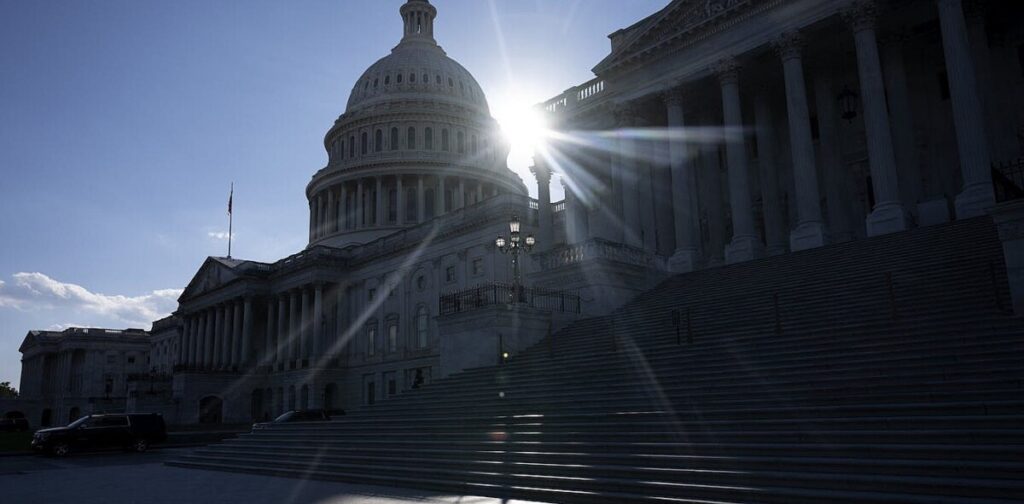
The shutdown has ended – but this economist isn’t rejoicing quite yet
The recent U.S. government shutdown, which lasted an unprecedented 43 days, concluded on November 12, 2025, when Congress passed a much-needed funding bill that President Donald Trump signed into law. However, the economic ramifications of this extended interruption in government operations are significant and multifaceted. Economist Amitrajeet A. Batabyal from RIT sheds light on both the immediate and long-term impacts of the shutdown, emphasizing that the consequences have not been evenly distributed across the population.
In the short term, the shutdown has had a detrimental effect on consumer spending, largely due to the furlough of approximately 700,000 government workers. Many of these individuals faced uncertainty regarding their job security, which contributed to a dramatic decline in consumer sentiment. The University of Michigan’s consumer sentiment index plummeted to levels not seen since the peak of the pandemic, indicating a significant reduction in spending that adversely affected retailers. Additionally, the closure of national parks and monuments hampered tourism, particularly in popular destinations like Washington D.C. and Hawaii, leading to an estimated weekly loss of $1 billion for the travel industry. The ripple effects extended to secondary businesses such as hotels and restaurants, further exacerbating the economic strain.
Looking at the longer-term implications, the Congressional Budget Office estimates that the shutdown could cost the U.S. gross domestic product (GDP) between $7 billion and $14 billion in lost productivity—an economic wound that may never fully heal. From a global perspective, the shutdown has eroded international trust in the U.S. as a reliable steward of the global economy. This decline in confidence, coupled with existing political dysfunction, has already led to a downgrade in the U.S. credit rating, which could result in higher borrowing costs moving forward. The shutdown’s impact has not been felt equally; lower-income Americans, particularly those reliant on the Supplemental Nutrition Assistance Program (SNAP), have been disproportionately affected. With 42 million Americans depending on SNAP, the uncertainty surrounding benefits has left many in a precarious situation. Furthermore, regions with higher concentrations of federal employees, such as California and Virginia, have experienced more severe economic disruptions.
While traditionally, the economy tends to recover from government shutdowns, the unique nature of this event raises concerns. This shutdown was marked by unprecedented uncertainty regarding backpay for furloughed employees and the potential for permanent layoffs, which could alter consumer spending patterns in the long run. The ongoing challenges posed by rising grocery prices and inflation, exacerbated by Trump’s tariff policies, further complicate the Federal Reserve’s efforts to maintain economic stability. As the U.S. navigates the aftermath of this shutdown, the broader implications for consumer confidence, economic growth, and international standing could shape the nation’s economic landscape for years to come.
After 43 days, the U.S. government shutdown
finally came to an end
late on Nov. 12, 2025, when Congress voted through a long-overdue funding bill, which President Donald Trump promptly signed.
But the prolonged gap in government-as-usual has come at a
cost to the economy
.
The Conversation spoke with
RIT economist Amitrajeet A. Batabyal
on the short- and long-term impact that the shutdown may have had on consumers, on the gross domestic product and on international trust in U.S. stewardship of the global economy.
What is the short-term economic impact of the shutdown?
Having
some 700,000 government workers
furloughed has hit consumer spending. And a subset of those workers believed they
may not have a job to come back to
amid efforts by the Trump administration to lay them off permanently.
In fact, the University of Michigan’s monthly index on consumer sentiment
tumbled to a near record low in November
– a level not seen since the depth of the pandemic. Because lower consumer sentiment is related to reduced spending, that has a
short-term impact on retailers
, too.
And because parks and monuments have been closed throughout the shutdown,
tourism activity has been down
– a decline no doubt worsened
by the reduction in flights
enforced due to shortages in air traffic controllers.
The effect was particularly pronounced in places like Washington D.C. – one of the
most popular destination for tourists
– and Hawaii. This short-term effect will likely extend to secondary businesses, such as hotels. Indeed, prior to the shutdown, the U.S. Travel Association warned that such an event would
cost the total travel industry
around US$1 billion a week.
And the longer-term impact?
Estimates range, but the nonpartisan Congressional Budget Office has said that the cost to America’s gross domestic product in lost productivity
is in the range of $7 billion to $14 billion
– and that is a cost from a self-imposed wound that will never be recovered.
And from an international macroeconomic point of view,
trust in the U.S. has been hit
. Even before the shutdown, political dysfunction in Washington contributed to a
downgrade in the U.S. credit rating
– something that could
result in higher borrowing costs
.
The shutdown further erodes the United States’ standing as the global leader of the free market and
rules-based international order
. Accompanied by the economic rise of China, this shutdown further
erodes international investors’ impression of the U.S.
as an arbiter and purveyor of the established trade and finance system – and that can only hurt Washington’s global economic standing.
Has the economic pain been felt evenly?
Certainly not. Large numbers of Americans have been hit, but the shutdown affected regions and demographics differently.
Those on the lower end of the income distribution have been hit harder. This is in large part due to the impact the shutdown has had on the Supplemental Nutrition Assistance Program, also known as food stamps. Some
92% of SNAP benefits go to American households
below the federal poverty line.
More than
42 million Americans rely
on SNAP payments. And they were caught up in the political maelstrom – left not knowing if their SNAP payments will come, if they will be fully funded and when they will appear.
There is also research that shows
Black Americans are affected more
by shutdowns than other racial groups. This is because traditionally, Black workers have made up a
higher percentage of the federal workforce
than they do the private sector workforce.
Geographically, too, the impact of this shutdown has been patchy.
California, Washington D.C. and Virginia have
the highest proportion of federal employees
, so that means a larger chunk of the workers in those regions were furloughed. Hawaii has also been disproportionately hit due to the large number of military there. One
analysis found that with 5.6% of people
in the state federally employed, and a further 12% in nonprofit jobs supported by federal funding, Hawaii was the
second-hardest-hit state
during the shutdown.
How easy is it for the US to recover from a shutdown?
Because shutdowns are always temporary, recovery depends on how long it has gone on for. Traditionally, the long-term economic trend
is not badly affected
by the short-term pain of shutdowns.
But it may be slightly different this time around. This shutdown went on
longer than any other shutdown in U.S. history
.
Also, the nature of this shutdown raises some concerns. This was the first shutdown in which a president said that
backpay was not a sure thing
for all furloughed federal employees. And the uncertainty over those threatened with layoffs again broke from past precedent. Both matters seemed to have been
settled with the deal ending the shutdown
, but even so, the ongoing uncertainly may have affected the spending patterns of many affected.
And we also do not know what the
economic impact of the reduction of domestic flights
will be.
Have other economic factors exacerbated the shutdown affect?
While the shutdowns in Trump’s first administration did take place while tariffs were being used as a foreign policy and economic tool, this year is different.
Trump’s
tariff war this time around
is across the board, hitting both adversaries and allies. As a result, the U.S. economy has been more tentative, resulting in
greater uncertainty on inflation
.
Related to that is the
rising grocery prices
that have contributed to an upward tick in inflation.
This all makes the job of the Federal Reserve harder when it is trying to fine-tune monetary policy to meets its
dual mandates
of full employment and price stability. Add to that the lack of government data for over a month, and it means the Fed is
grasping in the dark
a little when it comes to charting the U.S. economy.
Amitrajeet A. Batabyal does not work for, consult, own shares in or receive funding from any company or organization that would benefit from this article, and has disclosed no relevant affiliations beyond their academic appointment.


