Overwhelm the public with muzzle-velocity headlines: A strategy rooted in racism and authoritarianism
In a recent analysis, journalist and scholar Angie Chuang explores the phenomenon of “media saturation overload” and its implications for democracy, particularly in the context of Donald Trump’s administration. Chuang highlights how the relentless stream of often contradictory and sensational headlines—such as Trump’s proposed deployment of federal troops to San Francisco—serves to confuse and manipulate public perception. This barrage of information, she argues, is not merely a byproduct of a chaotic news environment but a deliberate strategy reminiscent of tactics used by authoritarian regimes. The psychological impact of this strategy, which some have termed “Trump stress disorder,” leads to a blurring of lines between fact and fiction, causing citizens to question the validity of information and fostering a culture of skepticism and division.
Chuang draws parallels between Trump’s media tactics and historical examples of authoritarian rhetoric, particularly from the early 20th century. She cites Steve Bannon’s notion of “flooding the zone” with information to overwhelm journalists and the public, thereby diverting attention from substantive issues. This approach mirrors the propaganda strategies of fascist leaders, who utilized constant messaging to frame their opponents as enemies and to create a narrative that marginalized certain groups. By deploying racially charged language and scapegoating marginalized communities, Trump’s administration effectively narrows the definition of American identity, promoting an exclusionary vision of belonging. Chuang warns that if citizens succumb to the overwhelming nature of this media landscape, they risk becoming unwitting participants in a political strategy aimed at undermining democratic values and fostering authoritarianism.
Ultimately, Chuang calls for a more discerning media consumption approach, urging the public to recognize these manipulative tactics and advocate for responsible journalism. By doing so, citizens can resist the paralysis induced by media saturation and work towards a more informed and egalitarian society. As the political landscape continues to evolve, understanding the historical context and psychological effects of these strategies becomes crucial for safeguarding democracy and ensuring that all voices are heard and valued in the national discourse.
https://www.youtube.com/watch?v=-ZX4HE1a7PA
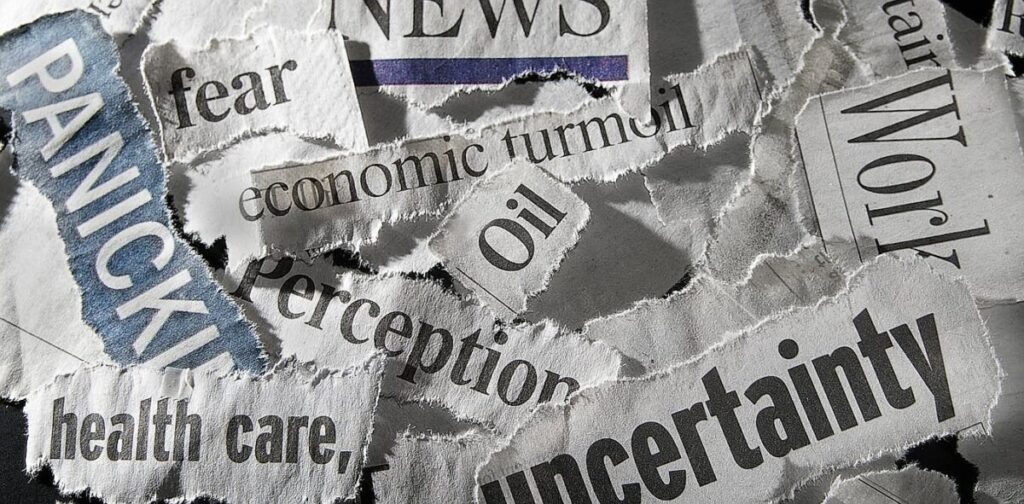
The seemingly unending barrage of stressful news is a strategy with ties to the past.
zimmytws/iStock via Getty Images
The headlines documenting President Donald Trump’s plan to send federal troops to San Francisco followed a familiar arc. “Trump claims ‘unquestioned power’ in vow to send troops to San Francisco,”
The Guardian reported
on Oct. 20, 2025. The next day, the
San Francisco Chronicle blared
: “S.F. threatens to sue if Trump brings in National Guard.” Then, on Oct. 23, “Trump reverses his decision to send troops to San Francisco,” as
ABC News put it
, after Trump posted that conversations with the city’s mayor and tech moguls had
swayed him
.
It was another example of how Trump’s
shifting policy positions
,
racially inflammatory statements
and threats
frequently fuel a flurry of headlines, reflecting what some psychologists are calling “
media saturation overload
” or “
Trump stress disorder
.”
This barrage of information may seem like overcommunication from a hyperactive administration. But it is much more than that.
Scholars have found that the constant,
often conflicting and at times false information
coming out of the White House and shared via social media posts and the conventional news media causes members of the public to
see truth and fact as relative
and makes them more likely to dismiss those who disagree with them as untruthful. This leaves doubt about what’s real and what isn’t.
This citizen paralysis creates what philosopher Hannah Arendt described in “
The Origins of Totalitarianism
” as a general public “for whom the distinction between fact and fiction … no longer exist.” When lies are truth and truth is derided as lies, Arendt wrote, ordinary people lose their bearings and can be manipulated for totalitarian objectives.
Meanwhile, many journalists have
openly acknowledged fatigue
with the pace and nature of the Trump administrations’ news cycles, amid frequent newsroom
layoffs, mergers and closures
.
I am a
longtime journalist
and now
scholar of journalism
and race, trained to see the methods and aims behind political leaders’ press operations. And as I show in my forthcoming book, the Trump administration’s rhetorical strategies
echo the playbooks
of authoritarian and white supremacist organizations such as the Third Reich and some factions of the modern
alt-right movement
. They are intended to narrow the scope of who belongs as an American.
Headlines at ‘muzzle velocity’
The Trump administration’s
rhetorical strategies
include
claiming victim status
while often
laying blame on immigrants
or
other scapegoats
in ways that I believe betray racist intent. At the same time it has
overwhelmed journalists and the public
with breaking news.
This strategy was laid out by Steve Bannon, an influential Trump supporter and strategist in his first administration, during a 2019
PBS “Frontline” interview
, when he described the media as “the opposition party.”
“They’re dumb and they’re lazy, they can only focus on one thing at a time,” he said. “All we have to do is flood the zone. … Bang, bang, bang. These guys will never – will never be able to recover. But we’ve got to start with muzzle velocity.”
Steve Bannon outlined the strategy of overwhelming people with announcements at what he termed muzzle velocity in a 2019 interview with “Frontline.”
Bannon has
long been
associated with the alt-right
, a movement known for
rhetorical tactics
that minimize and obfuscate its true aims.
A strategy forged in Trump’s first term
As I detail in my book, “
American Otherness in Journalism: News Media Representations of Identity and Belonging
,” Trump and his key advisers have been developing, refining and ramping up their news media manipulation for a long time.
An early example of this is the way the administration used these tactics through Trump’s public responses to the fatal violence at the
August 2017 Unite the Right protest in Charlottesville, Virginia
.
The
two-day rally
was organized by
a white nationalist blogger
and attended by members of
neo-Nazi
,
white supremacist
and
far-right militias
protesting the removal of a statue of Confederate Gen. Robert E. Lee from a Charlottesville park. They
marched with tiki torches
,
flew Confederate and Nazi flags
and chanted
antisemitic and racist slogans
.
Amid violent clashes with counterprotesters on the second day, a
neo-Nazi sympathizer
drove into a crowd,
killing a 32-year-old woman
and injuring many others.
Emergency workers help people after a car drove into a large group of counterprotesters in the aftermath of a white nationalist rally in Charlottesville, Va., on Aug. 12, 2017, killing one and injuring 19.
AP Photo/Steve Helber
My
study of television news coverage of Unite the Right
found that the majority of news reports focused on the
contradictory and inflammatory statements
that Trump made about the antisemitic and racist protesters. Trump’s
Aug. 15, 2017, press conference
remark about blame on both sides after what happened garnered the most news media attention: “I think there is blame on both sides,” he said. “You had some very bad people in that group. You also had some very fine people on both sides.”
Exploiting chaos
The uncertainty surrounding what he meant created a cycle of news stories implying and denying that he sympathizes with white supremacists.
This is-he-or-isn’t-he intrigue spurred a surge of what fits the description of Bannon’s “
muzzle-velocity
” news headlines: “
Trump declares ‘racism is evil’ amid pressure over Charlottesville
” followed closely by “
Trump defends White-nationalist protesters
” and “
Why Trump can’t get his story straight on Charlottesville
.”
With the focus on Trump’s comments and what he might have really meant, the news media
ultimately missed
covering at the time
the long-term threat posed by these white supremacist and other extremist groups.
Echoing a playbook from the past
Scholars have
identified the fascist roots
of these “post-truth” strategies: strongmen leaders uninterested in establishing leadership through honesty and transparency.
A recent scholarly analysis of Trump’s leadership concludes that the second-term president is
overwhelming the public
into “organized despair” by pitting races against each other while targeting minority groups as scapegoats, a tactic that hearkens back to 1930s Germany.
A 2019 analysis of Trump’s narrative style describes how he
presents himself as a “strongman
” fighting invisible forces of censorship and suppression. It also points out that this was
part of the appeal of fascist leaders
such as Mussolini and Hitler.
Researchers of Nazi propaganda
identified key tactics
in the German press such as name-calling and lumping together groups seen as opposition – communists, liberals and Jews – until public understanding of those groups blur into phrases like “enemies of Germany.” The messaging was constant and immersive, carried in
local and national newspapers
,
radio
,
film
and
posters
.
A key part of Trump’s rhetorical strategy is using race without directly referring to it. For example, Trump has described cities with large nonwhite populations such as Washington, D.C., and Chicago as “
out of control
” or “
dirty
,” contrary to actual crime statistics. He’s also questioned
Kamala Harris’ racial identity
, suggesting she “happened to turn Black.” And referring to Black football players who had been protesting systemic racism by kneeling during the national anthem, Trump said, “Get that son of a bitch off the field right now,” which
many observers interpreted
as
racist
because he was insulting people of color for the act of protesting racism.
This racial coding has been used by white supremacist groups to
mask their true intent
. They also use less overt labels such as “alt-right” or “pro-white” as a “
rhetorical bridge
” to the mainstream public.
In the case of the NFL protesters, the
plausible deniability
became an actual denial. Trump perfected this move when, during a 2020 debate with Joe Biden, he said, “
Proud Boys – stand back and stand by
,” referencing another group accused of thinly veiled racism.
Drowning in headlines
I believe that the endgame for this strategy is authoritarian power that greatly narrows the scope of who truly belongs and has rights in this country as an American.
This media saturation – drowning the public with a thousand Trump-generated headlines – allows his administration to keep
dominating and controlling national attention
.
But the media-consuming public can use the
tools they have
to encourage news outlets to better inform the public by identifying the media saturation strategy and reporting on why leaders are using it.
Otherwise, if news consumers let the headline overload do what it’s intended to do, and become overwhelmed and paralyzed, they become pawns in what I consider a ploy to make America less egalitarian and less democratic.
Angie Chuang is affiliated with the Association for Education in Journalism and Mass Communication and the Boulder Faculty Assembly.


