‘Real disruption’ for flights is yet to come if shutdown continues, DOT says
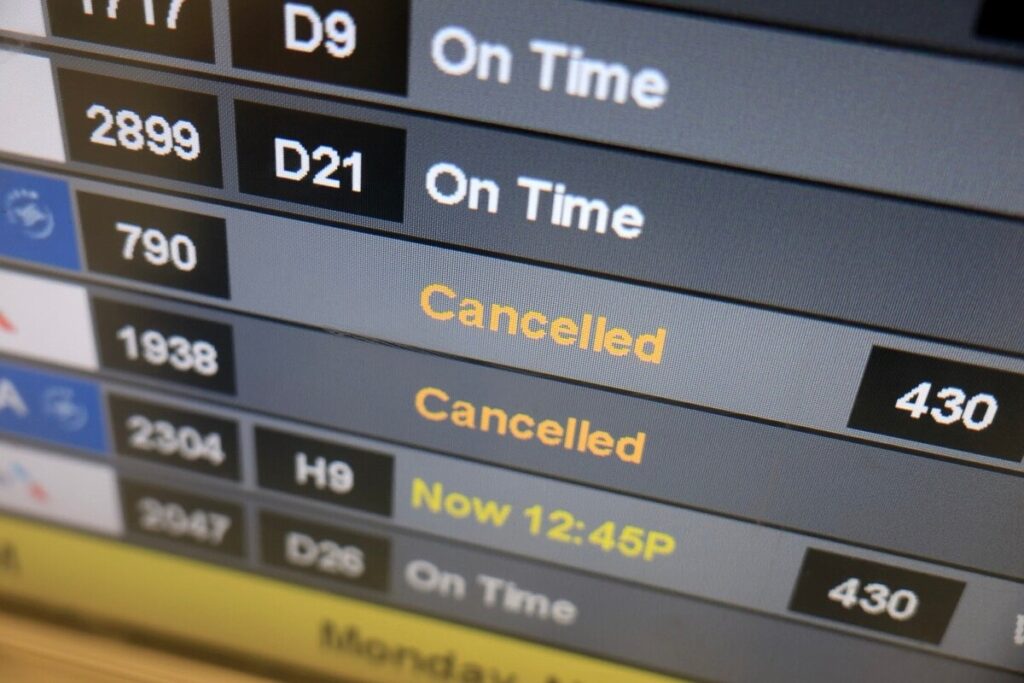
This past weekend marked one of the most tumultuous periods for air travel in the U.S. in recent years, as the ongoing government shutdown severely impacted operations at airports nationwide. The chaos was evident as over 20,000 flights were canceled or delayed, primarily due to understaffed air traffic control facilities. With air traffic controllers working without pay during the shutdown, many have been calling out, exacerbating the situation. Secretary of Transportation Sean Duffy warned of further disruptions if the shutdown continues, predicting that airlines might even consider grounding planes. While some airlines have yet to announce such drastic measures, the Federal Aviation Administration (FAA) has responded by mandating flight cancellations, increasing from 4% to 6% at 40 major airports, with projections of reaching 10% by the end of the week.
Despite the grim outlook, there were slight signs of improvement on Tuesday, as the number of flight cancellations decreased compared to the chaotic weekend. Airlines managed to stabilize their operations, with only 1,200 flights canceled on Tuesday, a significant drop from earlier in the week. Additionally, the FAA reported fewer staffing shortages in air traffic control facilities, suggesting that the situation may be stabilizing. However, the uncertainty surrounding the shutdown’s duration raises concerns about the upcoming Thanksgiving travel rush, which is just two weeks away. Experts believe that while the end of the shutdown could facilitate a quicker recovery, the road to normalcy may be slow, with potential lingering effects on air travel operations.
Travelers are advised to stay informed about their flights and the evolving situation. Major airlines have implemented flexible travel waivers and refund policies to accommodate affected passengers. As the holiday season approaches, the travel industry remains on high alert, with many looking to navigate the challenges posed by the shutdown. For those planning to fly during this busy period, it’s essential to stay updated on cancellations and to understand the resources available for managing travel disruptions.
https://www.youtube.com/watch?v=lGCwvOSOKb0
We just came off what may have been the
most chaotic weekend at U.S. airports in years
, with flight cancellations piling up across the country.
And while there does now appear to be
momentum in Washington
toward reopening the government, the Trump administration is making ominous predictions about what air travel could look like soon if the shutdown drags on.
“I think we would see that significant disruption coming this next weekend. Maybe as early as Friday,” Secretary of Transportation Sean Duffy said, speaking Tuesday at a news conference at Chicago’s O’Hare International Airport (ORD).
Duffy also claimed some airlines might consider grounding planes if the disruptions worsened — though multiple airline industry sources told TPG, late Tuesday, that they were not aware of any such plans.
Shutdown impact on air travel grows
However, the shutdown’s impact on air travel has certainly grown substantially in recent days. Travelers ran into mass disruptions this past weekend as short-staffed air traffic control facilities produced hourslong backups and helped to fuel more than 20,000 cancellations and delays on Saturday and Sunday.
Read more:
Flight delayed or canceled? Here’s what to do
Crowds pack Terminal 3 at Chicago’s O’Hare International Airport (ORD). JIM VONDRUSKA/BLOOMBERG VIA GETTY IMAGES
Air traffic controllers have been working without pay since the shutdown began, and a growing number of controllers have called out of work over the past 10 days or so.
To ease the burden, on Tuesday, the Federal Aviation Administration began requiring airlines to cancel 6% of flights at
40 major airports
across the country — up from 4% over the weekend. Those cuts are set to reach 8% of flights by Thursday, and stretch to 10% by Friday.
That would mean thousands of daily cancellations.
What happens when the government reopens?
It’s not clear how quickly the FAA would remove those restrictions once the government reopens.
“We’re going to wait to see the data on our end before we take out the restrictions in travel,” Duffy said Tuesday, citing safety data that, he said, showed an increase in concerning safety incidents on runways and in the air in recent weeks.
Signs of (slight) progress
There were some (slightly) positive signs on Tuesday.
While airlines canceled more than 1,200 flights, per FlightAware, that was far less than the numbers from Saturday, Sunday or Monday. More importantly, the number of canceled flights held steady: airlines made their required cuts, and things didn’t get substantially worse from there.
As meager as that sounds, that’s an improvement from the weekend.
Also, by late afternoon, the FAA had reported just four so-called “staffing triggers” at its air traffic control facilities, Duffy said. On Saturday, there were 81.
ROBERTO SCHMIDT/AFP VIA GETTY IMAGES
Thanksgiving travel looms
Still unclear, though: How quickly air travel could get back on track if — or when — the government reopens.
Once that happens, Duffy said, controllers would receive paychecks within 48 hours. That could be a key step to getting more workers back into control towers and flights back on track. However, plenty of uncertainty still looms after a rocky week at airports, and with the
Thanksgiving travel rush now just two weeks away.
Speaking last week to TPG, a top air traffic control expert said ending the shutdown would likely help Thanksgiving travel — but stopped short of predicting a return to normal operations.
“There should be a little boomerang effect, but there’s also going to be some trickle-down,” said Margaret Wallace, professor at Florida Institute of Technology’s College of Aeronautics.
What to know about air travel and the shutdown
In the meantime, TPG has complete coverage about the shutdown, and what you can do if you have travel planned:
We’ve compiled our
top tips for travelers
flying in the midst of these mass cancellations.
Here’s a
rundown of the flexible travel waivers and refund policies
major airlines have put in place.
What about Thanksgiving?
Some thoughts (and advice) as the busy holiday rush draws closer
.
Here’s
what TPG’s Summer Hull did
when her flight was canceled this week
Editorial disclaimer: Opinions expressed here are the author’s alone, not those of any bank, credit card issuer, airline or hotel chain, and have not been reviewed, approved or otherwise endorsed by any of these entities.


