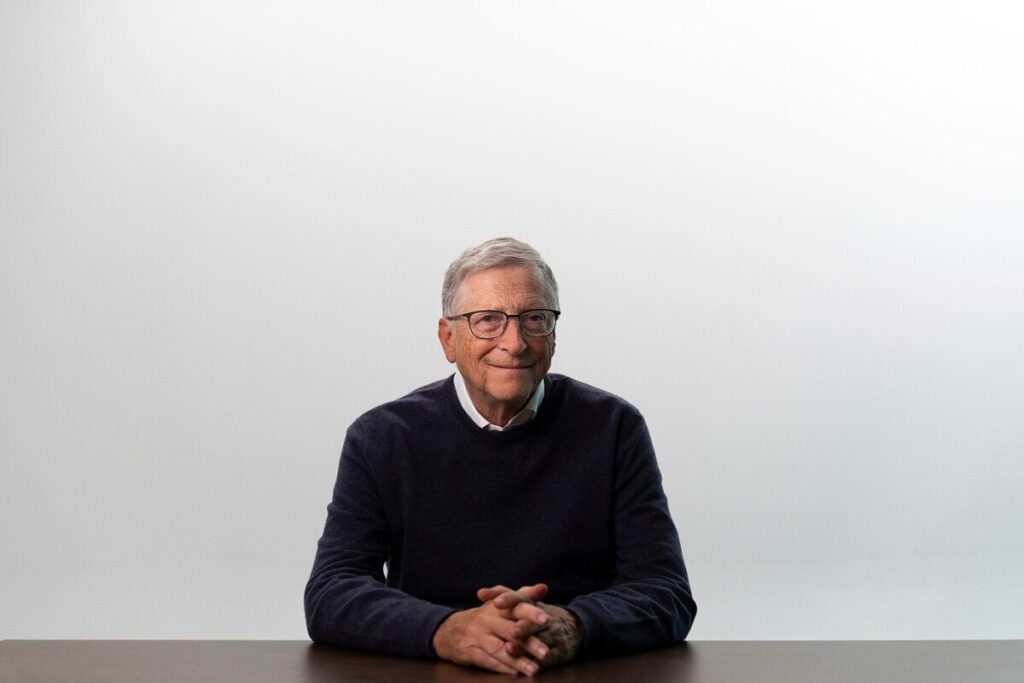
Moore: Bill Gates got mugged by reality
In a surprising turn of events, Microsoft co-founder Bill Gates has publicly shifted his stance on climate change, moving away from the alarmist rhetoric that has characterized his previous positions. For years, Gates was a prominent advocate for drastic measures to combat climate change, investing billions into renewable energy initiatives and warning of dire consequences if fossil fuel consumption continued unabated. However, Gates has recently expressed skepticism regarding the more extreme predictions of climate activists, suggesting that the doomsday scenarios often presented are not only exaggerated but also detrimental to constructive dialogue about climate solutions. This shift has drawn mixed reactions, with some conservatives critiquing Gates for his substantial investments in energy-intensive data centers, while others commend him for his willingness to reassess and publicly revise his views.
Gates’ new perspective emphasizes the importance of prioritizing human welfare in climate policy, advocating for a balanced approach that includes economic growth and technological advancement. He argues that while climate change poses risks, it is not the sole or even the most pressing threat to the welfare of impoverished populations, who are often more severely impacted by issues like poverty and disease. Gates advocates for a pragmatic approach that allows developing nations to utilize fossil fuels as they grow their economies, thereby improving agricultural practices and healthcare systems. This stance has led to Gates being criticized by some within the environmental movement, who now label him a “traitor” for stepping away from more radical green policies.
Moreover, Gates underscores two critical truths about climate change and energy access. He posits that advancements in technology have significantly reduced the mortality rates associated with severe weather events compared to historical data. Additionally, he argues that reliable and affordable energy is essential for lifting people out of poverty, and denying access to such resources is fundamentally inhumane. Gates suggests that redirecting a portion of his philanthropic efforts towards ensuring universal access to electricity and clean drinking water could have a far greater positive impact on global welfare than the vast sums already spent on climate initiatives that have failed to yield tangible results. This call for a more pragmatic and human-centered approach to climate policy invites a broader and more productive discussion on how best to address the challenges posed by climate change while fostering economic growth and improving the quality of life for millions around the world.
You’ve probably heard by now the blockbuster news that Microsoft founder Bill Gates, one of the richest people to ever walk the planet, has had a change of heart on climate change. For several decades, Gates poured billions of dollars into the climate-industrial complex and was howling that the end is nigh unless we stop using fossil fuels, cars, air conditioning and general anesthesia.
Now he says he rejects the “doomsday” predictions of the more extreme global warming prophets.
Some conservatives have snuffed that Gates has shifted his position on climate change because he and Microsoft have invested heavily in energy-intensive data centers.
What Gates has done is courageous and praiseworthy. There are not many people of his stature who will admit that they were wrong. Al Gore certainly hasn’t. My wife says I never do.
Gates still endorses the need for communal action (which won’t work), but he has sensibly disassociated himself from the increasingly radical and economically destructive dictates from the green movement. For that, the Left has tossed him out of their tent as a “traitor.”
I wish to highlight several critical insights that should be the starting point for constructive debate that every clear-minded thinker on either side of the issue should embrace.
1) It’s time to put human welfare at the center of our climate policies. This includes improving agriculture and health in poor countries.
2) Countries should be encouraged to grow their economies even if that means a reliance on fossil fuels like natural gas. Economic growth is essential to human progress.
3) Although climate change will hurt poor people, it will not be the only or even the biggest threat to the lives and welfare of the vast majority of them. The biggest problems are poverty and disease.
I would add to these wise declarations two inconvenient truths: First, the solution to changing temperatures and weather patterns is technological progress. A much smaller percentage of people die of severe weather events today than did 50 or 100 or 1,000 years ago.
Second, energy is the master resource, and to deny people reliable and affordable energy is to keep them poor and vulnerable — and this is inhumane.
If Gates were to direct even a small fraction of his foundation funds toward ensuring everyone on the planet has access to electric power and safe drinking water, it would do more for humanity than all the hundreds of billions of dollars that governments and foundations have devoted to climate programs that have failed to change the globe’s temperature.
Stephen Moore is a former Trump senior economic adviser and the cofounder of Unleash Prosperity, which advocates for education freedom for all children.


