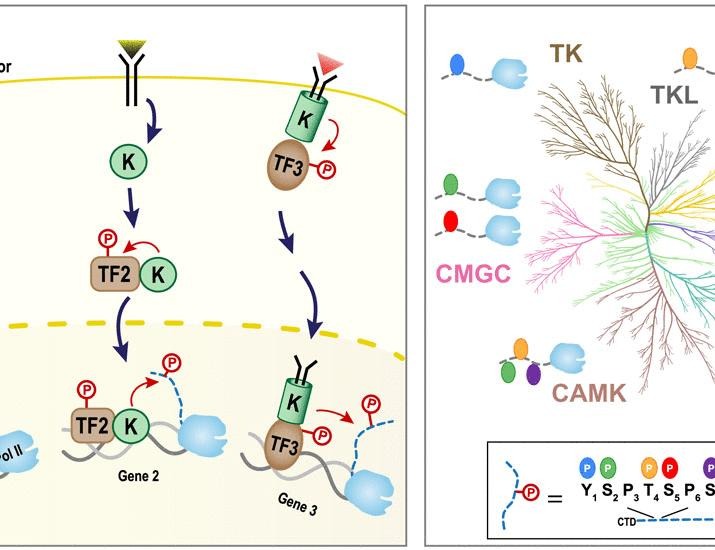
Direct targeting and regulation of RNA polymerase II by cell signaling kinases | Science
Recent research has shed light on the intricate role of distinct phosphorylation marks on the carboxyl-terminal domain (CTD) of RNA polymerase II (Pol II) during gene transcription. The CTD of Pol II is a crucial component in the transcription process, serving as a platform for the recruitment of various factors required at different stages of transcription. As Pol II progresses through the transcription cycle, specific phosphorylation events occur on the CTD, creating a unique molecular recognition code. This code is essential for the recruitment of stage-specific factors that facilitate the transition between transcription initiation, elongation, and termination.
For instance, during the initiation phase, the Ser5 residue of the CTD is typically phosphorylated, which helps in the recruitment of capping factors that add a protective cap to the nascent RNA transcript. As transcription elongation begins, the phosphorylation shifts to Ser2, which is associated with the recruitment of elongation factors that assist in RNA synthesis. This dynamic phosphorylation pattern not only regulates the interactions of Pol II with other proteins but also influences the processing of the RNA transcript, including splicing and polyadenylation. The precise timing and location of these phosphorylation events are critical for ensuring that the transcription machinery operates efficiently and accurately, highlighting the complexity of gene expression regulation.
Understanding the phosphorylation code of the CTD has significant implications for molecular biology and medicine. Disruptions in this phosphorylation process can lead to various diseases, including cancer, where abnormal gene expression patterns are often observed. By elucidating the mechanisms behind CTD phosphorylation, researchers can gain insights into potential therapeutic targets for treating transcription-related diseases. This research underscores the importance of post-translational modifications in the regulation of gene expression and the intricate choreography required for effective transcription. As scientists continue to unravel these molecular codes, the potential for developing innovative treatments and enhancing our understanding of gene regulation expands, paving the way for future advancements in biotechnology and therapeutic interventions.
Distinct phosphorylation marks are placed on the carboxyl-terminal domain (CTD) of RNA polymerase II (Pol II) during different stages of gene transcription. These phospho-CTD marks function as a molecular recognition code for the recruitment of stage-…


