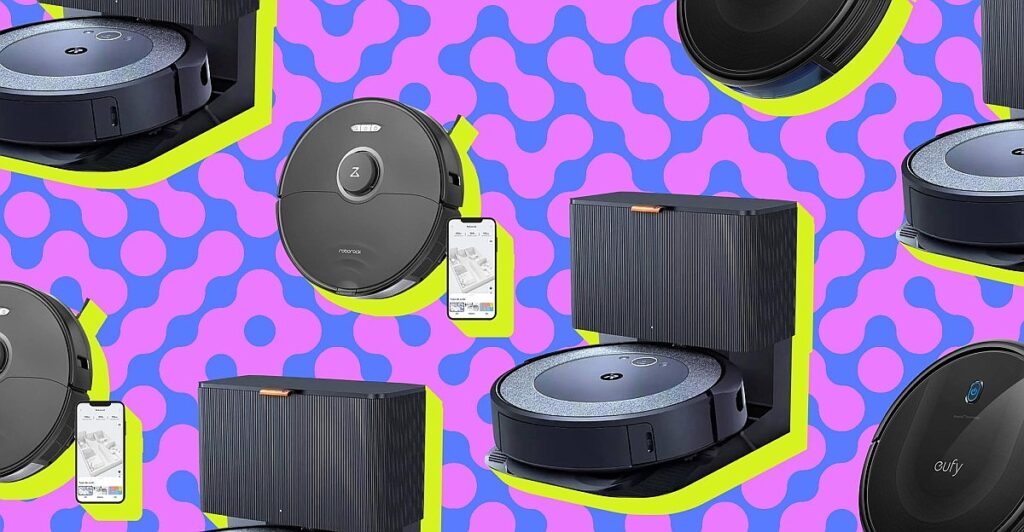
The best budget robot vacuums
In the ever-evolving landscape of home cleaning technology, robot vacuums have become increasingly sophisticated, much like modern automobiles equipped with advanced features and functionalities. However, as the market expands, it’s essential to recognize that not every household requires a high-end model with AI capabilities and complex navigation systems. For those who prefer a straightforward solution without breaking the bank, budget robot vacuums offer a practical and effective alternative. These devices are designed to autonomously clean your floors, provided you take the time to tidy up beforehand.
One standout option in the budget category is the Tapo RV30 Max Plus, a robot vacuum and mop that combines affordability with high-end features typically found in pricier models. Priced around $300, this versatile device boasts impressive specifications, including a powerful 5,200Pa suction capability, room-specific cleaning, and smart lidar navigation. The RV30 Max Plus excels at navigating spaces effectively, cleaning perimeters and interiors with precision, although it does require some initial tidying to avoid obstacles like cables and socks. Its dual mop and dustbin functionality, along with an auto-empty dock option for an additional $80, makes it a strong contender for those looking for a comprehensive cleaning solution without the hefty price tag. The Tapo app enhances usability with customizable cleaning settings, allowing users to define suction and water levels for different rooms, a feature often reserved for more expensive models.
For pet owners seeking an efficient cleaning solution, the Roborock Q5 Pro emerges as an excellent choice. With a substantial 770ml dustbin and 5,500Pa suction power, this robot vacuum is tailored to tackle pet hair and dirt effectively. It features dual rubber brushes that are less prone to tangling, ensuring that your floors remain clean without the hassle of frequent maintenance. The Q5 Pro also incorporates lidar mapping for efficient navigation and customizable cleaning zones, making it a practical investment for families with pets. While it lacks advanced AI obstacle avoidance, it compensates with robust performance and a user-friendly app that allows for precise control over cleaning schedules and zones.
For those who prefer a more basic option, the Shark Ion offers a straightforward bump-and-roll design that focuses on essential cleaning capabilities without the complexity of mapping or advanced features. With a large dustbin and durable build, the Shark Ion is designed for longevity and ease of use, making it suitable for quick clean-ups around the house. Alternatively, the Eufy 11S Max caters to users who wish to avoid smart technology altogether, providing a simple, Wi-Fi-free vacuuming experience with a slim profile and decent suction power. Each of these budget-friendly models demonstrates that effective cleaning doesn’t have to come with a hefty price tag, allowing consumers to find the right balance between functionality and affordability in their home cleaning routines.
Today’s robot vacuums are becoming a bit like cars: with all the features, upgrades, and fancy trimmings available these days, it’s easy to forget that they can just be simple machines that get us from point A to point B. Yes, some bots blow hot air on their bums (mop pads), deftly navigate dog poop, and have arms to pick up your socks, but there are plenty of basic budget robot vacuums that just do a decent job of cleaning your floor autonomously — as long as you tidy up first.
Fancier models have obstacle recognition, and some even use AI-powered cameras to tell popcorn from poop and avoid the latter. If you want one of those, check out my
best robot vacuum
buying guide. But if you think you can manage the task of picking up after yourself (and your puppy), a budget bot will save you a lot of money and still do a good job cleaning your floor.
Best budget robot vacuum
Tapo RV30 Max Plus
A budget robot vacuum and mop with high-end features, including room-specific cleaning, carpet boost, and smart navigation, it also features an auto-empty dock for just $80 more.
Score: 8
Pros
Cons
Cheap, even with the auto-empty dock
A dual mop and dustbin means no swapping
Room-specific cleaning
Carpet boost
Short battery life
Slow to recharge
Docking can be spotty
Basic obstacle detection
Where to Buy:
$329.99
$199.99 at
TP-Link (with code 30RV30MPLUS)
$329.99
$199.99 at
Amazon (with code 30RV30MPLUS)
Suction power:
5,300Pa /
Dustbin capacity:
300ml
/
Self-empty dock option:
Yes
/
Mopping option:
Yes /
Mapping:
Yes, lidar
/
Keep-out zones:
Yes, virtual /
Runtime:
100 mins, 2,600mAh battery/
Brush style:
Single rubber bristle hybrid
/
Works with:
Matter
For around $300, the Tapo RV30 Max Plus is a very capable robot vacuum and mop with some key features typically found only on vacuums that are more than twice its price. These include room-specific cleaning, multiple suction and water levels, smart lidar-based navigation, and an auto-empty dock. With brands like Roborock, you’re often paying double for the privilege of not having to empty the bot’s bin.
Thanks to lidar navigation, the RV30 did an excellent job of navigating my house, cleaning the perimeters of the rooms, and then using a mesh grid to clean inside the rooms. I did have to tidy up before it ran, though, as there’s no camera on board or AI-powered obstacle detection — so cables and socks will trip it up.
Its 5,200Pa suction power is impressive on a bot at this price, and ably sucked up Cheerios and dry oatmeal on hard flooring. It left some of the finer dust and debris, as its single bristle / rubber brush isn’t super effective. It fared less well on carpet. However, in the app, I could set it to clean a room three times for each job, after which it generally picked up all visible debris.
Mopping was better than average for a mop with no pressure or oscillation. It has a wide mop pad, and the bot has a big 300ml tank (which also incorporates a 300ml dustbin), so it applies enough water for a good surface clean.
Another unique feature for a budget robot is the ability to set customized cleaning for each room, choosing from five suction levels and three water levels as well as three rotations.
The Tapo app is very simple to use, with an easy-to-edit map that lets you add virtual walls and no-go zones, add furniture, and designate carpet areas. There’s no carpet sensing, so you need to tell it where carpets are if you don’t want it to mop them. You can also set the cleaning direction and build up to four maps — again, features usually only found on higher-end robots.
5,200Pa suction power is impressive on a bot at this price
It’s also easy to start a clean from the app, and I really like that you can tap on the map to send the robot to that spot.
The biggest downside of the Tapo is its tiny battery, which is just 2,600mAh. That is half the size of most vacs, and it couldn’t clean my entire 800-square-foot downstairs without needing to go back and recharge. It also takes a while to charge and occasionally has trouble repositioning itself on its dock.
You can get the RV30 without the auto-empty dock for around $80 less if you prefer an even simpler robot vacuum setup. This way, it will fit under a couch or bed, but you’ll have to manually empty its bin.
Best budget robot vacuum for pet hair
Roborock Q5 Pro
With a big 770ml bin and 5,500Pa of suction power, the Q5 Pro is a great budget option. It has a removable mopping pad with a small built-in water tank, dual rubber brushes, lidar mapping, and keep-out zones, making it an excellent cleaning machine. It uses Roborock’s very good app and can pair with an auto-empty dock for extra convenience.
Score: 8
Pros
Cons
Huge, 770ml bin
Dual rubber roller brushes
Lidar mapping
Digital keep-out zones
No carpet avoidance when mopping
Basic obstacle avoidance
Mopping is lackluster
Where to Buy:
$599.99
$203.99 at
eBay (refurbished, with code TOPGIFTPICKS)
Suction Power:
5,000Pa /
Dustbin capacity:
770ml
/
Self-empty dock option:
Yes
/
Mopping option:
Yes /
Mapping:
Yes, lidar
/
Suction power:
5,500Pa
/
Keep-out zones:
Yes, virtual /
Runtime:
240 mins, 5,200mAh battery /
Brush style:
dual, rubber
/
Works with:
Amazon Alexa, Google Home, Siri Shortcuts
My recommendation for families with pets who don’t want to spend a small fortune on an auto-empty robot vacuum is to buy a good bot with a big bin. These are getting harder to find now that every bot wants to be a multitasker and also mop (the water reservoir takes up valuable dustbin room). So, I’m very pleased with Roborock’s Q5 Pro with its 770ml dustbin.
This huge bin pairs with dual rubber roller brushes that are better at getting pet hair out of rugs than single brushes. The rubber is also less prone than bristles to getting tangled with hair, and combined with 5,500Pa suction power, this vacuum does a good job on very dirty floors. It does have a removable mopping pad with a small water tank built into it, too, which is useful for cleaning up the fine dust left behind by the vacuum, but it isn’t going to scrub your floors. It will, however, keep the pet hair at bay.
Don’t confuse this with the cheaper
Roborock Q5
. That bot has a smaller bin, lower suction, shorter runtime, and only one roller brush. It’s worth spending the extra for the Pro.
The Q5 Pro Plus
pairs the bot with the redesigned Roborock auto-empty dock if you really don’t like emptying the robot’s onboard bin, normally a hefty price bump, it’s often on sale at Amazon. The dock is relatively compact and lightweight compared to previous versions. However, considering the size of the Q5 Pro’s bin, you’d only have to empty it three times before the dock’s 2.5-liter bag is also full.
The Q5 Pro doesn’t have AI-powered obstacle avoidance, although it will dodge shoes and larger objects. It does have a huge 5,200mAh battery that will run for about four hours. It uses the excellent Roborock app and has all the same software features of the higher-end Roborock’s family, including lidar mapping and navigation, digital keep-out zones, room-specific cleaning, zone cleaning, and voice control.
Best basic bump-and-roll bot
Shark Ion
A truly basic budget bot, the Shark has good suction power, a big bin, and a roller brush made of bristle and plastic that doesn’t get tangled up easily. There’s no mapping, keep out zones, or obstacle detection, but the bot does offer big wheels that easily roll over obstacles and high transitions between rooms. It’s easy to buy replacement parts, too, making this one that can go for years.
Score: 7
Pros
Cons
Big bin
Easy to operate
Easy to repair
Big wheels means it can get over most transitions
Loud and rattly
No mapping
No keep-out zones
Where to Buy:
$249.99
$233.78 at
Amazon
$249.99 at
Shark
Suction power:
unknown
/ Dustbin capacity:
425ml
/ Runtime:
120 mins
/ Brush style:
single bristle / rubber hybrid
/ Auto-empty dock option:
no
/ Mapping:
no
/ Keep-out zones:
no
/ Works with:
Amazon Alexa, Google Home
The
Shark Ion
’s big bin, simple app experience, decent battery life, repairability, and bullish nature make this an excellent bump-and-roll bot. It doesn’t map or have any special navigation features other than colliding with things and changing direction. It’s not fancy, but it gets the job done.
It’s a good one to stick under a bed or desk and set to run when you’re not home, as it’s loud and rattly and will bang into everything in its path. But its big wheels and 120-minute runtime mean it’s less prone to getting stuck or running out of juice than simpler $200 bots.
Unlike many budget bots, it uses a hybrid roller brush that’s both bristle and plastic and doesn’t get as tangled as standard bristle brushes. Its short, squat side brushes are surprisingly effective at getting debris into the robot’s path, and because they’re short, they’re less prone to getting tangled in stray cords.
But the best thing ‘bout this bot is its tank-like wheels that will roll right over anything in its path, including high transitions between rooms, obstacles like lounger chair legs, and other furniture traps that regularly stump other bots. That’s a good thing, as there’s no mapping, obstacle detection, or any way to set keep-out zones here. This bot just goes.
Another bonus: replacement parts are easily available, making it simple to repair and just keep going.
Shark doesn’t share suction power specs, but it ably handled all my tests, including the toughest: raw oatmeal. Those little flakes are hard to pick up; side brushes will spin them all over the floor. It did a good job on pet hair, too, although, like most robots I tested, it required at least two runs to get everything up effectively.
The app is super basic: just on / off, scheduling, and a choice of three power levels (all loud). Disappointingly, you can only schedule it once a day. Most robots can be programmed to do two to three passes, but in place of that, I like the option to schedule it to go out twice to make sure it gets the job done. I couldn’t do that with the Shark. Still, you can press its button or use the app to send it out again if needed.
Best budget robot vacuum without Wi-Fi
Eufy 11S Max
The Eufy 11S Max is a super slim, repairable bump-and-roll bot with a large 600ml bin and three cleaning levels. Its biggest selling point for some, however, is that it lacks Wi-Fi, meaning you don’t have to fiddle with an app.
Score: 8
Pros
Cons
Big bin
Slim profile
Avoids obstacles
Quiet
Easily repairable
No mapping
No keep-out zones
Small battery
Where to Buy:
$279.99
$139.99 at
Amazon
$279.99
$139.99 at
Walmart (with coupon)
$279.99 at
eBay
Suction power:
2,000Pa
/ Dustbin capacity:
600ml
/ Runtime:
100 mins
/ Brush style:
single bristle / rubber hybrid
/ Auto-empty dock option:
no
/ Mapping:
no
/ Keep-out zones:
no
/ Works with:
n/a
The Eufy 11S Max is a rarity — a robot vacuum that doesn’t use Wi-Fi at all. There’s not even an app. Instead, you just press the button, and off it trundles. It also comes with a remote if you’d rather not get up off the couch, and you can use that to program it to clean at a specific time.
The 11S is super slim, 72.5mm high, with no lidar tower, so it will get under most couches. It has a big 600ml bin, and I was very impressed with how much it got up off my hardwood floors, even with its relatively small 2,000Pa of suction. There are three cleaning levels, and at the lowest, it registers around 55db, which is quiet enough to run in a home office.
It does have a smallish battery — only 100 minutes of runtime — but it will go back and recharge. For $200, this is the perfect budget bot for those wary of or who don’t want to deal with an app or Wi-Fi. It’s a bump-and-roll bot, meaning there are no real navigation skills. But it has plenty of replaceable parts, including the
battery and wheels
, so you can keep it going for a long time.
What we’re currently testing and what’s coming next
In light of reports around
iRobot’s uncertain future
, we’ve removed the iRobot Roomba Combo i5 from our recommendations. While if the company goes out of business, Roombas should still work in offline mode, you may not be able to control them via the app or with voice commands. As for the company’s new budget robovacs — Roomba’s
$169.99
$319.99
Roomba 105 Combo and the
$469.99
Roomba 205 DustCompactor Combo — we’re still in the testing phase, but so far aren’t impressed. While both models can vacuum and mop, boast 7,000Pa of suction, and include other useful features, each has already run into notable issues during testing. For example, the 205 we received — which features an onboard debris and dust compactor that iRobot says goes eight weeks before having to be emptied — arrived with battery problems.
We’re also in the process of testing the
$379.99
$549.99
Roborock Q10 S5 Plus Robot Vacuum and Mop, and so far we’re fans. Along with 10,000Pa of suction power, it offers a 2.7-liter self-emptying base that can hold up to 70 days’ worth of debris. Its sonic mop lifts automatically when it detects carpet and can scrub floors 3,000 times per minute, and you can set specific rooms to clean, create no-go zones, and customize cleaning schedules.
Shark has launched a new line of budget robots under its Navigator line. We’ve started testing the
Shark Navigator RV2110
and, so far, we’re impressed with its basic lidar navigation, which allows it to map your home so it doesn’t need to bump n’ roll like the Ion. At the current sale price of $199.99
$299.99
, it’s a good option as you have more control of where it cleans, and it doesn’t miss areas.
The
Shark RV2120AE
is the same robot with an auto-empty dock, which, like all Shark auto-empty docks, doesn’t require replacement dust bags. However, at $299.99 ($150 off)
$499.99
, the RV2120AE is more expensive than the Tapo, even when you consider that you have to purchase bags for the latter. The Shark RV2110AE is cheaper at $348, but it has a smaller battery and only one side brush, so it won’t run as long between charges. One benefit of Shark vacuums to consider over the Tapo is that they’re very repairable — you can buy replacement parts for almost everything on the bot, which you can’t with the Tapo.
Update, November 12th:
Adjusted pricing and availability. Removed the iRobot Roomba Combo i5 and noted the company’s financial difficulties, added some impressions of the Roomba 105 Combo and Roomba 205 DustCompactor Combo, and included a mention of the Roborock Q10 S5 Plus Robot Vacuum and Mop
.
Sheena Vasani also contributed to this post.