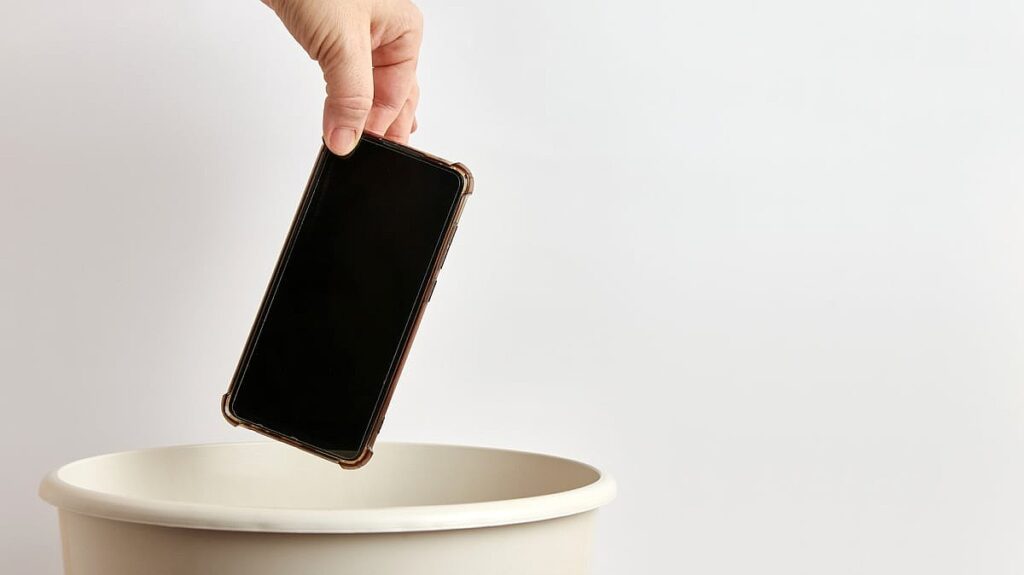
I broke up with my iPhone, and it felt like leaving a toxic relationship
In a powerful and personal narrative, Lennon Torres recounts her decision to break free from the grip of her iPhone, likening the experience to ending a toxic relationship. After years of reliance on the device, which promised connection yet delivered anxiety, she realized that her addiction extended beyond social media apps to the phone itself. Despite deleting social media in January, the device continued to manipulate her life through constant notifications and updates, creating a dependency that mirrored the psychological grip of past romantic relationships. Torres emphasizes that smartphones have evolved from mere tools to environments that captivate users, with Americans spending an average of over five hours a day on their phones. This dependency is particularly pronounced among Gen Z, who can spend up to nine hours daily on screens.
Torres’s breaking point came during her activism against Apple’s handling of sensitive issues, such as child safety. After participating in protests demanding accountability from the tech giant, she recognized the irony of being tethered to the very product she was criticizing. This realization prompted her to switch to a Motorola Razr, a move that she describes as a personal revolution and a rejection of a system that prioritizes profit over principle. While she acknowledges that the Razr is not a perfect solution and still carries some of the same challenges as her iPhone, the decision is rooted in her values and a desire to distance herself from a brand that she feels has betrayed its commitment to inclusivity and social responsibility. Ultimately, Torres’s journey illustrates the complexities of modern technology and the emotional weight of breaking free from a device that has shaped her identity and self-worth.
https://www.youtube.com/watch?v=O2ewMV4Vwu8
I didn’t cry when I ended it with the last guy I was dating. I tossed him the Apple Watch that revealed his infidelity, walked away, and never looked back. But when I powered down my iPhone for the last time, my hands were practically shaking. It wasn’t just a phone — it was the portal. The gateway to every app I’d already deleted months earlier, every algorithm I thought I’d escaped. I quit social media in January, but the device still had me. Powering it down felt like ending the most manipulative relationship I’ve ever had.
Even without the apps, the phone lingered — buzzing, glowing, whispering promises of connection. I started to realize: the addiction wasn’t just to the platforms. It was to the phone itself.
SEE ALSO:
A mass exit from social media
Since 7th grade, my iPhone was my constant companion — the one that promised connection with fast access but delivered anxiety. When I deleted social media, I thought I’d cut the cord. But the phone itself kept whispering. It love-bombed me with its sleek design. It gaslit me with every update:
This will make your life easier,
Apple whispered, while tightening its grip on my daily life. Notifications became manipulation. The absence of apps didn’t mean the absence of control. None of the boys I’ve dated have come close to the psychological grip my iPhone pulled off.
And I’m not alone. iPhones — and smartphones in general — stopped being tools a long time ago. They became environments we are engrossed in. The average American spends over five hours a day on their phone and checks it nearly
a hundred times daily.
Globally, people spend
almost seven hours on screens every day,
and for my generation, Gen Z, it’s closer to nine. That’s not convenience; that’s dependency.
Apple started as a company obsessed with liberation. Steve Jobs famously promised tools that would
“put a dent in the universe”
and free us from the tyranny of desks. The early vision was mobility, creativity, and empowerment — a computer in your pocket so you could live untethered. Instead, they delivered
features
designed to keep us engaged, like push notifications, then
entire ecosystems
, like the App Store, were built to keep us roped in.
Services became the priority
,
and the goal became keeping users on the device.
I knew this for years before I acted. But knowing and leaving are different things.
It wasn’t until last month that I knew it was time. Over a two week time span, I did two things that fundamentally changed me. First, I tied myself to a
70-foot banner
at Apple’s iPhone launch in Cupertino pointing to the fact that Tim Cook does
not do enough to stop rape videos of children
from being stored and shared in iCloud. Second, I marched with
more than 150 people
to Apple’s flagship store in New York City to demand accountability:
Choose people over profit.
Standing there, shouting for change, I realized the hypocrisy — I was tethered to the very product I was protesting. That was the breaking point. It wasn’t just about ethics. It was about identity. I had spent years curating my life through a device that curated me back — shaping my habits, my attention span, even my sense of self-worth. And suddenly, in front of that glass cube on Fifth Avenue, I saw it clearly: I wasn’t just holding a phone. I was holding the most toxic relationship of my life.
So I broke up with my iPhone and switched to a Motorola Razr.
SEE ALSO:
This Gen Z-er quit social media and hasn’t looked back since
I wasn’t bold enough to ditch the smartphone entirely. Instead, I hoped this shock to the system would help me build a healthier relationship with the device. Tech as a tool. The first few weeks felt like withdrawal — and they still do. I reach for features that aren’t there, panic over missing iMessage blue bubbles, and even feel disoriented. That’s how deep the dependency runs. Research backs it up:
58 percent of teens feel anxious without their phones
, and 73 percent of adults experience phantom vibrations — false alerts that mimic withdrawal.
I hate to admit it, but I fell in line with the
90 percent of U.S. college students who say green bubbles make Android users look less cool
— and even link them to “fewer friends” and “lower social class.” I worried people would assume I was suddenly unreachable — that switching to green meant I wasn’t reliable anymore. My friends reinforced it. The first group chat I joined with my new Razr, someone immediately dropped: “Ew, who made this group chat green?”
The Razr isn’t perfect either. It’s still a smartphone, and I’m sure I’ll find some of the same issues that existed on my iPhone. But this switch isn’t just about the tech for me — it’s also about values. It’s about refusing to support a brand whose CEO will share a meal with a president actively trying to erase people like me. It’s about the heartbreak of watching a Fortune 500 company led by an openly gay man, someone I saw myself in, turn his back on vulnerable young people who are a lot like who he used to be.
That’s the failure of capitalism — even when you climb to the top, even when you hold unimaginable power, profit still wins over principle. Tim Cook could have been a beacon for inclusion. Instead, he became another executive who forgot the weight of his influence.
So yes, I left my iPhone. But more than that, I left the illusion that Apple was on my side. Breaking up with my phone was a personal revolution — and a rejection of a system that asks us to trade our dignity for convenience.
I didn’t just leave a device. I walked away from the most toxic relationship of my life. And honestly? I’ve never felt lighter.
This article reflects the opinion of the writer.
Lennon Torres is a Public Voices Fellow on Prevention of Child Sexual Abuse with The OpEd Project. She is an LGBTQ+ advocate who grew up in the public eye, gaining national recognition as a young dancer on television shows. With a deep passion for storytelling, advocacy, and politics, Lennon now works to center the lived experience of herself and others as she crafts her professional career in online child safety at
Heat Initiative
. The opinions reflected in this piece are those of Lennon Torres as an individual and not of the entities she is part of. Lennon’s substack:
https://substack.com/@lennontorres