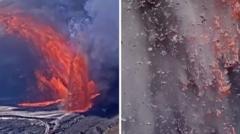
Watch: Moment Hawaii volcano eruption engulfs camera
Kilauea, one of the most active volcanoes globally, has been captivating scientists and visitors alike with its intermittent eruptions that have persisted since December of the previous year. Located on the Big Island of Hawaii, Kilauea is renowned for its frequent activity, and this latest series of eruptions has drawn significant attention due to its potential impacts on the surrounding environment and local communities. The latest phase of eruptions has primarily been concentrated within the Halemaʻumaʻu Crater, a summit caldera that has been a focal point for volcanic activity. The eruptions have produced spectacular lava fountains and flows, creating a mesmerizing display that attracts tourists while also posing challenges for nearby residents.
The ongoing eruptions have been characterized by varying intensity, with periods of heightened activity followed by quieter phases. Scientists from the United States Geological Survey (USGS) have been closely monitoring the volcano, utilizing advanced technology to track changes in seismic activity and gas emissions. These observations are crucial not only for understanding the volcanic processes at play but also for ensuring the safety of the local population. For instance, increased volcanic gas emissions can pose health risks, prompting warnings for residents in downwind areas. The lava flows, while a stunning natural phenomenon, also raise concerns about property damage and the potential disruption of infrastructure, as seen during Kilauea’s previous eruptions in 2018, which caused significant destruction to homes and roads.
In addition to the immediate geological and environmental implications, Kilauea’s eruptions have broader cultural and historical significance for the Hawaiian people. The volcano is considered a sacred site, embodying the goddess Pele, who is revered in Hawaiian mythology. As such, the eruptions are viewed not only as natural events but also as spiritual occurrences, reinforcing the deep connection between the land and its indigenous culture. As Kilauea continues to erupt, the balance between appreciating its beauty and respecting the potential dangers remains a critical conversation among scientists, locals, and visitors alike. The ongoing activity serves as a reminder of the dynamic nature of our planet and the need for continued research and preparedness in the face of natural phenomena.
https://www.youtube.com/watch?v=c7FxHqQZc7E
Kilauea, one of the world’s most active volcanoes, has been erupting intermittently since December last year.