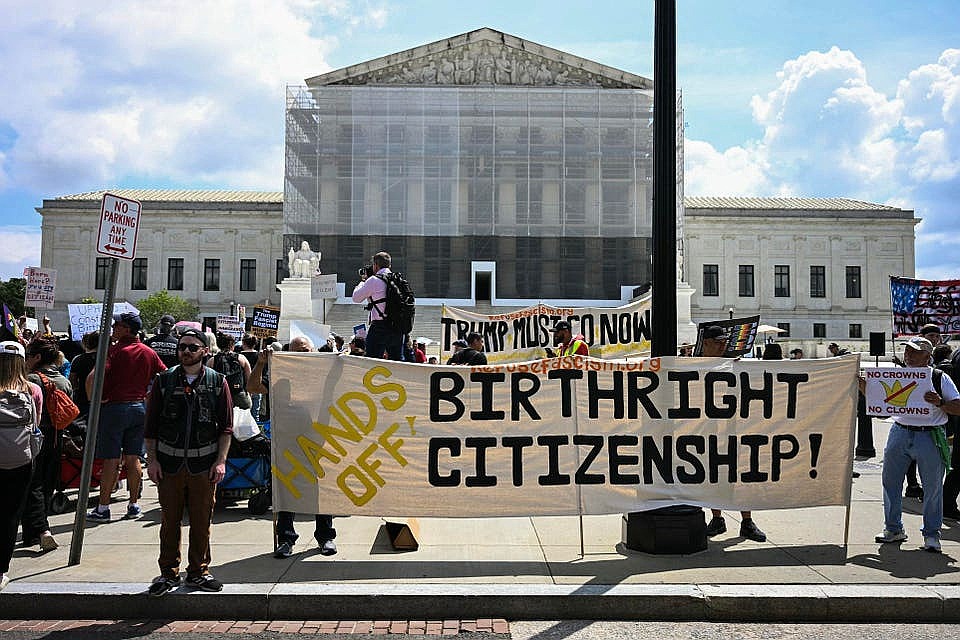
Supreme Court Will Rule On Trump’s Challenge To Birthright Citizenship
In January, former President Donald Trump made headlines by signing an executive order aimed at denying citizenship to children born in the United States to undocumented immigrants and certain temporary foreign residents. This move has reignited the long-standing debate over birthright citizenship, which is enshrined in the 14th Amendment of the U.S. Constitution. The amendment, ratified in 1868, states that “all persons born or naturalized in the United States, and subject to the jurisdiction thereof, are citizens of the United States.” Trump’s executive order seeks to challenge this constitutional guarantee, arguing that it has been exploited and has led to what he labels “birth tourism,” where foreign nationals come to the U.S. specifically to give birth in order to secure citizenship for their children.
The implications of this order are profound, as it could potentially affect thousands of children born to undocumented immigrants each year. Critics argue that such a policy would not only violate the Constitution but also undermine the foundational principles of American democracy, which has historically embraced the idea of inclusivity and opportunity for all. For instance, in 2019, an estimated 250,000 children were born to undocumented parents in the U.S., and many of these children are already integrated into American society, attending schools and participating in community activities. By denying them citizenship, the executive order could create a generation of stateless individuals, further complicating their access to education, healthcare, and other essential services.
Supporters of the executive order claim it is necessary to protect American sovereignty and ensure that citizenship is not granted through what they consider loopholes in the law. However, legal experts and immigrant rights advocates have voiced strong opposition, arguing that the order could face significant legal challenges and is likely unconstitutional. The debate surrounding this issue highlights the broader national discourse on immigration policy and the complexities of citizenship in a country built on the principles of freedom and equality. As the landscape of immigration continues to evolve, this executive order serves as a reminder of the contentious nature of these discussions and the need for comprehensive reform that respects human rights while addressing security concerns.
Trump signed an executive order in January denying citizenship to children born on American soil to undocumented immigrants and some temporary foreign residents.


