What are small modular reactors, a new type of nuclear power plant sought to feed AI’s energy demand?
As electricity demand surges in the United States, driven by the growing need for larger data centers to support artificial intelligence systems, the search for sustainable energy solutions has intensified. According to the International Energy Agency, global data centers consumed approximately 460 terawatt-hours of electricity in 2022, a figure expected to rise substantially in the coming years. One of the most promising solutions being discussed is nuclear energy, particularly through the development of small modular reactors (SMRs). These reactors, which are still in the research and development phase, could provide a reliable, low-carbon energy source for the burgeoning tech industry while also addressing the challenges of energy generation in remote areas.
Small modular reactors are designed to generate between 20 and 300 megawatts of electricity, making them suitable for smaller communities and industrial applications. Unlike traditional nuclear power plants, which require large plots of land and significant time for construction, SMRs can be manufactured in factories and transported to their operational sites, allowing for quicker deployment—often within two to three years. They also come equipped with advanced safety features to minimize the risk of accidents and reduce the amount of radioactive material compared to conventional reactors. As the U.S. Department of Energy (DOE) invests in domestic manufacturing of specialized nuclear fuel for these reactors, including high-assay low-enriched uranium, the country is taking steps to ensure a stable supply chain while addressing the pressing issue of nuclear waste management, which remains a significant challenge.
The potential applications for small modular reactors extend beyond just electricity generation. Their ability to produce both electricity and heat makes them ideal for various industrial uses, such as powering desalination plants and supporting remote mining operations. Additionally, educational institutions like the University of Illinois are exploring the integration of microreactors on campus to provide power and steam while offering hands-on training for students in nuclear engineering. While SMRs are still years away from commercial availability, their development represents a critical step towards meeting the energy demands of the future in a sustainable and efficient manner. As discussions around nuclear energy continue, it is clear that small modular reactors could play a vital role in powering the next generation of technology while mitigating climate change impacts.
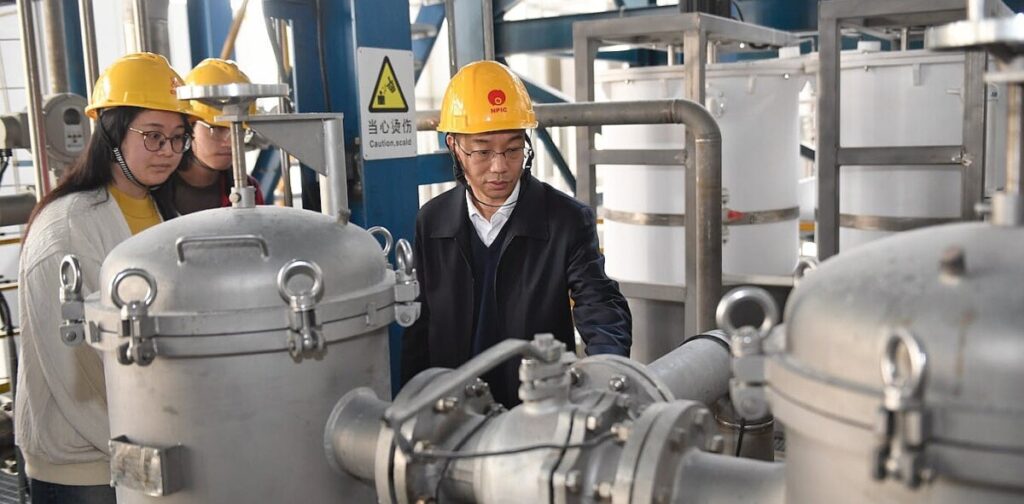
Workers examine an experimental small modular reactor at a research institute in China.
Liu Kun/Xinhua via Getty Images)
As U.S.
electricity demand rises
and technology companies seek to
build more and larger data centers
to drive artificial intelligence systems, the main question arising is how to generate all that power.
According to the International Energy Agency, large-scale data centers around the world used
about 460 terawatt-hours of electricity
in 2022, a figure that analysts
expect to continue rising
years into the future.
One potential solution being proposed is nuclear energy – produced by
existing large-scale nuclear power plants
,
reactivated old ones
,
new ones that might be constructed
with
government subsidies
, and other, smaller types of nuclear plants that are
in development and not yet available
.
The discussion around powering AI data centers, in particular, has involved a type of nuclear power plant called a
small modular reactor
. According to the International Atomic Energy Agency, there are
about 70 different designs
being researched and developed around the world, including reactors that could one day serve small or remote communities, military applications and even ships at sea or spacecraft.
Proponents say these reactor designs provide
consistent power without climate-changing carbon emissions
. They can also be located close to places that need their energy, reducing dependence on the electricity grid. They are still years from being commercially available: Demonstration projects may begin construction before 2030, with commercial ones
reaching operation perhaps by the mid-2030s
. And there is not yet a plan from the U.S. Department of Energy to
handle the radioactive waste they would generate
.
I am an
engineer whose work focuses on the nuclear industry
, including waste handling and decommissioning of nuclear reactors. Here’s what this type of reactor is, how it works and what it can do:
Small modular reactors, at the top, are in between the other two sizes of reactor, and serve different sizes of communities, at the bottom.
A. Vargas/IAEA
The basics
There are three general sizes of nuclear reactors – only one of which, conventional nuclear plants, has been built commercially. Conventional plants are built in permanent locations on large plots of land around reactor cores as tall as 30 feet (10 meters). They usually generate
more than 1,000 megawatts of power
, enough to
supply 700,000 to 1 million homes
.
The other types are still being researched and are considerably smaller.
Microreactors
have cores that are small enough to fit into the trailer of a semitruck. They can be installed on land about as big as a football field and generate less than 20 megawatts.
Small modular reactors are in between. Their cores are roughly 9 feet (3 meters) across and 18 feet (6 meters) tall. The entire operation occupies an area of
about 50 acres
and can
generate up to 300 megawatts
of electricity.
Because of the reactors’ size, they can be built in factories from various components and then be shipped by truck, rail or water to the location where they are assembled.
All the different types of small modular reactors generate heat the same way: by splitting heavy atoms and capturing the heat into a variety of materials – like
water
,
liquid metal
or
molten salt
– that circulate through water to generate steam that drives a turbine.
They are also
designed with safety features
to reduce the risk and severity of accidents that might release radiation or radioactive material into the surroundings. For instance,
passive systems
and those based on fundamental principles like gravity can terminate nuclear reactions before they reach levels where explosions or leaks might occur. These reactors also produce less heat and have far smaller amounts of nuclear material than traditional large reactors, which can reduce the radioactivity risk as well.
The green-wrapped core module of a small nuclear reactor is readied for transfer to a ship.
Liu Xuan/VCG via Getty Images
Construction and deployment
Small modular reactors are well-suited to provide electricity in remote places or regions without a large power grid – places where large nuclear power plants are impractical.
Their compact design and flexible placements make them ideal for small geographical regions or industrial installations, like desalination plants, or in countries just starting to develop nuclear power.
They can be built and put into operation
within two or three years
– more quickly than the decade or longer it can take to
secure permits and construction of standard nuclear power plants
and
complete construction
of a large nuclear plant.
There remains a range of technical challenges before small modular reactors can actually be built and put into use. These include relatively straightforward questions like how many people are needed to operate each reactor, and more complex
decisions about refinements to safety regulations
, both
in the U.S. and internationally
. It’s also not yet clear what the best way is to
manage the transport of radioactive materials
, especially for reactors that use coolants other than water, which could produce new forms of radioactive waste.
Understanding the fuel
Larger nuclear power plants use fuel that is
about 5% uranium-235
, the element that splits in a nuclear reaction, releasing heat. But many small modular reactor designs use a different fuel, with
between 5% and 20% uranium-235
.
This different fuel, called “high-assay low-enriched uranium,” lets the reactors generate more electricity from a smaller volume of fuel material. And though it contains significantly more uranium than standard nuclear fuel, it remains far below the concentration of
90% uranium-235 that is used in nuclear weapons
.
The more concentrated fuel also allows reactors to run longer between refueling and reduces the amount of radioactive waste that remains after the fuel is spent.
An engineer at a French research center works on equipment as part of efforts to develop a small modular reactor.
Nicolas Tucat/AFP via Getty Images
US efforts
The U.S. Department of Energy is working to develop
domestic manufacturing of this type of uranium for small modular reactors
, to avoid being dependent on foreign sources.
Under a government contract, a Maryland-headquartered nuclear fuel company called Centrus Energy has
produced nearly 1 ton (920 kilograms)
of that fuel since 2023 under a contract
estimated to cost taxpayers US$120 million
. In mid-2025, Centrus received a
$110 million contract extension
to
produce that amount again
by the middle of 2026.
The Department of Energy is distributing the fuel Centrus has made to five companies for
demonstrations and development projects
.
Managing waste
All nuclear plants require safe handling of the fuel and the resulting waste. There is no permanent place to store nuclear waste in the U.S. Most nuclear waste is stored
on the land around the reactors
where it was generated.
The Department of Energy says it is trying to find a place to
temporarily store waste from small modular reactors
, but that process has been
tied up in the courts for years
and may not be resolved anytime soon.
Other industrial uses
In addition to delivering electricity, small modular reactors can also
directly generate large amounts of heat
.
That can be
useful for desalination plants
, which use both electricity and heat to convert seawater into fresh water for drinking and irrigation. Remote mining operations also often need both heat and power to operate equipment, ensure living quarters are habitable and
process minerals
.
Small modular reactors may also be useful on university campuses. A
microreactor planned for the University of Illinois
will provide power and steam to campus buildings, while also teaching students how to operate nuclear plants, and offer research and demonstration opportunities for more reactor improvements in the future.
Leonel Lagos does not work for, consult, own shares in or receive funding from any company or organization that would benefit from this article, and has disclosed no relevant affiliations beyond their academic appointment.


