Trump invites ‘cute’ Japanese kei trucks to come to America
In a surprising twist during a recent briefing, former President Donald Trump expressed his admiration for Japan’s kei vehicles, charmingly referring to them as “very small” and “really cute.” This unexpected endorsement came as Trump announced his intentions to roll back fuel economy standards, aiming to make vehicles more affordable for American consumers. The kei vehicle, which translates to “light truck” in Japanese, is a compact automobile designed to meet specific regulations in Japan, and its popularity is on the rise, even in the United States. Data from Japan Used Motor Vehicle indicates that sales of these mini trucks have tripled over the past five years, with approximately 7,500 units imported last year alone.
Trump’s enthusiasm for kei vehicles led him to instruct the U.S. Department of Transportation (USDOT) to expedite the approval process for their production in the U.S. Transportation Secretary Sean Duffy confirmed that the directive aimed to clear regulatory hurdles, allowing companies like Toyota to manufacture these smaller, fuel-efficient cars domestically. However, the legal landscape surrounding kei vehicles in the U.S. is quite complex. While federal rules permit the import of these vehicles if they are 25 years old or older, state regulations regarding their on-road legality and registration remain murky. There is a possibility that kei trucks could be categorized as low-speed vehicles, akin to golf carts, which might allow them to bypass some regulations.
Despite their growing fan base, which celebrates kei vehicles as a refreshing alternative to the oversized SUVs that dominate American roads, the question of their market viability remains. Enthusiasts have taken to social media platforms like Instagram, where they share memes and merchandise, cultivating a community passionate about these pint-sized vehicles. However, the inherent size limitations of kei vehicles may deter the majority of American consumers, who often prefer larger automobiles. Furthermore, while the rollback of fuel efficiency standards is framed as a move to make cars more affordable, experts warn that any initial savings could be negated by rising fuel costs in the long run. As the automotive landscape continues to evolve, the fate of kei vehicles in the U.S. market remains uncertain, but their quirky appeal is certainly capturing attention.
https://www.youtube.com/watch?v=xjkTm2UxLXQ
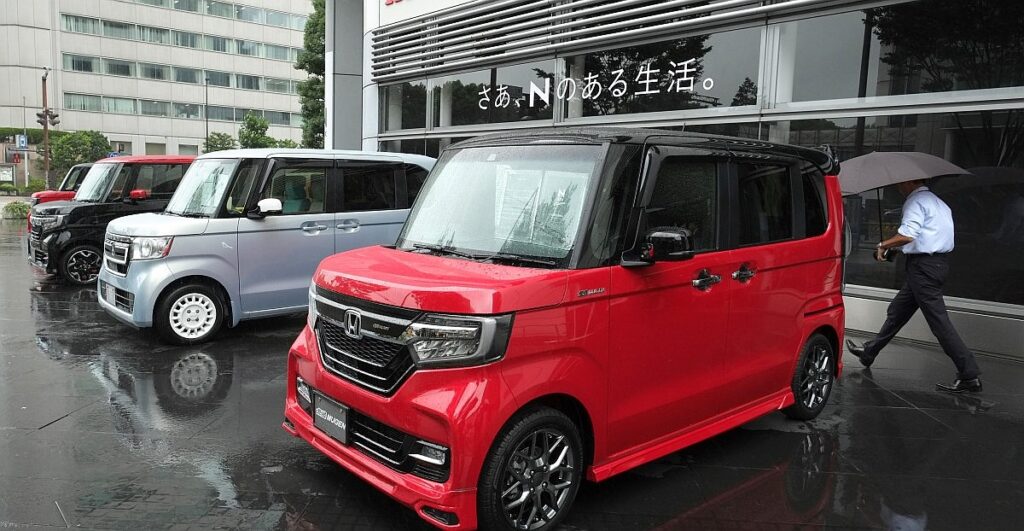
This picture taken on August 31, 2017 shows Honda Motor’s new N-BOX mini-vehicles at its headquaters in Tokyo.
Tiny kei trucks from Japan have a new fan: President Donald Trump.
Trump expressed admiration for the pint-sized autos during a briefing with reporters to announce his plan to
gut fuel economy standards
. “They’re very small. They’re really cute,” Trump said. “And I said, how would that do in this country? And everyone seems to think, good, but you’re not allowed to build them.”
Kei vehicles, which are built to satisfy Japan’s light vehicle regulations, are enjoying surging popularity in the automarket — including here in the US. Sales of kei trucks tripled in the last five years, with around 7,500 total imported just last year, according to data from Japan Used Motor Vehicle
cited by CNN
.
“They’re very small. They’re really cute.”
Comparing them to the Volkswagen Beetle, Trump said he was authorizing the US Department of Transportation “to immediately approve the production of those cars.”
“He gave me the directive to clear the regulations on this, which we have,” US Transportation Secretary Sean Duffy said at the briefing. “And so if Toyota or any other company wants to make smaller, more affordable cars, fuel efficient, we have cleared the deck so they can make them in America and sell them in America.”
A spokesperson for USDOT did not immediately respond to questions about what specific authorization Trump gave Duffy.
Indeed, the regulation around the legality of kei vehicles in the US is spotty. Federal rules allow for the import of mini trucks so long as they are 25 years or older, while state laws surrounding their on-road legality and registration are less clear. The vehicles would also need to comply with the Federal Motor Vehicle Safety Standards, which dictates everything from steering wheel placement to vehicle weight.
That said, many states have rules allowing low-speed vehicles like golf carts, so its conceivable that kei trucks could slip through under those provisions.
Whether they would sell, though, is another question. Kei vehicles, short for “keitora,” meaning “light truck,” have strict guidelines around engine, size, and power limits. And while they certainly have a following in the US, they are probably too small for the majority of American buyers.
That said, they have a small but growing fan base in the US, specifically because they represent an antidote to the
giant SUVs and trucks that dominate our roads today
.
On Instagram
and other social platforms, enthusiasts sell kei merch and post memes to tens of thousands of followers.
Of course, the purpose of the briefing was to announce the rollback of strict fuel efficiency rules put in place by the Biden administration. Trump said the goal was to make cars more affordable, but most experts predict that any savings from lower-priced vehicles will be offset by higher fuel costs over time.