Republicans Are in Trouble, but Democrats Could Blow It
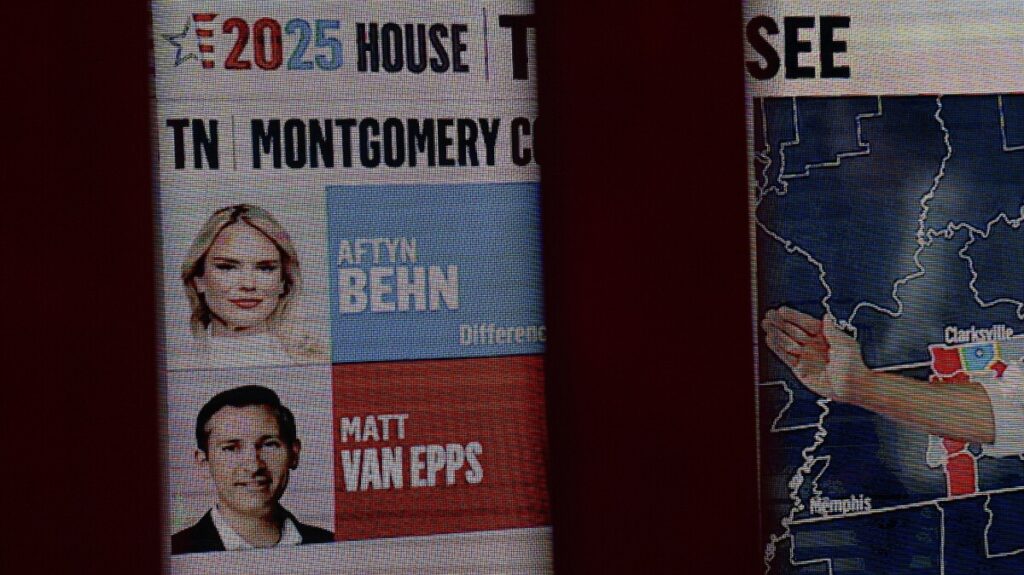
In a surprising turn of events during the special election for Tennessee’s Seventh Congressional District, Republican Matt Van Epps secured victory over Democrat Aftyn Behn by just nine points, a stark contrast to Donald Trump’s 22-point win in the same district during the 2024 presidential election. Trump celebrated the outcome as a “BIG Congressional WIN” on Truth Social, but the reduced margin of victory raises concerns for the Republican Party as they approach the 2026 midterms. Van Epps’ performance, 13 points below Trump’s, suggests a vulnerability that could potentially allow Democrats to gain significant ground if they can replicate this shift across other districts. Analysts note that if Democrats were able to achieve similar results nationwide, they could potentially reclaim upwards of 40 seats in the House and even regain control of the Senate.
However, the election also serves as a cautionary tale for Democrats. In off-year special elections, characterized by low voter turnout, the party’s more progressive base is often overrepresented. Behn, a former community organizer with a notably progressive background, may have alienated moderate voters with her past statements and radical views, which were heavily exploited in Republican attack ads. Her candidacy highlights the ongoing debate within the Democratic Party regarding strategy: should they focus on mobilizing their base with inspiring progressive candidates, or should they adopt more moderate positions to appeal to a broader electorate? While some progressives argue that Behn’s loss was due to external factors, including heightened national attention and aggressive campaigning from Republicans, the evidence suggests that a more moderate approach may resonate better with swing voters. As Democrats prepare for the upcoming elections, they face a critical decision: continue with the current strategy or pivot towards candidates who can attract a wider range of voters, especially in traditionally conservative districts.
The implications of this election extend beyond Tennessee, as Democrats must navigate the complexities of voter demographics and preferences. With only 31,000 voters participating in the Democratic primary, far fewer than those who voted in the special election, the challenge of mobilizing a diverse electorate becomes apparent. As the party looks ahead to 2026, it must weigh the risks of nominating candidates like Behn against the potential benefits of centrist alternatives who could appeal to a broader audience. The outcome in Tennessee serves as a microcosm of the larger electoral landscape, illustrating the need for strategic recalibration within the Democratic Party as they aim to reclaim power in a polarized political environment.
https://www.youtube.com/watch?v=g18MTRquc_A
In the 2024 presidential election, Donald Trump carried Tennessee’s Seventh Congressional District by 22 points. Last night, in a special election to represent the district, the Republican Matt Van Epps won by only nine points,
defeating
State Representative Aftyn Behn, a Democrat.
Trump
celebrated
the outcome on Truth Social as a “BIG Congressional WIN,” but the margin of victory in a deep-red district is ominous for Republicans. Van Epps underperformed Trump by 13 percentage points, a sign that the party is vulnerable heading into the 2026 midterms. If Democrats could replicate that shift everywhere next year, they would gain upwards of 40 seats in the House and take back the Senate.
But last night’s outcome also offers Democrats a cautionary tale. An off-year special election in December is precisely the kind of low-turnout situation in which the party’s highly educated base currently dominates. In such races, Democrats probably need to run up the score by even more than 13 points before they can have a real shot at winning both houses of Congress next year. And if they’d nominated a more moderate candidate, they probably would have.
[
Rogé Karma: Democrats finally realize it isn’t 2016 anymore
]
Behn, a 36-year-old former community organizer, has the kind of progressive background that might not hurt in a Democratic primary but can become a real liability in a general election—including an extensive trail of
quotes
that ended up being used against her. She
told
a Nashville interviewer in 2020, “I’m a very radical person.” In now-deleted tweets from the same year, she advocated for dissolving the Nashville police department and
wished
a “Good morning, especially to the 54% of Americans that believe burning down a police station is justified.” She
said
on a podcast that she hated country music, bachelorette parties, and the city of Nashville itself, and suggested on a different episode that “birthers”—a gender-neutral term for “men and women who can give birth”—should refuse to procreate as a form of “collective bargaining.”
Republican groups seized on those quotes in the final few weeks of the campaign, spending millions of dollars on attack ads to make sure as many voters in the district as possible heard them. This tactic appears to have worked to some degree. A 13-point over-performance sounds huge, but in contemporary political terms, it’s pedestrian. The president is deeply unpopular, and the Democratic coalition has grown ever whiter, older, richer, more highly educated, and more female—a recipe for high turnout in off years. Indeed, compared with other Democrats who ran in special elections for Congress this year, Behn’s performance is below average. Democrats averaged a staggering over-performance of 18 points in races that took place in Florida, Virginia, and Arizona.
The ambiguity of the Tennessee results—Behn lost, but she over-performed, but she probably under-over-performed—has reignited an interminable intra-party debate. Some members of the Democratic left argue that the key to winning elections is mobilization: nominating inspiring progressive candidates who excite the party’s voters, driving up Democratic turnout. Moderates (and plenty of more pragmatic leftists) counter that this never works, and that winning—especially in Trump districts—requires persuasion: running candidates with enough moderate positions to win over some conservative voters.
Behn’s candidacy was a test case for the first theory. “This Tennessee special congressional election is about MOBILIZATION,” the candidate
wrote
in October. The Democratic National Committee chair, Ken Martin,
told
The Bulwark
last week that the race was “not about persuading voters; it’s about turning them out.” Following Behn’s loss, some progressives doubled down on that idea,
arguing
that a moderate candidate wouldn’t have performed better than Behn did, because the base wouldn’t have turned out. They argue that if Behn didn’t do as well as other special-election candidates have, it’s because her race drew much more national attention, including from Trump himself, leading to the barrage of attack ads. Of course, those attack ads might have had less bite if the candidate hadn’t personally provided so much fodder for them.
One thing that keeps the motivation–persuasion debate going is that, in any specific electoral race, both sides have an unfalsifiable argument. Win or lose, they can argue that the Democratic candidate would have fared better if only they had tried harder to appeal to swing voters or if only they had tried harder to rock the vote.
The weight of the evidence, however, strongly favors the persuasion theory. There is no real trade-off between persuasion and turnout, because sporadic voters are not hardcore progressives waiting to be activated. In ideological terms, they are, in fact,
very similar
to swing voters; if anything, sporadic voters are even more moderate and conservative. Because these voters are similar to each other, the same basic tactics tend to work with both groups: focusing on the economy and stressing that you have mainstream rather than far-left views about cultural issues.
[
Marc Novicoff: Democrats don’t seem willing to follow their own advice
]
Last night’s special election showed the limits of a turnout-alone strategy. If ever that approach is going to work, it is in an off-year special election. In the midterms, the Democratic turnout advantage is all but guaranteed to shrink. (This will be even truer in the 2028 presidential election.) At some point, the time will come to face the full electorate.
In the four-way
Democratic primary
for Tennessee’s Seventh, only 31,000 voters cast a ballot, fewer than half the number that voted for Behn yesterday. Behn won that primary with 28 percent of the vote, beating the businessman Darden Copeland by fewer than 1,000 votes. Copeland had run on lowering the national debt and wrote in a
candidate survey
that he models himself on Dick Gephardt, the pro-life Democratic congressman who once chaired the centrist Democratic Leadership Council.
Democrats are in a strong position heading into 2026. One of the only things standing in their way is the likelihood of them nominating more Aftyn Behns, when Darden Copelands are staring them in the face.


