This AI pioneer says AI could replace almost every job — even CEOs
In a stark warning about the future of work, AI pioneer Stuart Russell has raised alarms regarding the potential for artificial intelligence to replace a vast majority of jobs, including those of highly skilled professionals and even CEOs. Speaking on the “Diary of a CEO” podcast, Russell, a professor at UC Berkeley and co-author of the seminal textbook “Artificial Intelligence: A Modern Approach,” expressed his concern that political leaders are underestimating the economic upheaval that AI could bring. He suggested that we may soon be facing “80% unemployment,” as AI systems advance to perform tasks traditionally reserved for humans, such as surgery, coding, and executive decision-making. Russell’s predictions echo the sentiments of other industry experts, who foresee significant job displacement across various sectors, with some estimates suggesting that up to 40 million jobs in the U.S. could be at risk within the next decade.
The implications of this shift could be profound, not just economically but also psychologically. As Russell pointed out, the rise of machines in the workforce could lead to a society where humans struggle to find purpose, as their roles in problem-solving and contribution diminish. He warned of a future where individuals may become passive consumers, living for entertainment rather than engaging in meaningful work. This scenario raises critical questions about the societal and educational structures needed to adapt to such changes. Russell emphasized the importance of rethinking human incentives and educational paradigms in a world where machines dominate productivity. He noted that, despite the advancements in AI, there has yet to be a convincing vision of what a future society could look like when traditional work is no longer a defining feature of human life.
As companies like HP, IBM, and Salesforce have already begun to implement AI technologies leading to workforce reductions, the urgency for discussions around these issues is paramount. Russell’s insights challenge us to consider not only the economic ramifications of AI but also the deeper existential questions about what it means to be human in a rapidly changing world. As we stand on the brink of this technological revolution, the need for proactive measures and thoughtful dialogue about our future has never been more critical.
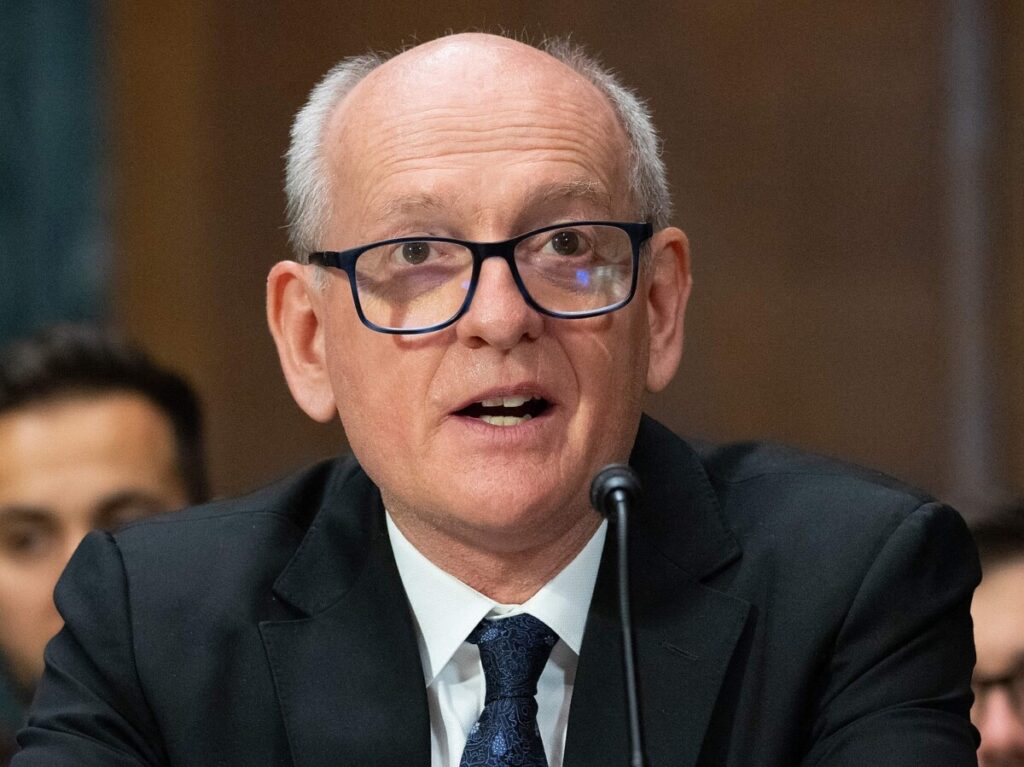
Leading AI pioneer Stuart Russell warns that rapidly advancing machines could replace nearly every job — even those of CEOs.
SAUL LOEB/AFP via Getty Images
AI pioneer Stuart Russell warns leaders are “staring 80% unemployment in the face.”
Russell says AI may replace surgeons, coders, and even CEOs as firms chase efficiency.
He fears a future where machines do all work, leaving humans struggling to find purpose.
After more than 40 years of studying
AI
, UC Berkeley professor Stuart Russell hasn’t mellowed.
The man who co-authored “Artificial Intelligence: A Modern Approach,” the world’s most authoritative textbook on AI, now spends up to 100 hours a week trying to avert what he sees as a historic crisis — one that could leave almost the entire global population
without work
.
Russell, one of the world’s most influential AI researchers and a recipient of the OBE — a royal honor awarded by the UK — for his contributions to computer science, told British entrepreneur Steven Bartlett on the “Diary of a CEO” podcast posted on Thursday that the economic shock ahead is far bigger than governments realize.
‘80% unemployment’ is no longer a sci-fi scenario
Russell said political leaders are “suddenly staring 80% unemployment in the face” as AI systems accelerate toward
replacing abilities
once reserved for the highest-skilled humans.
“AI systems are doing pretty much everything we currently call work,” he said. That includes fields once believed to be safe from automation.
“Anything you might aspire to — you want to become a surgeon — it takes the robot seven seconds to learn how to be a surgeon that’s better than any human being,” he added.
He suggested that sectors once considered safe — from driving and logistics to accounting, software engineering, and even medicine — are likely to be swept up in the coming wave of automation.
Russell joins a growing chorus of AI experts and tech leaders in forecasting historic levels of job displacement.
While
Andrew Yang
has warned AI could wipe out 40 million US jobs in the next decade, Anthropic CEO
Dario Amodei
has predicted up to half of entry-level white-collar roles could disappear within five years.
Others, including Nvidia CEO Jensen Huang and Yann LeCun, Meta’s outgoing chief AI scientist, believe AI will
transform work
rather than erase it.
Why CEOs could be replaced, too
The disruption won’t stop at the top. Russell said even senior executives won’t be spared.
“Pity the poor CEO whose board says, ‘Unless you turn over your decision-making power to the AI system, we’re going to have to fire you because all our competitors are using an AI-powered CEO and they’re doing much better.'”
Google CEO Sundar Pichai
and OpenAI CEO Sam Altman have both echoed these thoughts in recent interviews.
“I think what a CEO does is maybe one of the easier things for an AI to do one day,” Pichai told
the BBC
last month.
Companies are already cutting jobs because of AI.
HP, IBM, Salesforce, and Klarna have also
cited AI as a factor in sweeping layoffs
or workforce reductions announced over the past year.
“Even the giant AI companies will have few human employees in the long run,” Russell said.
A world where work disappears — and meaning must be reinvented
Russell believes that even if AI advances safely, the bigger challenge may be psychological. Humans derive purpose from striving, problem-solving, and contributing to others, he said.
A society where machines handle all productive tasks could drift toward a future in which humans become passive, sedentary consumers living for entertainment — a scenario he describes as “not conducive to human flourishing.”
“We need to figure out what is the next phase going to be like,” he said, and “how in this world do we have the incentives to become fully human, which I think means at least a level of education that people have now and probably more.”
So far, he added, nobody — not AI researchers, not economists, not science fiction writers, not futurists — has convincingly described that world.
Read the original article on
Business Insider


