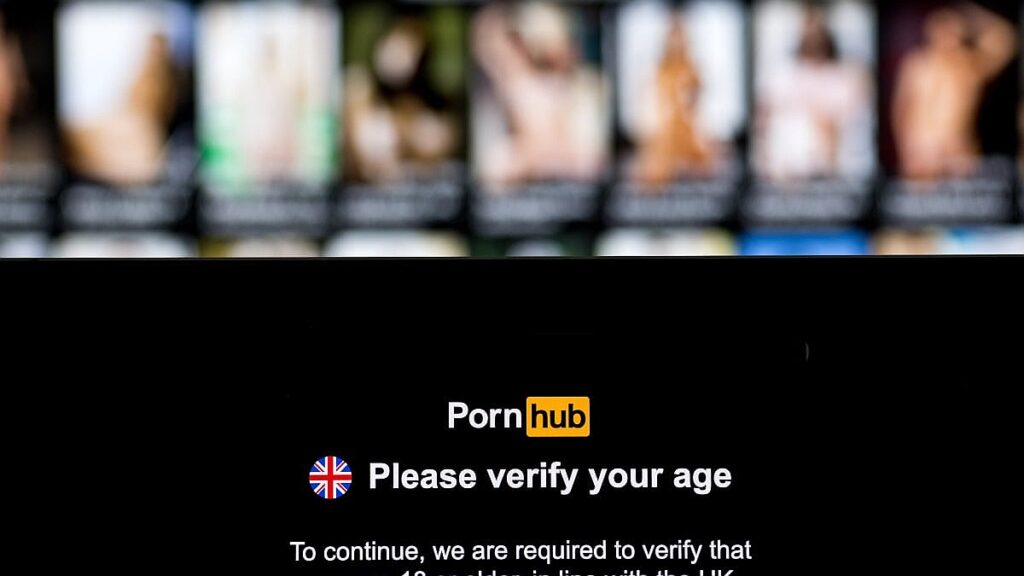
All the states and countries that have age-verification laws (so far)
In recent years, age-verification laws have emerged globally, aimed at preventing minors from accessing explicit content online. These regulations, often referred to as age assurance or age checks, mandate that websites confirm users are over 18, typically requiring personal data such as government-issued ID photos or facial recognition scans. While the intention behind these measures is to safeguard young users, experts have raised concerns about their effectiveness and the potential risks to digital privacy and security. For instance, research from NYU has indicated that age verification may not effectively deter minors, especially as users can easily bypass restrictions using VPNs or other methods. Additionally, the collection of sensitive personal information raises alarms about identity theft and could exacerbate the digital divide, limiting access to online content for individuals without the necessary identification.
The implementation of age-verification laws varies significantly across different regions. In the United States, these regulations are enacted at the state level, with notable examples including Virginia and Louisiana, where access to sites like Pornhub is restricted. The Supreme Court’s ruling in 2025 affirmed the constitutionality of these laws, prompting more states to consider similar measures. Meanwhile, the UK’s Online Safety Act, effective July 2025, requires explicit content sites to utilize various age verification methods, with significant penalties for non-compliance. France and Italy are also following suit, with their own age verification laws that impose strict requirements on adult sites. In Australia, the approach differs slightly, focusing on age verification for users of major search engines, while China maintains a stringent stance against pornography, enforcing Real Name Verification for accessing various online services.
As these age-verification laws proliferate, they raise critical questions about privacy, security, and the accessibility of information online. Experts warn that the intended protective measures may inadvertently create barriers to internet access, particularly for those lacking proper identification. As the global landscape of online content regulation evolves, the implications of these laws will likely continue to spark debate among policymakers, privacy advocates, and internet users alike.
Age-verification
laws have swept the world in recent years. These rules, also known as age assurance or age checks, often require websites that contain a certain (or any) amount of explicit content to confirm that users are over 18.
But it’s not just checking a “yes or no” box anymore. Many of these laws require personal data, such as a photo of a government ID or a facial recognition scan, to access parts of the internet.
SEE ALSO:
Porn censorship is going to destroy the entire internet
While the purported aim of these laws is to keep minors from seeing
porn
, experts have told Mashable for years that
age verification doesn’t work
for that intended purpose. This is because website companies based in other countries may not comply, or citizens may attempt to circumvent these laws using
VPNs
(or, in the case of the UK’s Online Safety Act, by using
images of video game characters
). Early research out of NYU has suggested that
age verification doesn’t work
, as well.
Experts also state the digital privacy and security issues that could arise from submitting so much personal information to various websites. One is
identity theft
, should bad actors obtain access to this data, such as through a phishing scam pretending to be a verification system for a porn site. Another is a
lack of access
to parts of the internet entirely if someone doesn’t have an ID, which could widen the
digital divide
.
SEE ALSO:
The best hookup apps, reviewed: I swiped until my thumb hurt
Yet, these laws are spreading throughout the world. Here’s a breakdown of the states and countries with age verification laws (so far).
United States
The United States is distinct in that age-verification laws have been implemented on a state-by-state basis, as opposed to a federal one. While you’re
not able to access Pornhub
in Virginia, for instance, you can drive up to Maryland and browse all you’d like.
Since Louisiana enacted its age verification law in 2023, similar bills have popped up across the country. Then, in 2025, the
Supreme Court ruled that these laws are constitutional
, essentially ensuring that more states will implement them as well, experts told Mashable at the time.
States with enacted age verification laws as of this publication, according to the adult industry trade organization the
Free Speech Coalition
, are:
Alabama
Arizona
Arkansas
Florida
Georgia
Idaho
Indiana
Kansas
Kentucky
Louisiana
Mississippi
Missouri
Montana
Nebraska
North Carolina
North Dakota
Ohio
Oklahoma
South Carolina
South Dakota
Tennessee
Texas
Utah
Virginia
Wyoming
United Kingdom
The
Online Safety Act
, which contains the UK’s age-verification clause, went into effect in July 2025. Sites and apps must use one of several methods to assure someone’s age, such as taking their banking information, matching a photo with an ID, or scanning their face.
The UK’s communication regulatory agency, Ofcom, stated that it will fine up to £18 million or 10 percent of qualifying worldwide revenue (whichever is greater) for sites that don’t comply. Since then, “SFW” sites, from
dating apps
to
Spotify
and
YouTube
, have or will implement age checks in the region (and others). Controversial sites
4chan and Kiwi Farms have sued Ofcom
, stating they shouldn’t need to comply as they operate outside the UK.
France
France’s age verification law
, which requires explicit sites to have a third-party system to confirm users’ ages, went into effect in June 2025. It also must be “double-blind,” meaning the porn site can’t know the visitors’ age, while the verification system can’t know the site the visitor is looking at.
Soon after it was enacted, though, the
law was briefly suspended
until it was deemed legal by EU law. But in July, France’s highest court — the Council of State — annulled the suspension. This caused back and forth with Pornhub, which initially blocked itself in the country, then reinstated itself during that period, only to block itself again after the law’s suspension was revoked.
Italy
Starting November 12,
Italy will enact age verification
for pornographic sites. Last Friday, Italy’s communications agency, AGCOM, released a
list of 45 websites
that must implement age verification systems to continue functioning in the country, or receive a warning and fines up to 250,000 Euros. The list includes Pornhub and
OnlyFans
.
AGCOM stated
on its website that a certified independent third party must verify users’ ages, doing so in two steps (identification and authentication of the identified person) — and it has to happen every session. When dealing with an app, a separate app must age-verify like a digital ID wallet app.
Australia
This law looks a little different than that of other countries, but its purpose is the same.
Australia’s age-verification law
states that at the end of this year, people will have to verify their ages when logged into their Google or Microsoft accounts and using those search engines. These engines must have tools or settings like “safe search,” where explicit content must be filtered out entirely. The highest safety setting must be the default for account holders for whom the age assurance system indicates are likely children.
If age assurance can’t be done, explicit material must be blurred.
China
Pornography is currently
illegal in China
, so its age-verification systems also look different. The country has
strict age restrictions
for video games, livestreaming and video-sharing platforms, payment processors, and social media. Users must undergo
Real Name Verification
, which requires providing their name and ID number to access these services. Depending on the app, users may have to give more information too, such as their phone number, bank account, and a facial recognition scan.
This list will likely grow longer, and Mashable will update it when it does. Ofcom’s group director for online safety, Oliver Griffiths, told Mashable back in June that
age verification
for porn sites was a “global issue” and sought to instill global norms. It seems that’s well on the way.
UPDATE: Dec. 2, 2025, 11:49 a.m. EST
The U.S. list has been updated to add Missouri.