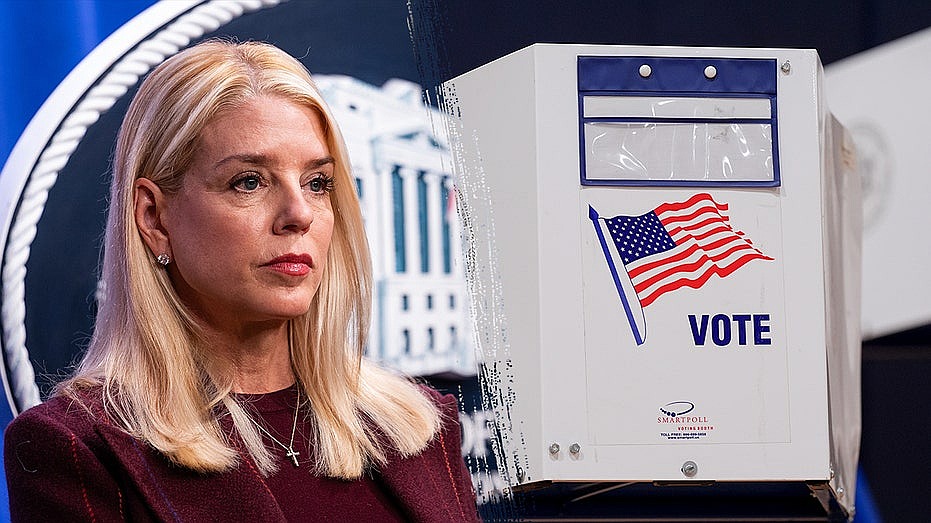
DOJ sues six states for refusing to turn over voter registration rolls, warns ‘open defiance’ of federal law
In a significant move to uphold election integrity, the U.S. Department of Justice (DOJ) filed lawsuits against six states—Delaware, Maryland, New Mexico, Rhode Island, Vermont, and Washington—accusing them of noncompliance with federal voter registration laws. The lawsuits, initiated by the DOJ’s Civil Rights Division, assert that these states have failed to provide their statewide voter registration rolls upon request, violating key federal statutes including the National Voter Registration Act (NVRA), the Help America Vote Act (HAVA), and the Civil Rights Act of 1960. These laws are designed to ensure states maintain accurate voter rolls and make them accessible for inspection, thereby promoting transparency and accountability in the electoral process.
Attorney General Pam Bondi emphasized the importance of accurate voter rolls, stating that they are fundamental to fair elections. She criticized the states for what she described as a pattern of noncompliance that undermines the safeguards established by federal law. The lawsuits stem from formal requests made by the DOJ for the current voter registration lists, which went unanswered, prompting the department to take legal action. Assistant Attorney General for Civil Rights Harmeet Dhillon highlighted that the DOJ is intensifying its enforcement efforts as the 2026 election cycle approaches, reiterating that every citizen should have the right to vote freely and fairly. The DOJ’s proactive stance on enforcing voter registration transparency is part of a broader initiative to ensure public confidence in election administration and to prevent administrative errors that could affect election outcomes.
As the legal proceedings move forward in federal court, the outcomes could lead to judges compelling the states to comply with federal law by providing the requested voter rolls, setting compliance deadlines, or issuing injunctions. This escalation in election law disputes reflects a growing tension nationwide as states prepare for the upcoming midterms. The DOJ’s commitment to filing further lawsuits indicates an ongoing effort to hold states accountable for maintaining transparent and accurate voter registration systems, which are crucial for the integrity of the democratic process.
The
Justice Department
filed lawsuits Tuesday against six blue states: Delaware, Maryland, New Mexico, Rhode Island, Vermont and Washington, accusing them of violating federal law by refusing to provide statewide
voter registration rolls
upon request.
The complaints, filed by the
DOJ’s Civil Rights Division
, argue the states failed to meet their legal obligations under the National Voter Registration Act (NVRA), the Help America Vote Act (HAVA) and the Civil Rights Act of 1960, three federal statutes that require states to maintain accurate voter rolls and make those records available for inspection.
Attorney General
Pam Bondi
said state refusals to disclose the lists undermine the transparency and accountability those laws were designed to guarantee.
“Accurate voter rolls are the cornerstone of fair and free elections, and too many states have fallen into a pattern of noncompliance with basic voter roll maintenance,” Bondi said in a statement announcing the lawsuits. “The Department of Justice will continue filing proactive election integrity litigation until states comply with basic election safeguards.”
NEWSOM’S FIERY CLAIM DOJ HAS ‘NO BUSINESS’ MONITORING CA ELECTION BLASTED BY TRUMP OFFICIAL: ‘CALM DOWN BRO’
According to the DOJ, the agency formally requested each state’s current, statewide voter registration roll and did not receive the required records. In each lawsuit, the department argues that Congress gave the attorney general clear authority to demand the production, inspection and analysis of voter registration data to ensure compliance with federal law.
Assistant Attorney General for Civil Rights
Harmeet Dhillon
, who leads the Civil Rights Division, said the department is escalating enforcement efforts ahead of the 2026 election cycle.
“Our federal elections laws ensure every American citizen may vote freely and fairly,” Dhillon said. “States that continue to defy federal voting laws interfere with our mission of ensuring that Americans have accurate voter lists as they go to the polls, that every vote counts equally, and that all voters have confidence in election results. At this Department of Justice, we will not stand for this open defiance of federal civil rights laws.”
FIRST TIME VOTING? HERE IS THE ULTIMATE GUIDE TO BALLOT BOXES, CRITICAL ISSUES ON ELECTION DAY
The DOJ says the lawsuits are part of a broader effort to enforce
voter registration transparency requirements
that Congress put in place to ensure public confidence in election administration. NVRA requires states to maintain accurate voter lists and produce them upon request; HAVA mandates states modernize and safeguard voter registration systems; and the Civil Rights Act of 1960 authorizes the government to inspect and copy certain election records, including voter rolls.
Fox News Digital has reached out to elections officials in all six states for comment.
Federal officials have increasingly pressed states on
voter roll compliance
issues in recent years, arguing that transparency around registration lists is essential to maintaining accurate records, preventing administrative errors and ensuring voters have confidence in election outcomes. The DOJ says the six states named in these new suits have repeatedly failed to meet the department’s requests.
The cases will now move forward in
federal court
, where judges could order the states to turn over the voter lists, impose compliance deadlines or issue injunctions requiring adherence to federal law.
Election law disputes over voter roll access and maintenance have escalated nationwide as states prepare for the
2026 midterms
and the DOJ’s latest actions show an aggressive legal posture toward states that fail to meet federal disclosure rules.
The department says it will “continue filing proactive election integrity litigation until states comply” and has left open the possibility of additional lawsuits.