
What is AI? (Grades 5-8)
In the educational article “What is AI?” aimed at students in grades 5-8, the concept of artificial intelligence (AI) is explored in an engaging and accessible manner. AI refers to technology that enables machines and computers to mimic human-like thinking abilities, allowing them to learn, recognize patterns, and make predictions. The article breaks down key components of AI, including machine learning, deep learning, and generative AI. For instance, machine learning allows AI to analyze vast amounts of data and make accurate predictions, while deep learning helps computers process information similarly to the human brain. Generative AI, a subset of deep learning, enables the creation of text, images, and videos, showcasing the creative potential of this technology.
The article highlights NASA’s innovative use of AI across various missions, emphasizing its role in enhancing space exploration and Earth-based applications. For example, NASA employs AI to create detailed 3D maps of lunar craters, which aids in mission planning and hazard identification. The Perseverance rover on Mars utilizes AI to navigate autonomously, taking images of the terrain and avoiding obstacles. Moreover, AI has empowered citizen scientists to discover over 10,000 pairs of binary stars, contributing to our understanding of planetary formation. On Earth, NASA leverages AI for disaster relief, analyzing satellite images to assess damage from natural disasters like hurricanes. This multifaceted application of AI not only enhances scientific discoveries but also aids in improving safety and efficiency in air travel and disaster response.
The article concludes with insights from NASA experts, encouraging students to explore careers in AI and STEM fields. Krista Kinnard, NASA’s Deputy Chief AI Officer, emphasizes that AI is a field for problem solvers and innovators, with applications ranging from healthcare to environmental protection. Students are encouraged to engage in coding and robotics, fostering curiosity and resilience through hands-on learning experiences. With the growing importance of AI in various sectors, the article serves as an inspiring introduction for young learners to the possibilities that await them in this exciting field.
https://www.youtube.com/watch?v=G6de8L7cVvM
4 Min Read
What is AI? (Grades 5-8)
This article is for students grades 5-8.
What is AI?
Artificial intelligence, or AI, is a type of technology that helps machines and computers have “thinking” abilities similar to humans. Devices using AI can learn words and concepts, recognize objects, see patterns, or make predictions. They can also be taught how to work
autonomously
. AI is often used to help people understand and solve problems more quickly than they could on their own.
AI includes:
Machine learning:
This type of AI looks at large amounts of data and learns how to make fast and accurate predictions based on that data.
Deep learning:
This type helps computers operate much like the human brain. It uses several layers of “thought” to recognize patterns and learn new information. Deep learning is a type of machine learning.
Generative AI:
A human can use generative AI to create text, videos, images, and more. It is based on deep learning.
NASA’s Perseverance Mars rover alongside the rock nicknamed “Cheyava Falls,” in this July 23, 2024, selfie made up of 62 individual images. “Cheyava Falls,” which has features that may bear on the question of whether the Red Planet was long ago home to microscopic life, is to the left of the rover near the center of the image. The small hole visible in the rock is where Perseverance collected the “Sapphire Canyon” core sample.
NASA/JPL-Caltech/MSSS
How is NASA using AI?
NASA has found uses for AI in many of its missions and programs.
For missions to the Moon, AI can use satellite imagery to create detailed 3D maps of dark craters. This data could help scientists plan missions, spot hazards, and even identify where future crews might find water ice. On Mars, the Perseverance rover uses AI to drive itself
autonomously
. It takes pictures of the ground, sees obstacles, and chooses the safest path.
AI also helps NASA search for planets outside our solar system. For example, AI has helped
citizen scientists
find over 10,000 pairs of binary stars. These pairs orbit each other and block each other’s light. This information could help scientists search for new planets and learn more about how stars form.
———————————————————————————————
Words to Know
Autonomous:
acting or operating independently, without external control. An
autonomous
technology can perform duties without human intervention.
Citizen scientist:
a member of the public, often a volunteer, who collects data that can be used by scientists. When members of the public participate in research in this way, it’s called
citizen science
.
———————————————————————————————
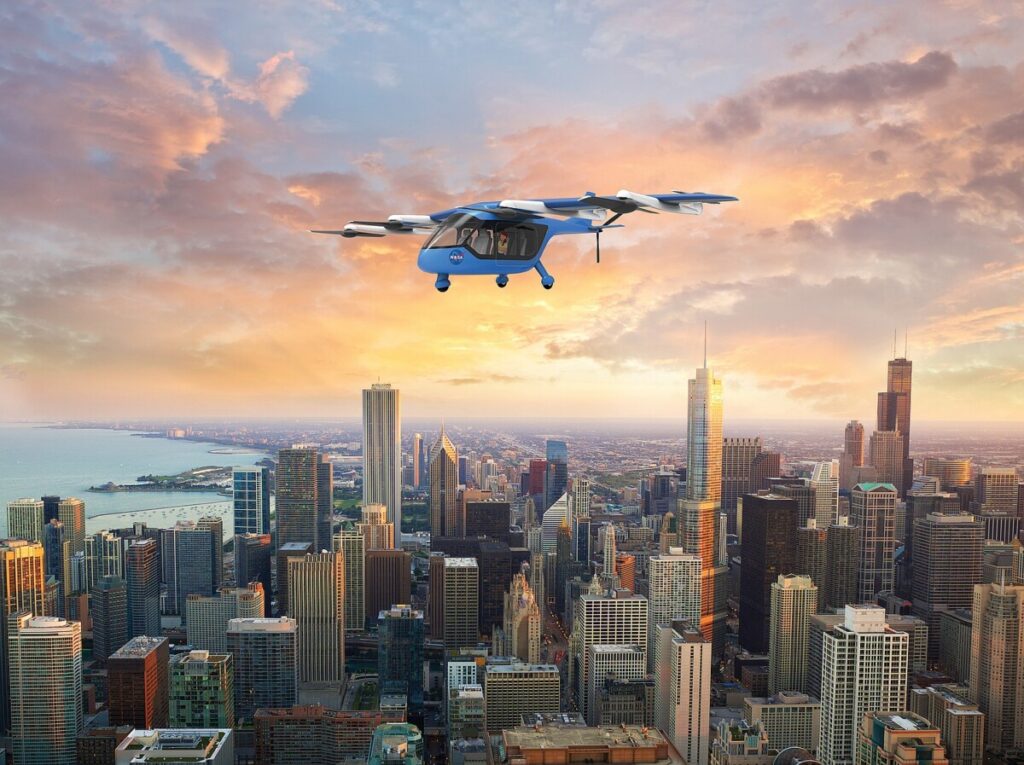
NASA also uses AI to support its work on Earth. The agency uses AI to aid disaster relief efforts during and after natural disasters like hurricanes or wildfires. For example, AI can count tarps on roofs in satellite images to measure damage after a storm. NASA is also supporting flight controllers and pilots by using AI to plan better flight routes, making air travel safer and more efficient.
AI is helping NASA explore space, protect people, and make amazing discoveries!
The blue tentacle-like arms containing gecko-like adhesive pads, attaBlue tentacle-like arms with gecko-like adhesive pads reach out and grapple a “capture cube” inside the International Space Station. The arms are attached to the cube-shaped Astrobee robotic free-flyer, right. The experimental grippers demonstrated techniques to autonomously perform tasks in low Earth orbit.
NASA
Advice From NASA AI Experts
“AI is a great field for people who like solving problems, building things, or asking questions about how the world works. People use AI to help doctors understand diseases, to teach robots how to explore space, and to help communities prepare for things like floods or wildfires. If you like using technology to help people and discover new things, AI could be a great career for you!” – Krista Kinnard, NASA’s Deputy Chief AI Officer
In this illustration, astronauts work on the lunar surface as part of NASA’s Artemis program.
NASA
Start exploring coding and STEM activities like robotics clubs. Just remember to always stay curious, keep practicing, and don’t be afraid of making mistakes. This really helps you learn.
Martin Garcia
AI Adoption and Innovation Lead, NASA’s Johnson Space Center
Career Corner
NASA roles that may involve AI include:
Astronauts
: Astronauts on the International Space Station can use an AI “digital assistant” to get medical recommendations. This is helpful when communication with Earth is interrupted. It could also be useful on future missions to distant destinations like Mars.
Engineers:
Engineers can use AI to help them generate designs for things like new spacecraft.
Astronomers:
AI helps astronomers analyze satellite and deep space telescope data to find stars and exoplanets.
Meteorologists:
Weather experts can use machine learning to make climate projections.
Programmers:
Programmers can use AI to update code used in older missions, bringing it up to modern standards.
IT professionals:
AI can enable IT experts to understand outages across NASA, allowing them to get programs back up and running faster.
Program managers:
Program managers can use AI to plan and model NASA missions.
Explore More
Build Your Computer Science Skills With NASA
Gaining Traction on Mars Activity
NASA Space Detective: Can You Spot a Star or a Galaxy
Video: Hack Into Computer Science With NASA
Artificial Intelligence at NASA



