US escalation with Maduro halts deportation flights to Venezuela
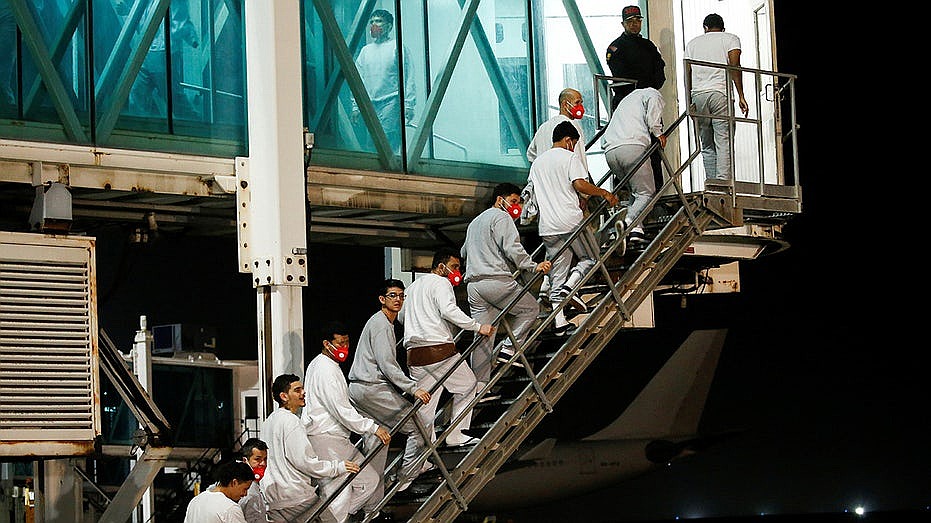
In a significant escalation of U.S. military involvement in Venezuela, recent actions have led to the suspension of flights repatriating unlawful migrants from the United States back to their home country. The Venezuelan foreign ministry announced that the U.S. government has unilaterally halted these flights, which were part of the “Plan Vuelta a la Patria” (Return to the Homeland Plan). This plan had facilitated the return of nearly 14,000 Venezuelans through regular charter flights, marking one of the few points of cooperation between the U.S. and Nicolás Maduro’s government. President Donald Trump’s warning to pilots to avoid Venezuelan airspace comes amid discussions of potential military strikes targeting Caracas, heightening tensions between the two nations.
The backdrop to this escalation includes the Trump administration’s ongoing efforts to end temporary protected status for around 600,000 Venezuelans residing in the U.S. Critics of the administration, including voices from the anti-interventionist community, argue that such military actions could exacerbate the migration crisis rather than alleviate it. Curt Mills, executive editor of The American Conservative, expressed skepticism about the shift towards military intervention, suggesting it distracts from addressing immigration enforcement issues. Meanwhile, the U.S. has already conducted strikes against alleged narco-traffickers in the Caribbean, with indications that military operations could extend to land-based targets in Venezuela as pressure mounts on Maduro to step down.
Foreign policy analysts have raised alarms about the potential consequences of these escalatory measures. Reports from the Stimson Center and libertarian think tanks warn that military intervention could destabilize the region further, leading to increased migration flows rather than resolving the political crisis in Venezuela. Doug Bandow of the Cato Institute emphasized that U.S. pressure could worsen instability and trigger mass migration, while George A. López from the Quincy Institute noted that without a credible political transition structure in Venezuela, external pressures might deepen chaos and drive more Venezuelans to flee. As the situation unfolds, the world watches closely to see how U.S. military strategy will impact both Venezuelan politics and the broader migration crisis.
https://www.youtube.com/watch?v=Fsl3lLO3k_0
Recent U.S. military escalations involving Venezuela have halted flights carrying unlawful migrants from the United States back to the South American country, Venezuela’s foreign ministry said, prompting criticism from anti-intervention voices.
President
Donald Trump
warned pilots Saturday that the airspace “above and surrounding” Venezuela should be “closed in its entirety” as his administration weighs potential strikes on targets in and around Caracas.
“Through this action, the United States government has unilaterally suspended the Venezuelan migrant flights that were being carried out regularly and weekly as part of the repatriation of Venezuelans through the Plan Vuelta a la Patria (Return to the Homeland Plan),” the ministry said in a statement.
The deportation flights had been one of the only areas of cooperation between Washington and the government of
Nicolás Maduro
. Venezuelan officials say nearly 14,000 nationals have been returned on twice-weekly charter flights in recent months.
VENEZUELA AGREES TO RESUME DEPORTATION FLIGHTS IN RESPONSE TO PRESSURE FROM TRUMP
At the same time, the Trump administration has continued moving forward with plans to end temporary protected status for roughly 600,000 Venezuelans living in the United States.
“Genius. Enough with this immigration enforcement nonsense. Let’s get back to True MAGA — neocon wars that exacerbate and cause migration crises. About darn time,” said Curt Mills, executive editor of The American Conservative, criticizing the shift toward military action.
So far, U.S. strikes have targeted alleged narco-traffickers operating in the
Caribbean near Venezuela
. But officials have signaled that operations could expand to land-based targets as Washington increases pressure on Maduro to relinquish power.
VENEZUELA WILL FACE ‘SEVERE, AND ESCALATING SANCTIONS’ IF IT DOESN’T ACCEPT ITS CITIZENS, RUBIO SAYS
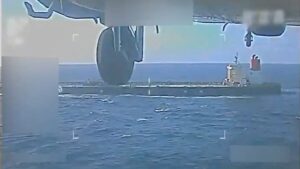
Dozens of U.S. bombers have deployed to the region alongside the world’s largest aircraft carrier, the USS Gerald R. Ford, underscoring the scale of the buildup. With U.S. bombers and the Ford already positioned in the region, much of the world is waiting to see whether Trump will green-light the next phase of
strikes against Venezuelan targets
.
Trump confirmed he spoke with Maduro by phone recently.
“I wouldn’t say it went well or badly. It was a phone call,” he told reporters aboard Air Force One Sunday.
Trump presented Maduro with an ultimatum — step down or face potential U.S. military action. Maduro, the
Miami Herald reported,
sought global amnesty for himself, demanded to retain control of the military and resisted an immediate exit from power.
Restraint-minded foreign policy analysts have sounded the alarm against a regime-change-driven intervention in Venezuela, arguing such a move could make migration patterns worse.
“Escalatory dynamics could trigger regional instability and hostility, with migration flows among the most predictable consequences,” a report by Stimson Center analysts Evan Cooper and Alessandro Perri claimed. “Absent a credible transition structure inside Venezuela, external pressure is far more likely to deepen chaos — driving more Venezuelans to flee — than to produce political change.”
Analysts in the libertarian foreign-policy space have issued similar warnings.
Doug Bandow, a senior fellow at the Cato Institute, argued that “U.S. militarized pressure on Venezuela is far more likely to worsen instability than to produce meaningful political change,” adding that history shows “coercion in Venezuela leads to unpredictable outcomes and episodes of mass flight.”
“Escalation without a stable political alternative inside Venezuela risks accelerating the very migration pressures Washington is trying to contain,” said George A. López, a senior analyst at the Quincy Institute.