
What Is RFK Jr. After?
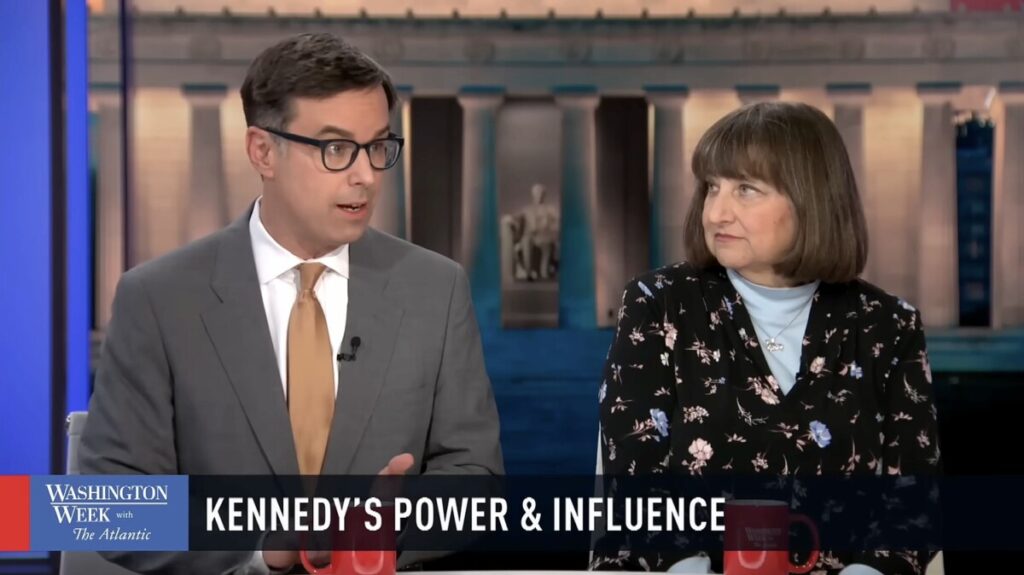
In a recent episode of “Washington Week With The Atlantic,” staff writer Michael Scherer shared insights from his extensive interviews with Robert F. Kennedy Jr., who is making waves with his ambitious plans to overhaul America’s public health system. The discussion highlighted Kennedy’s complex position within the political landscape, where he is often viewed through a polarized lens. Scherer noted that Kennedy is caught in a “daily battle” between critics who accuse him of undermining scientific integrity and supporters who praise him for challenging the establishment. This dichotomy underscores the contentious nature of Kennedy’s public persona, as he navigates the fine line between being a controversial figure and a crusader for health reform.
Scherer elaborated on Kennedy’s journey from the fringes of the Democratic Party to his current role as Health and Human Services (HHS) secretary under the Trump administration. He attributes Kennedy’s rise to his tenacity and unwavering commitment to his vision, despite facing significant opposition. This determination is evident in Kennedy’s approach to public health, where he seeks to implement sweeping changes that reflect his beliefs about health policy and governance. The conversation also featured insights from Jeffrey Goldberg, editor-in-chief of The Atlantic, Dan Diamond of The Washington Post, and Julie Rovner from KFF Health News, each providing their perspectives on the implications of Kennedy’s policies and the future of public health in America.
As the episode unfolds, it becomes clear that Kennedy’s influence extends beyond traditional political boundaries, as he aims to reshape public health discourse in a way that resonates with a broad audience. His unique position invites both scrutiny and support, making him a pivotal figure in the ongoing debate about health policy in the United States. For those interested in the evolving landscape of American public health and the individuals shaping it, this episode provides a compelling analysis of RFK Jr.’s vision and the challenges he faces in realizing it. To dive deeper into this discussion, viewers can watch the full episode on PBS or listen to the accompanying podcast for a more comprehensive understanding of Kennedy’s impact on the health sector.
https://www.youtube.com/watch?v=i0q_Oj425cU
Editor’s Note:
Washington Week With The Atlantic
is a partnership between NewsHour Productions, WETA, and
The Atlantic
airing every Friday on PBS stations nationwide.
Check your local listings
, watch full episodes
here
, or listen to the weekly podcast
here
.
Over many interviews, Robert F. Kennedy Jr. told the
Atlantic
staff writer Michael Scherer about how he plans to remake America’s public-health system. Scherer joined
Washington Week With The Atlantic
to discuss his story, and what the Health and Human Services secretary may be after.
“What we do know about RFK is the caricature he’s caught in—this daily battle between people who think he’s destroying science or people who think he’s taking on the establishment,” Scherer said last night. Less known, however, is how “he got from being at the edge of the Democratic Party” to becoming HHS secretary in the Trump administration.
“I think the answer is he’s a fiercely determined person who is on a quest,” Scherer continued. “He has been able to plow through enormous obstacles and enormous detractors to really not lose faith in his own vision of what he’s doing.”
Joining the editor in chief of
The Atlantic
, Jeffrey Goldberg, to discuss this and more: Scherer, a staff writer at
The Atlantic
; Dan Diamond, a White House reporter for
The Washington Post
; and Julie Rovner, the chief Washington correspondent and host of the podcast
What the Health
at
KFF Health News
.
Watch the full episode
here
.



